10 Best Plastic Enclosures for Industrial Use
Industrial equipment rarely fails because of one dramatic weakness. More often, dust enters through a cable gland, condensation reaches a terminal, or ultraviolet exposure slowly weakens the housing. Plastic Enclosures help control these risks while reducing weight, corrosion concerns, and installation effort. MarketsandMarkets estimates that the global electrical enclosures market could grow from approximately USD 7.1 billion in 2023 to USD 9.5 billion by 2028. This growth reflects wider automation, distributed control systems, and demand for safer equipment protection.
The right enclosure depends on the working environment, not appearance alone. A factory floor may require an IP65 or IP66 rating under IEC 60529. Outdoor equipment may also need UV-resistant material, sealed fasteners, and reliable temperature performance. Polycarbonate commonly suits impact-sensitive applications, while ABS can support lighter indoor assemblies. Fiberglass-reinforced polyester offers another option where chemical exposure and mechanical strength matter. Small details matter. Wall thickness, hinge quality, gasket compression, and internal clearance can determine whether a box protects equipment for years.
This guide examines ten Plastic Enclosures for industrial use, comparing materials, protection ratings, mounting options, and practical limitations. Information is considered alongside manufacturer specifications and recognized standards, rather than marketing claims alone. However, no enclosure is universally best. A product rated IP66 may still perform poorly under extreme heat, incorrect drilling, or unsuitable cable entry systems. That point deserves attention. Selection should include a site assessment, expected maintenance, and realistic failure scenarios. The final choice should protect both the electronics and the people working nearby.
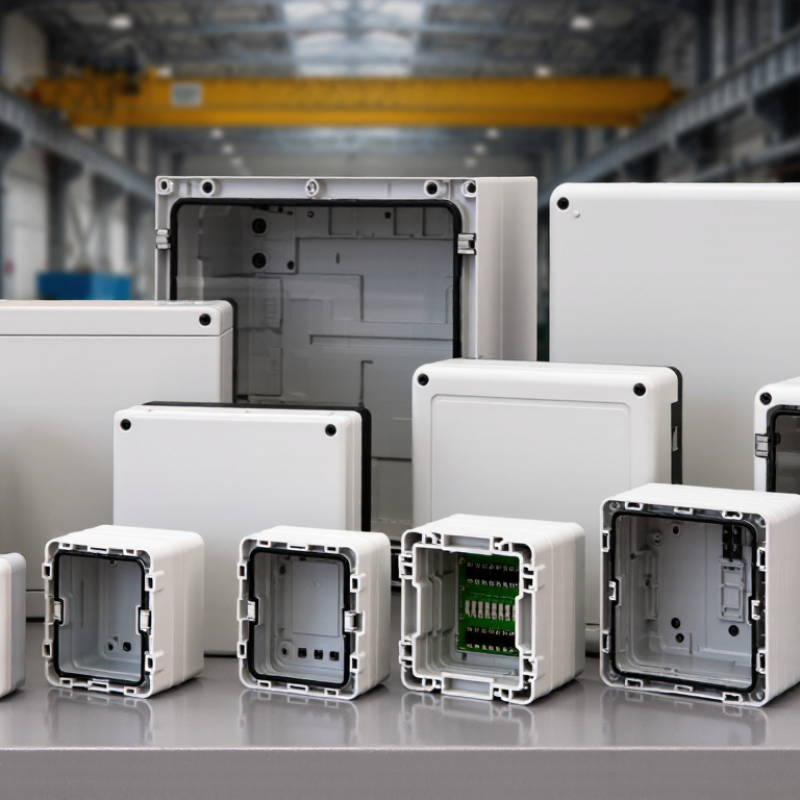
Industrial Plastic Enclosures: Purpose and Core Requirements
Industrial plastic enclosures protect electrical and control equipment from harsh factory conditions. Their purpose is practical: isolate sensitive components from dust, moisture, chemicals, vibration, and accidental contact. A well-designed enclosure also supports safe wiring, inspection, and routine maintenance.
Material selection depends on the installation environment. Polycarbonate offers strong impact resistance and clear inspection options. ABS suits lighter indoor applications, while glass-reinforced polyester performs better around heat, chemicals, and mechanical stress. Outdoor installations need UV-resistant material, sealed joints, and suitable protection against water entry. Ingress ratings, such as those defined by IEC 60529, should match the real exposure level, not an assumed one.
Design details often decide performance. A compressed gasket must remain flexible after repeated opening. Cable glands should prevent water paths around incoming wires. Hinges, mounting plates, grounding points, and ventilation accessories need enough space for gloved hands. I have seen compact boxes fail because installers could not bend cables without stressing terminals. Small dimensions looked efficient on paper. They were not efficient in the field.
No enclosure is perfect. A sealed box can trap heat, while ventilation can invite contamination. Engineers must balance cooling, sealing, accessibility, and future expansion. Testing should include temperature changes, impact, water exposure, and repeated door operation. Real installation conditions deserve more attention than a catalog image.
Key Criteria for Comparing Industrial Enclosure Designs
10 Best Plastic Enclosures for Industrial Use
Key Criteria for Comparing Industrial Enclosure Designs
Comparing the ten best plastic enclosures starts with the environment, not appearance. A workshop cabinet may face oil mist, vibration, dust, moisture, and sudden temperature changes. During site inspections, I check cable entries, hinges, seals, and mounting points before judging the housing itself. A strong enclosure should keep its seal after repeated opening and closing.
Material selection matters. Polycarbonate usually handles impact well, while reinforced polyester can perform reliably outdoors. ABS may suit cleaner indoor areas, but heat and ultraviolet exposure can shorten its service life. Look for a tested ingress protection rating, suitable impact resistance, and stable performance across the expected temperature range. Small details matter. A poorly fitted gasket can defeat an otherwise excellent design.
Thermal management deserves careful comparison. Internal heat from drives, relays, or power supplies may cause early component failure. Ventilation systems can help, but they may also create new paths for dust and moisture. Check wall thickness, flame behavior, chemical resistance, and access space for maintenance. I once favored a compact enclosure because it saved panel space. That decision made wiring unnecessarily difficult. It worked, but it was not a good design choice. Door clearance, transparent covers, and flexible mounting options should be assessed with real equipment, not only drawings. A practical test with gloves, tools, and installed cables often reveals weaknesses that specifications miss.
Ten Top Plastic Enclosures for Industrial Applications
Ten top plastic enclosures for industrial applications are not simply the largest or most heavily sealed. They should match real site conditions. Industrial equipment faces dust, moisture, vibration, chemicals, and repeated servicing. The best designs balance impact resistance, dimensional stability, and installation speed. Polycarbonate suits areas needing strong impact protection, while ABS can support lighter indoor assemblies. Reinforced plastic also helps prevent corrosion near pumps, sensors, and control panels. Material choice still requires caution.
Check the ingress rating against the actual installation, not a catalog assumption. A sealed enclosure needs a compatible gasket, correctly sized cable glands, and even fastener pressure. Field inspections often show that poorly routed cables defeat an otherwise effective seal. Transparent covers help operators read indicators without opening the box. Hinged designs save time, but their hinges need clearance and repeated-cycle testing. Small details matter.
Industrial buyers should review UV exposure, chemical contact, flame behavior, and mounting strength. A nonconductive housing may improve electrical isolation, yet it does not replace proper grounding practices. Internal heat also deserves attention. Compact boxes can trap warmth around power supplies and relays. Vent membranes, spacing, or a larger body may reduce condensation and thermal stress. Independent test reports add confidence, especially when the enclosure protects critical controls. Still, no specification replaces a site trial. A dusty workshop, washdown area, and outdoor cabinet can demand different solutions. That difference is easy to underestimate.
Matching Enclosures to Environments and Equipment Types
Selecting the best plastic enclosure starts with the environment, not the catalog image. A dusty workshop needs sealed joints and a suitable ingress protection rating. Outdoor equipment also faces ultraviolet exposure, rain, temperature swings, and accidental impact. Washdown areas demand smooth surfaces and carefully protected cable entries. Do not guess.
Match the enclosure’s shape to the equipment inside. Wall-mounted boxes suit compact controllers, terminal blocks, and power supplies. Deep housings provide space for relays, wiring bends, and heat movement. Clear covers help technicians inspect indicator lights without opening the box. Portable instruments need lighter cases, secure latches, and comfortable handling. Heat is unforgiving.
Material choice matters too. Polycarbonate can resist impact, while fiberglass-reinforced plastic may suit harsher industrial locations. Sensitive control systems may require shielding or a separate grounding strategy. Check mounting bosses, gasket compression, ventilation needs, and service access before installation. I once selected a box with enough volume but too little cable-bending space. The wiring looked forced, and maintenance became slower. That mistake reinforced a practical lesson: internal dimensions matter as much as external protection.
Before approval, test the assembled enclosure with its actual glands, fasteners, and accessories. Review temperature limits, flame ratings, and relevant certification documents. A reliable enclosure protects equipment only when installation details support its design.
Installation, Maintenance, and Safety Considerations
Selecting one of the 10 best plastic enclosures for industrial use is only the beginning. Installation determines long-term safety. IEC 60529 defines IP ratings for protection against dust and water, but the rating applies only when the enclosure is correctly assembled. Use sealed cable glands, compatible washers, and stainless hardware where corrosion is likely. Leave clearance around heat-producing components. A crowded box traps heat quickly.
Maintenance should follow the enclosure’s actual environment, not a generic calendar. The U.S. Department of Energy reports that industrial motor systems can represent more than 70% of facility electricity use, making thermal management important near controls and drives. Inspect covers, hinges, seals, and mounting points during scheduled shutdowns. Look for whitening, cracks, loose fasteners, and brittle cable entries. Clean with mild detergent. Harsh solvents can weaken plastic.
Safety checks need practical discipline. NEMA 250 and IEC 60529 classifications are not interchangeable, so verify the required standard before installation. De-energize equipment and confirm isolation before opening the enclosure. Small mistakes matter. A missing gasket may defeat the stated protection level. NFPA 70E recommends risk-based electrical safety practices, including boundaries, training, and suitable protective equipment. However, paperwork alone cannot reveal condensation behind a terminal block. A flashlight, torque check, and honest inspection often expose problems earlier. Reconsider the layout when dust, vibration, or heat changes.