
Blog
2026 Top Check Valves Types and Their Applications Guide?
Check valves play a crucial role in fluid systems. They allow flow in one direction and block reverse flow. These valves are vital in various industries, from oil and gas to pharmaceuticals. According to a recent industry report, the global check valve market is projected to reach $8 billion by 2026. This growth indicates rising demand across several sectors.
Different types of check valves exist, each designed for specific applications. For example, spring-loaded check valves offer quick response times. Meanwhile, tilting disc check valves excel in high-flow environments. However, the choice of valve can often be overlooked. Many engineers face challenges in selecting the appropriate valve type.
Understanding the unique features of each check valve is critical. Some applications may require regular maintenance or specific materials. Despite being a common component, the decision-making process can be complex. It's essential to stay informed about the latest advancements and best practices in check valve selection.
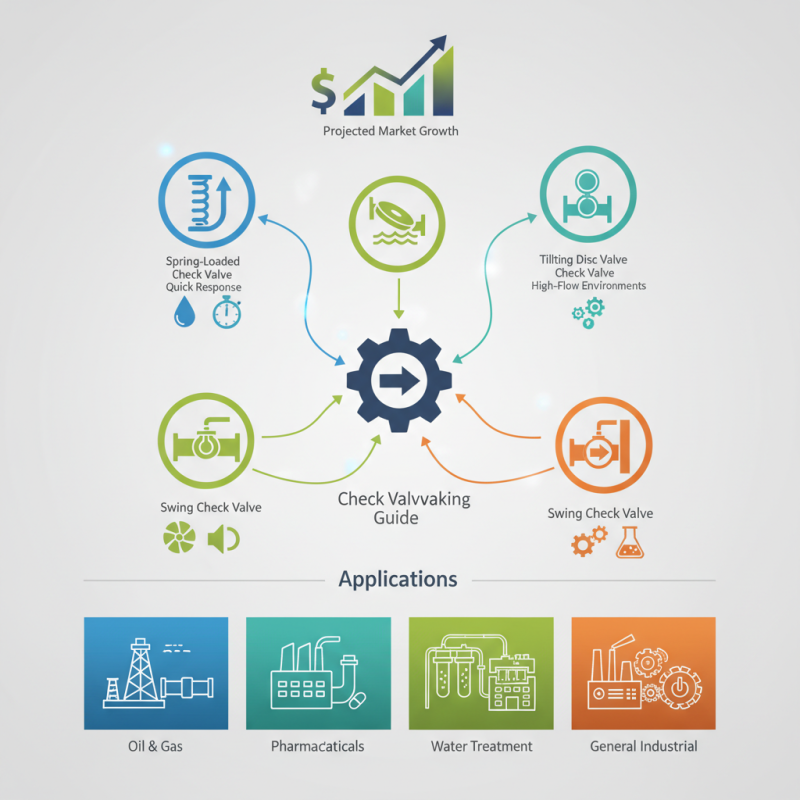
Types of Check Valves: An Overview of Common Designs and Mechanisms
Check valves are essential components in fluid systems. They ensure that fluid flows in one direction only, preventing backflow. Several designs exist, each with unique mechanisms suited for specific applications. The two most common types are swing check valves and lift check valves.
Swing check valves operate with a hinged disc. This design allows for minimal pressure drop, making it ideal for water and steam systems. According to industry reports, swing check valves hold approximately 65% of the market share in water applications. On the other hand, lift check valves use a disk that moves vertically. This design is beneficial in high-pressure scenarios, such as gas pipelines, where reliability is crucial.
Another noteworthy type is the diaphragm check valve. This design is less common but has specific advantages. It is great for applications requiring tight sealing and minimal leakage. However, it can be more sensitive to debris in the fluid. A study highlighted that more than 30% of system failures in certain industries were linked to check valve malfunctions. Considering these factors helps engineers select the right valve for their needs.
2026 Top Check Valves Types and Their Applications Guide
| Type of Check Valve | Mechanism | Applications | Advantages |
|---|---|---|---|
| Swing Check Valve | A disc swings on a hinge to allow flow in one direction. | Water supply, sewage, and pump discharge systems. | Simple design, low-pressure drop, suitable for large diameter piping. |
| Lift Check Valve | A disc moves up and down, blocking flow when reversed. | Oil and gas applications, water treatment facilities. | Compact design, can handle high pressure and flow rates. |
| Dual Plate Check Valve | Two plates pivot to open and close flow. | Power plants, chemical processing, and HVAC systems. | Reduced weight, low-pressure drop, quick response to flow changes. |
| Stop Check Valve | Combines a check function with a manual stop feature. | Pump systems, waste treatment plants, and boiler feedwater systems. | Allows manual control of flow, prevents backflow. |
| Spirit Check Valve | Utilizes a ball or disc that sits within a seat to block flow. | Chemical processing, pharmaceutical, and food industries. | Simple structure, reliable sealing, and ease of maintenance. |
Related Posts
-

10 Essential Tips for Choosing the Right Check Valves for Your Projects
-

Understanding the Importance of Spring Check Valve in Modern Plumbing Systems
-
Understanding Electric Actuators: Revolutionizing Automation in Modern Industries
-

Top 10 Uses of Air Actuator in Modern Technology?
-

The 7 Best Air Actuators for Enhanced Performance and Efficiency
-

Exploring the Future of Control Valves in Sustainable Industrial Applications