2026 Top Basket Strainers for Global Buyers
Choosing the right basket strainers in 2026 requires more than comparing prices or polished product photos. Global buyers must examine filtration performance, material quality, flow capacity, cleaning access, and supplier consistency. A strainer that performs well in a food-processing line may fail in a chemical, marine, or municipal application. Context matters.
This guide introduces practical options for international purchasing teams. It focuses on stainless steel grades, basket design, mesh openings, pressure ratings, connection types, and replacement-part availability. Buyers should also review certificates, inspection records, test methods, and traceable manufacturing information. Claims deserve evidence. A confident sales description is not a technical validation.
Small details can affect operating costs. A poorly fitted basket may allow particles to pass, while an overly fine mesh can restrict flow and increase maintenance. Operators may need a hinged cover, differential-pressure indicator, lifting handle, or quick-cleaning feature. These choices become important beside a noisy pump, during a night shift, or when a spare basket is urgently needed.
There is no universal best model. That is worth remembering. Budget products may offer acceptable service, but their welds, seals, or dimensional accuracy need closer inspection. Premium units can still be unsuitable when spare parts are difficult to source locally. Regional standards, installation practices, and shipping conditions also influence the final decision. By comparing verified specifications with real operating needs, global buyers can select basket strainers with greater confidence and fewer expensive surprises. Nevertheless, even this approach is imperfect; field conditions often reveal weaknesses that laboratory data cannot predict.
Basket Strainer Fundamentals: Mesh Ratings, Flow Area, and Pressure Loss
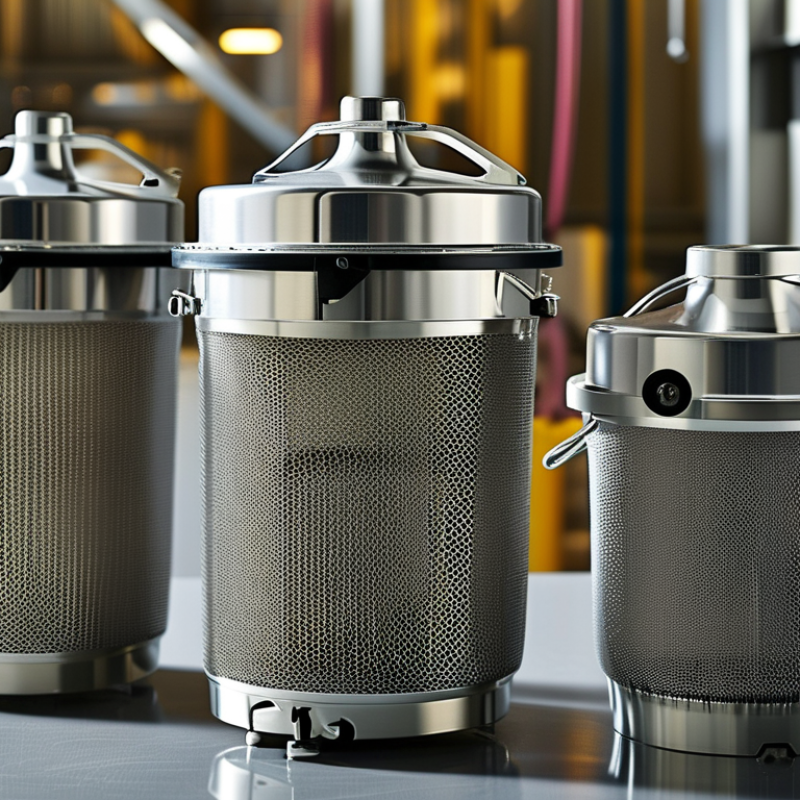
When selecting a basket strainer, buyers should examine more than nominal pipe size. Mesh rating describes the openings that retain particles. A 40-mesh screen has approximately 40 openings per linear inch, but actual retention depends on wire thickness and construction. Micron ratings may be more precise, yet suppliers do not always use identical test methods. Ask whether the rating is nominal or absolute.
Flow area matters just as much. The basket’s open area should comfortably exceed the connecting pipe’s internal area. This reduces velocity through the screen and helps limit pressure loss. Flow matters. A compact basket may fit neatly but restrict liquid sooner. The result can be a noticeable pressure drop across a clean strainer.
Pressure loss should be checked at the real operating flow, not only at maximum capacity. Record clean differential pressure during commissioning, then compare it with later readings. Rising pressure usually indicates accumulated debris or an undersized basket. In practical installations, a larger basket often lasts longer between cleaning cycles. However, larger is not automatically better. It may increase cost, weight, and maintenance effort. A tidy calculation can still miss startup surges, changing viscosity, or irregular solids. I would leave a reasonable design margin and verify performance with actual site data.
Global Standards: ASME B16.5, EN 1092-1, and API 598
2026 Top Basket Strainers for Global Buyers
For global buyers, basket strainer selection begins with flange compatibility. ASME B16.5 defines flange dimensions, pressure classes, facing details, and bolt patterns. A Class 150 flange is not automatically interchangeable with a PN16 flange. Their drilling patterns can differ, even when pipe sizes appear similar. Check the flange drawing, gasket face, and actual operating temperature before ordering.
EN 1092-1 uses PN ratings and European flange dimensions. PN16, PN25, and PN40 selections must match the system design pressure and temperature. Confirm the material group, face type, bore, and tolerances. In practical inspections, small errors often appear around bolt-hole alignment. They delay installation. A verified dimensional drawing is worth more than a general catalogue statement.
API 598 mainly addresses inspection and pressure testing for valves. It should not be treated as a complete basket strainer standard. If a project specification references API 598, define which tests apply, such as shell testing, seat testing, duration, and leakage acceptance. The strainer body, cover gasket, drain plug, and removable basket also need separate review. A hydrostatic test may reveal casting porosity, but it cannot confirm convenient basket removal. That detail is easy to overlook. Global procurement works better when standards, drawings, test records, and material certificates are checked together. Some specifications remain unclear, and that deserves correction before production.
2026 Top Basket Strainers for Global Buyers - Global Standards: ASME B16.5, EN 1092-1, and API 598
| Item |
Nominal Size |
Flange Standard |
Pressure Designation |
Flange OD
(mm) |
Bolt Circle
(mm) |
Bolt Pattern |
Typical Basket Opening |
| 1 |
DN50 / NPS 2 |
ASME B16.5 |
Class 150 |
152.4 |
120.7 |
4 × Ø19.1 mm |
Perforated plate: 1.5–6 mm
Mesh: 20–40 mesh |
| 2 |
DN80 / NPS 3 |
ASME B16.5 |
Class 150 |
190.5 |
152.4 |
4 × Ø19.1 mm |
Perforated plate: 1.5–6 mm
Mesh: 20–40 mesh |
| 3 |
DN100 / NPS 4 |
ASME B16.5 |
Class 150 |
228.6 |
190.5 |
8 × Ø19.1 mm |
Perforated plate: 2–8 mm
Mesh: 20–40 mesh |
| 4 |
DN150 / NPS 6 |
ASME B16.5 |
Class 150 |
279.4 |
241.3 |
8 × Ø22.2 mm |
Perforated plate: 3–10 mm
Mesh: 10–30 mesh |
| 5 |
DN50 |
EN 1092-1 |
PN16 |
165 |
125 |
4 × Ø18 mm |
Perforated plate: 1.5–6 mm
Mesh: 20–40 mesh |
| 6 |
DN80 |
EN 1092-1 |
PN16 |
200 |
160 |
8 × Ø18 mm |
Perforated plate: 1.5–6 mm
Mesh: 20–40 mesh |
| 7 |
DN100 |
EN 1092-1 |
PN16 |
220 |
180 |
8 × Ø18 mm |
Perforated plate: 2–8 mm
Mesh: 20–40 mesh |
| 8 |
DN150 |
EN 1092-1 |
PN16 |
285 |
240 |
8 × Ø22 mm |
Perforated plate: 3–10 mm
Mesh: 10–30 mesh |
| 9 |
DN200 |
EN 1092-1 |
PN16 |
340 |
295 |
12 × Ø22 mm |
Perforated plate: 4–12 mm
Mesh: 10–30 mesh |
| 10 |
DN250 |
EN 1092-1 |
PN16 |
395 |
355 |
12 × Ø26 mm |
Perforated plate: 5–15 mm
Mesh: 8–20 mesh |
Technical selection notes: ASME B16.5 and EN 1092-1 define flange dimensions and pressure designations; they do not define complete basket-strainer performance. Basket opening, filtration area, pressure drop, materials, drain connection, cover design, and face-to-face dimensions must be confirmed against the project specification. API 598 is primarily a valve inspection and testing standard. Where it is referenced for a basket strainer project, the purchaser should clearly define the applicable shell or pressure test method, test pressure, holding time, and acceptance criteria rather than assuming direct closure-test applicability.
2026 Design Comparison: Simplex, Duplex, and Self-Cleaning Units
2026 Top Basket Strainers for Global Buyers
2026 Design Comparison: Simplex, Duplex, and Self-Cleaning Units
For global buyers, basket strainer selection should match flow conditions, maintenance habits, and available shutdown time. The design choice affects pressure loss, cleaning speed, and operating continuity. A simplex strainer uses one basket inside a single housing. It suits smaller systems with predictable debris loads and scheduled maintenance. Operators must stop the line before removing the cover. That sounds simple.
A duplex strainer contains two chambers and a changeover valve. Operators can isolate one basket while the other remains active. This matters in water treatment, process cooling, and continuous circulation systems. However, valve alignment deserves careful training. A small operating mistake can restrict flow or expose equipment to unfiltered liquid. Buyers should check valve visibility, basket access, and spare-part availability. A cheaper purchase can become expensive during urgent maintenance.
Self-cleaning units use rotating brushes, backflushing, or suction mechanisms to remove collected particles. They reduce manual cleaning and may support unattended operation. Yet performance depends on particle shape, fluid viscosity, and control settings. Field checks show that fine fibers can still block poorly selected screens. Dirty fluid is rarely predictable. Buyers should compare cleaning-cycle water use, sensor reliability, drain requirements, and electrical compatibility. Do not judge by automation alone. A transparent inspection area and clear pressure readings often reveal problems earlier.
Supplier Checks: ISO 9001, Material Traceability, Testing, and Total Cost
2026 Top Basket Strainers for Global Buyers
A reliable basket strainer begins with a supplier audit, not a polished product photo. Ask for a current ISO 9001 certificate and confirm its issuing body. The certificate should match the factory’s legal name, address, and production scope. Request process records for welding, surface treatment, pressure testing, and final inspection. In practice, vague answers often reveal weak control systems. That matters.
Material traceability deserves close attention. Each basket should link to a heat number, material certificate, and inspection record. For stainless steel parts, verify the stated grade through mill documents or independent testing. Check the screen wire, support frame, gaskets, and fasteners separately. One mixed material can create unexpected corrosion. Small detail.
Testing should reflect the actual service conditions. Review flow capacity, pressure drop, operating temperature, leak resistance, and mesh accuracy. Ask for test methods, equipment records, and sample reports. A supplier may provide impressive numbers without explaining test conditions. I have seen this create costly comparisons between unequal products. Rechecking the assumptions is worthwhile.
Purchase price is only one part of total cost. Include tooling, packaging, freight, import charges, spare baskets, cleaning time, and possible rejection rates. A cheaper unit may require frequent shutdowns or replacement screens. Request a pilot order with dimensional checks and photographs before larger volume production. Keep every approval tied to a drawing revision and inspection plan. This reduces confusion when specifications change.
2026 Top Basket Strainers for Global Buyers
Supplier screening benchmark based on ISO 9001 certification, material traceability, product testing, delivery capability, and total cost of ownership.
Scores are weighted procurement indicators on a 0–100 scale. Higher values indicate stronger suitability for international sourcing. Total cost combines purchase price, freight, inspection, compliance, and expected quality-related costs.