2026 Top Horizontal Directional Drilling Machine Types
Choosing the right Horizontal Directional Drilling machine in 2026 requires more than comparing horsepower, torque, and purchase price. Contractors must match machine capacity with soil conditions, bore length, product pipe diameter, and available working space. A compact rig may fit a crowded urban site, while a larger rotary system can handle longer crossings and tougher ground. The wrong match can cause steering delays, excessive fluid pressure, or costly rework.
Dr. Samuel T. Ariaratnam, a respected trenchless technology researcher, describes the field’s practical purpose this way: “Trenchless technology is about installing and renewing infrastructure with minimal surface disruption.” That principle still guides modern HDD decisions. Newer machines add automated steering support, digital locating, remote diagnostics, and improved operator visibility. Yet technology cannot replace field judgment. Mud behavior changes near cobbles. Clay can clog tooling. A clean specification sheet does not guarantee a clean bore.
Real experience remains essential.
This guide examines the 2026 top horizontal directional drilling machine types, including mini, mid-size, maxi, rock-capable, and utility-focused models. It compares their working envelopes, thrust systems, rotary torque, fluid management, and typical applications. The categories are useful, but not perfect. Manufacturers classify machines differently, and performance depends heavily on tooling, crew skill, and maintenance quality. Readers should treat rankings as a practical starting point, not a universal verdict. Site investigation, pilot-bore planning, and verified manufacturer data should shape the final selection. The most expensive machine is not always the best investment. Reliability often wins quietly.
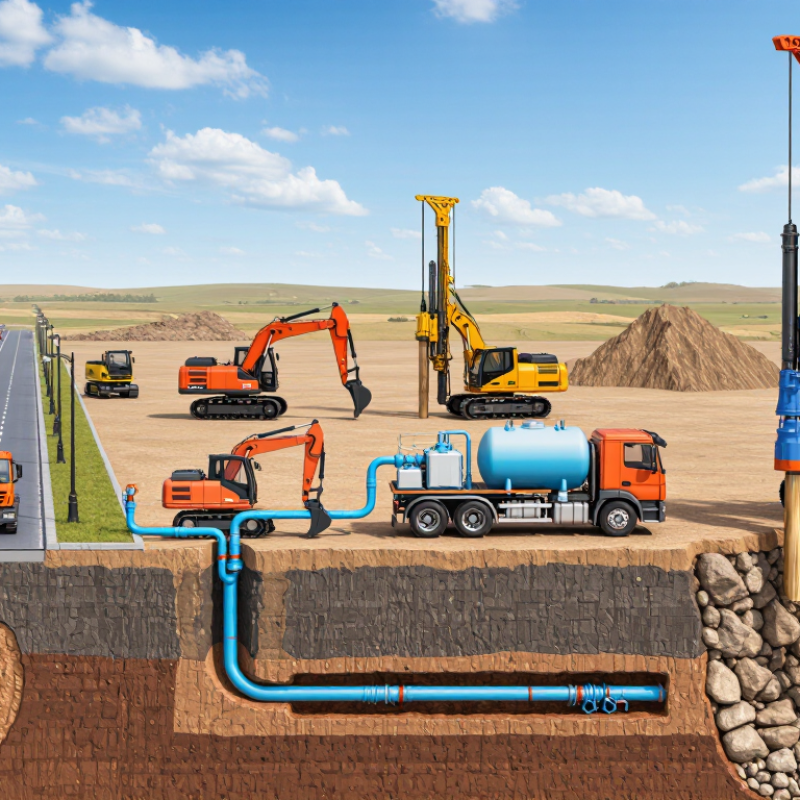
Horizontal Directional Drilling Machines: 2026 Classification by Pullback Force
Horizontal Directional Drilling Machines: 2026 Classification by Pullback Force
Pullback force remains the clearest field indicator for HDD machine selection. However, no single global standard defines every force class. A practical 2026 classification places light machines below 100 kN, medium machines from 100 to 500 kN, heavy machines from 500 to 1,500 kN, and ultra-heavy machines above 1,500 kN. These ranges reflect common contractor specifications and equipment surveys, not a legal classification.
Light units suit short fiber, water, and gas crossings with compact work zones. Medium machines handle longer urban installations and moderate clay or sand. Heavy units provide the reserve needed for steel pipe, rock tooling, and deep river crossings. Ultra-heavy systems support major transmission pipelines, but their size increases transport, anchoring, and fluid-management demands. The 2024 Global Horizontal Directional Drilling Market report by Grand View Research identifies infrastructure renewal and utility expansion as major growth drivers through 2030. That trend favors versatile medium and heavy equipment.
Field selection should compare rated pullback with expected installation load, not pipe weight alone. Engineers should include bore length, curvature, soil friction, drilling-fluid pressure, and contingency margin. The European Investment Bank’s 2023 infrastructure data also highlights rising investment in underground utility networks across Europe. Yet force alone can mislead. I have seen a powerful rig struggle when the bore path was poorly conditioned. Bigger is not always safer. Soil investigation and real-time load monitoring still deserve equal attention.
Midi HDD Rigs: 100–300 kN Pullback for Roads, Railways, and Urban Works
Midi HDD rigs, rated from 100 to 300 kN pullback, suit demanding urban utility work. They sit between compact and large drilling systems. This range offers enough force for medium-diameter conduits beneath roads, railways, and developed streets.
Experienced crews value their controlled footprint. A typical setup can work near traffic barriers, sidewalks, or existing services. The machine must still provide stable thrust, accurate steering, and reliable torque.
Operators monitor drilling fluid pressure, bore path, and ground response throughout the crossing. Small errors can become expensive underground.
Space is limited. That matters.
For road crossings, midi rigs can install water, power, or communication ducts without open excavation across the carriageway. Railway work demands careful vibration control, precise depth management, and strict coordination with site supervisors.
Urban ground is rarely uniform. Fill, clay, gravel, and old foundations may appear within one bore.
Fluid recycling also deserves attention. Poorly managed slurry can weaken the entry area or block nearby drainage. Experienced contractors review utility records, locate services, and confirm soil conditions before drilling. They also prepare a recovery plan for unexpected rock or unstable ground.
The 100–300 kN class is capable, but not universally suitable. Larger crossings may require more torque, rod capacity, or support equipment. Smaller sites may not justify its transport and setup time.
Practical selection depends on bore length, product diameter, soil behavior, and access conditions—not pullback rating alone.
Maxi HDD Rigs: Over 300 kN Pullback for Long, Large-Diameter Crossings
2026 Top Horizontal Directional Drilling Machine Types
Maxi HDD Rigs: Over 300 kN Pullback for Long, Large-Diameter Crossings
Maxi HDD rigs deliver more than 300 kN of pullback, equal to roughly 67,400 pounds-force. They are designed for long crossings, heavy product pipes, and difficult ground conditions. A typical setup includes a large drill frame, high-capacity mud pumps, powerful wireline systems, and automated drilling controls. On site, the difference is visible: thicker drill rods, wider recycling tanks, and a larger working pad.
MarketsandMarkets’ 2024 outlook estimates the global horizontal directional drilling market could reach about USD 12.4 billion by 2028, growing at approximately 8% annually from 2023. The report links demand to utility replacement, water infrastructure, and energy projects. These figures are useful, but regional forecasts vary. They should not replace a project-specific feasibility study.
The DCA’s HDD Good Practices Guidelines emphasize bore planning, drilling-fluid control, and continuous tracking of tooling forces. Maxi equipment can reduce reaming cycles, yet extra power does not solve poor geology. High torque may increase the risk of stuck tooling or excessive formation disturbance. I have seen planning teams focus too heavily on pullback capacity. That is an incomplete approach. Entry angle, bend radius, fluid viscosity, spoil removal, and emergency access matter just as much. Bigger is not always better.
Specialized HDD Systems: Rock Drills, Slant Rigs, and Modular Platforms
In 2026, specialized HDD systems are moving beyond standard soil boring. Market research indicates steady expansion. Grand View Research estimates the global HDD market could grow at about 6.8% annually through 2030. That growth reflects harder ground, denser utilities, and tighter work corridors.
Rock drills are designed for limestone, shale, and fractured formations. Their larger torque capacity helps maintain penetration when cutting tools meet sudden resistance. Operators must watch thrust, vibration, and drilling-fluid returns continuously. A dry-looking return can signal lost circulation or a changing formation. Small warning. Poor judgment becomes expensive quickly.
Slant rigs support angled entry points on steep sites, road shoulders, and restricted urban parcels. Their geometry can reduce surface preparation, but setup accuracy becomes critical. Modular platforms offer another advantage. Crews can separate the power unit, control cabin, and drilling frame, then move each section through narrow access routes.
The Federal Highway Administration notes that HDD can reduce surface disruption compared with open-cut construction. However, the 2023 Common Ground Alliance DIRT Report recorded more than 200,000 reported excavation damages in the United States and Canada. Specialized equipment cannot replace utility locating, bore planning, or disciplined communication. That is the uncomfortable part. More machine capability does not guarantee better decisions.