Top Benefits of Electric Actuators for Industrial Applications?
Electric actuators are transforming industrial applications. These devices convert electrical energy into mechanical motion. They offer numerous advantages over traditional actuators, enhancing efficiency and reliability.
One of the prominent benefits of electric actuators is their precision. Unlike pneumatic or hydraulic systems, they provide accurate positioning. This accuracy leads to better process control in factories. Furthermore, maintenance requirements are notably lower. This can reduce downtime and maintenance costs significantly.
However, electric actuators do come with challenges. They can be sensitive to environmental conditions. In some cases, they might not perform well in extreme temperatures. Despite these issues, their growing popularity in various industries cannot be ignored. As technology advances, electric actuators are likely to become even more essential in the industrial landscape.
Advantages of Electric Actuators over Pneumatic and Hydraulic Systems
Electric actuators are gaining traction in industrial applications for several reasons. One key advantage is their precision. Unlike pneumatic and hydraulic systems, electric actuators provide exact positioning. This accuracy reduces errors in tasks that require careful control. Moreover, they offer faster response times. In many cases, this leads to increased productivity on the factory floor.
Energy efficiency is another point of consideration. Electric actuators consume less energy compared to their pneumatic or hydraulic counterparts. This reduction in energy usage not only cuts costs but also promotes sustainability. They generate less waste and require less maintenance. Maintenance can be a significant drain on time and resources in industrial settings.
However, there are drawbacks to consider. Electric actuators may not be suitable for all environments, especially those with extreme temperatures. Additionally, they might struggle under heavy loads compared to hydraulic systems. Users should evaluate their specific needs before making a switch. Balancing the pros and cons is essential for making the right choice in actuator technology.
Top Benefits of Electric Actuators for Industrial Applications
| Feature |
Electric Actuators |
Pneumatic Actuators |
Hydraulic Actuators |
| Energy Efficiency |
High efficiency with low energy consumption |
Moderate efficiency, significant air waste |
Can be energy-intensive |
| Precision Control |
Excellent precision and repeatability |
Moderate precision |
Good precision but more complex |
| Maintenance |
Low maintenance required |
Regular maintenance needed due to air compressor |
High maintenance due to fluid leaks |
| Installation Flexibility |
Easy installation with less infrastructure |
Requires compressed air system |
Requires more complex hydraulic systems |
| Environmental Impact |
Minimal environmental footprint |
Can release greenhouse gases |
Potential for oil spills and contamination |
Enhanced Precision and Control in Industrial Processes
Electric actuators are revolutionizing industrial processes by enhancing precision and control. A recent industry report shows that the use of electric actuators can improve operational efficiency by up to 30%. This is attributed to their ability to provide accurate feedback and quick response times, crucial for maintaining tight tolerances in manufacturing.
In sectors such as aerospace and automotive, precision is non-negotiable. The integration of electric actuators supports automation. Operators can set parameters that ensure exact movements. The immediate results reduce waste and lower the likelihood of human error. However, there's a learning curve involved. Implementing new technology might require retraining staff, which can slow down initial productivity.
Moreover, electric actuators contribute to energy efficiency. A report indicates that they consume up to 50% less energy compared to traditional hydraulic systems. Still, maintenance requirements are higher. Neglecting regular check-ups can lead to performance drops. Companies must invest time and resources to monitor and optimize actuator functions. Balancing energy savings with maintenance needs is crucial for long-term success.
Energy Efficiency and Cost-Effectiveness of Electric Actuators
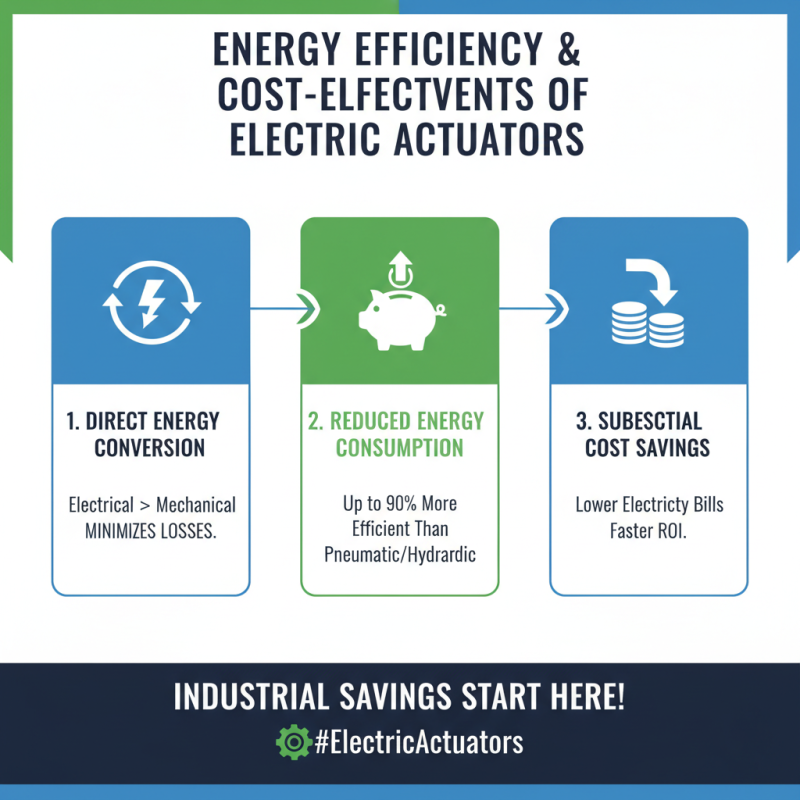
Electric actuators are becoming essential in industrial settings. Their energy efficiency is one of the leading advantages. Unlike pneumatic or hydraulic systems, electric actuators convert electrical energy directly to mechanical energy. This process minimizes energy loss and reduces costs. In fact, industries can save significantly on electricity bills by transitioning to electric actuators.
Using electric actuators means less maintenance. They typically have fewer moving parts compared to traditional systems. This feature leads to reduced wear and tear. However, it's important to regularly check connections and seals. Neglecting maintenance can lead to failures.
Tips: Always consider the load requirements of your application. Incorrect sizing can lead to inefficiencies. Also, use programmable controllers to optimize performance. They can help adjust energy consumption based on the task. Remember that investing in quality components can pay off in the long run. The initial costs may seem high, but the savings on energy and repairs will emerge over time.
Reduced Maintenance Requirements for Electric Actuators
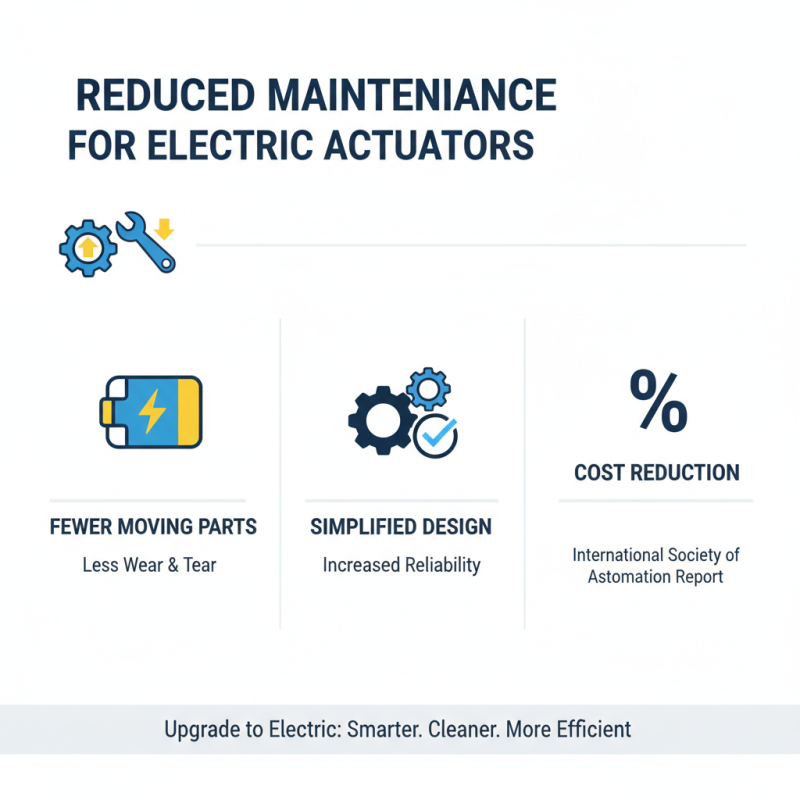
Electric actuators are revolutionizing industrial applications, particularly due to their reduced maintenance requirements. Unlike traditional pneumatic or hydraulic systems, electric actuators have fewer moving parts, leading to lower wear and tear. According to a report by the International Society of Automation, maintenance costs can be reduced by up to 40% when switching to electric actuators.
The elimination of hydraulic fluid eliminates leaks and spills, reducing environmental concerns. This shift not only decreases cleaning efforts but also minimizes downtime, allowing for increased production efficiency. A study from McKinsey & Company found that companies using electric actuators experienced up to 25% less unplanned downtime. However, these benefits do not come without challenges.
Some industries might face initial resistance due to the perceived complexity of electric actuators. This can lead to insufficient training for operators, impacting overall effectiveness. Additionally, electric actuators can be sensitive to temperature variations, which may require special considerations in certain environments. Addressing these issues is crucial for maximizing the advantages of electric actuators in industrial settings.
Improved Safety Features and Environmental Impact of Electric Actuators
Electric actuators are transforming industrial applications by enhancing safety features. Compared to traditional options, they often reduce risks associated with mechanical failures. These actuators have fewer moving parts. This design lowers the chance of accidents in hazardous environments. Workers can feel more secure, knowing that these systems minimize physical dangers.
Environmental impact is another significant aspect. Electric actuators produce less noise and vibration compared to their hydraulic or pneumatic counterparts. This reduction contributes to a better workplace atmosphere. Furthermore, they often yield higher energy efficiency. In sectors focused on sustainability, electric actuators can help meet green goals, but not all installations maximize this potential.
However, it's important to assess the limitations. The initial costs may deter some businesses. Additionally, transitioning to electric systems can require retraining staff. Companies must weigh the long-term benefits against these challenges. Without careful planning, expenses could outweigh the gains. Balancing safety, environment, and efficiency is key to making informed decisions.
Top Benefits of Electric Actuators for Industrial Applications