Top 10 Benefits of Using Centrifugal Air Blowers for Industry?
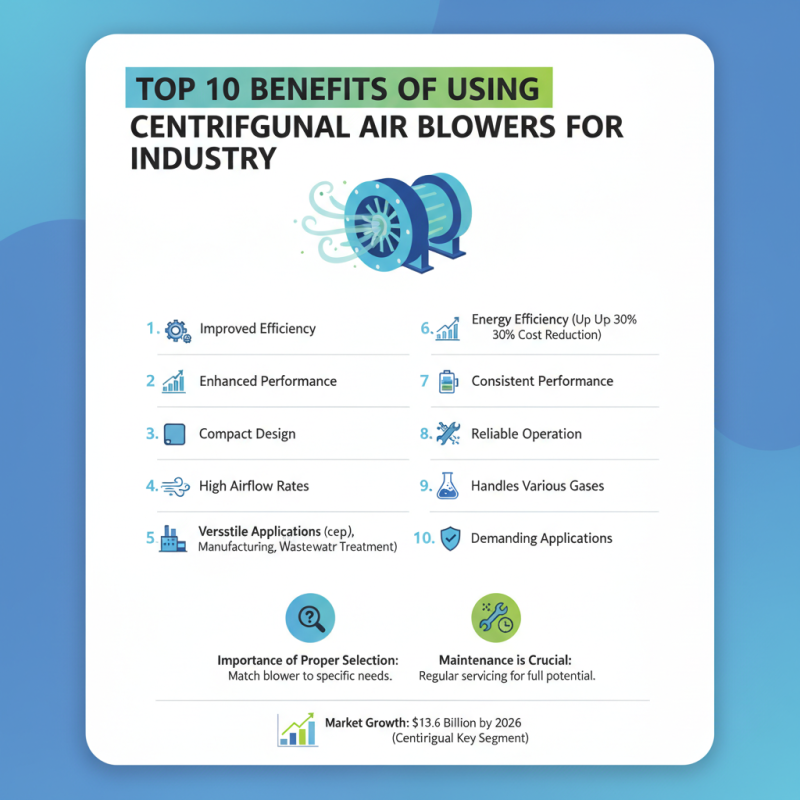
Centrifugal Air Blowers have become essential in various industries. Their role in improving efficiency and performance is significant. A report by MarketsandMarkets predicts the air blower market will reach $13.6 billion by 2026, with centrifugal models being a key segment. These blowers are known for their compact design and high airflow rates.
In sectors like manufacturing and wastewater treatment, Centrifugal Air Blowers offer unique advantages. They deliver consistent performance while consuming less energy compared to traditional methods. A recent study indicated that energy-efficient blowers can reduce operational costs by up to 30%. However, it’s worth reflecting on how maintenance can impact performance. Regular servicing is crucial to unlock their full potential.
The versatility of Centrifugal Air Blowers is impressive. They can handle various gases and are ideal for demanding applications. As industries look for reliable solutions, these blowers stand out. Nevertheless, understanding the specific needs of each application is vital. This ensures optimal blower selection and operation.
Benefits of High Efficiency and Energy Savings with Centrifugal Air Blowers
Centrifugal air blowers significantly improve energy efficiency in industrial applications. These systems optimize airflow by utilizing a rotating impeller. As air moves through the blower, it accelerates, allowing for powerful air displacement. This efficient design can lead to substantial energy savings, often reducing operating costs by 20% or more.
High efficiency is crucial for industries aiming to minimize their carbon footprint. With stringent energy regulations, many sectors are seeking sustainable solutions. Centrifugal air blowers fit this need perfectly. They provide consistent performance, delivering high volumes of air with less power consumption. However, it's essential to regularly maintain these systems to ensure peak efficiency.
Some facilities might overlook proper maintenance. Neglected blowers can lead to increased energy usage and reduced longevity. Regular inspections can mitigate these risks. Organizations embracing centrifugal air blowers must prioritize both efficiency and upkeep to achieve long-term benefits. Balancing these aspects can enhance overall operational reliability and savings.
Enhanced Airflow and Pressure Generation for Industrial Applications
Centrifugal air blowers play a crucial role in various industrial applications. They enhance airflow and pressure generation, which is vital for processes like drying, cooling, and pneumatic conveying. Recent industry reports highlight that efficient airflow can improve energy efficiency by up to 30%. This is significant for enterprises focusing on sustainability.
In applications requiring high-pressure air, centrifugal blowers excel. For instance, a study from the Industrial Technology Laboratory noted that these blowers can generate pressures exceeding 10 psi, surpassing many other types. This capability is indispensable for processes such as material transport in manufacturing. Yet, not all operations are equal. Some systems might not fully utilize this potential, leading to inefficiencies.
Regular maintenance is essential for optimal performance. Even simple tasks, like cleaning or checking seals, can prevent failures. Ignoring these can result in performance degradation and increased operational costs. Industries must prioritize understanding the airflow requirements specific to their processes. Each application has unique demands that must be evaluated to achieve the best results.
Versatility in Industrial Settings: Uses of Centrifugal Air Blowers
Centrifugal air blowers prove highly versatile across various industrial settings. They efficiently handle tasks like drying, cooling, and conveying materials. Factories leverage these blowers for dust collection, improving air quality. This adaptability makes them essential in food processing, pharmaceuticals, and textile manufacturing. They maintain consistent airflow, which is crucial for many operations.
Implementing centrifugal air blowers isn't without challenges. Maintenance can be overlooked, leading to decreased efficiency. Regular checks on belts and impellers help prevent potential breakdowns. Ensure the blower is the right size for your application to avoid wasted energy.
Consider the environment when installing these systems. Noise levels vary based on design and usage. Selecting a quieter model can enhance workplace comfort. Training staff on proper operations is essential for maximizing performance. Investing in expert guidance may save time and resources in the long run.
Reduced Maintenance Needs and Extended Equipment Lifespan
Centrifugal air blowers are increasingly recognized for their reduced maintenance needs. Unlike traditional systems, they have fewer moving parts. This design minimizes wear and tear. Maintenance efforts decrease significantly, leading to lower operational costs. Routine checks become easier and less frequent.
The durability of centrifugal air blowers contributes to an extended equipment lifespan. Materials used in their construction are often selected for toughness. This ensures reliability under various industrial conditions. Operators may notice a substantial reduction in breakdowns. However, it’s vital to keep the system clean and free from debris, as neglect can lead to issues.
Regular attention is essential for optimal performance. Users might overlook small maintenance tasks, which can accumulate and cause long-term problems. Finding a balance between minimal care and adequate monitoring is crucial. A comprehensive understanding of the equipment allows teams to make informed decisions, promoting its longevity.
Environmentally Friendly Options and Compliance with Industry Standards
Centrifugal air blowers are becoming a go-to choice in many industries. Their design allows for efficient air movement, which translates into energy savings. These blowers often operate with lower noise levels, adding a layer of workplace comfort. The focus on minimizing environmental impact is a huge advantage. More manufacturers are opting for blowers that meet strict energy efficiency guidelines. This not only conserves resources but also reduces operational costs significantly.
Environmental compliance is critical. Regulatory standards are evolving, pushing industries towards greener technologies. Utilizing centrifugal air blowers that adhere to these standards shows commitment to sustainability. It is also a step toward reducing carbon footprints. Companies that ignore these standards could face penalties. Thus, staying informed about updates in environmental policies is crucial.
Investing in eco-friendly options is commendable, yet not all solutions are perfect. Some blowers may require more maintenance over time. This could increase costs unexpectedly. It's essential for industries to balance initial benefits with long-term considerations. Understanding specific operational needs can aid in making informed decisions. Continuous evaluation of equipment performance is necessary for sustainability goals.