
Blog

What Are the Best Virtual Reality Devices from China?

China’s virtual-reality market is ambitious, but choosing the “best” headset depends on what you need it to do. The Ministry of Industry and Information Technology’s 2022–2026 action plan set a goal of exceeding RMB 350 billion in VR industry scale by 2026. It also targeted annual sales of more than 25 million VR terminals. These are policy targets, not confirmed sales figures. They show why Chinese brands merit attention, while reminding buyers to separate forecasts from results.

Global market data offers useful context. IDC reported that worldwide AR/VR headset shipments fell 8.3% in 2023, to about 8.1 million units. That figure combines product categories and does not measure Chinese devices alone. Still, it signals a market where comfort, software support, and price matter as much as impressive specifications. In this guide, we examine Virtual Reality Devices from Chinese makers, including consumer headsets and enterprise-focused options. We compare display clarity, tracking, controllers, content libraries, and practical availability. A bright, sharp screen can look excellent in a showroom; a heavy headset may feel different after an hour. That comparison is imperfect. Product availability and software support can also vary by region, so current listings deserve a final check. The strongest choice is not always the newest model. It is the device that fits your use, budget, and tolerance for trade-offs.
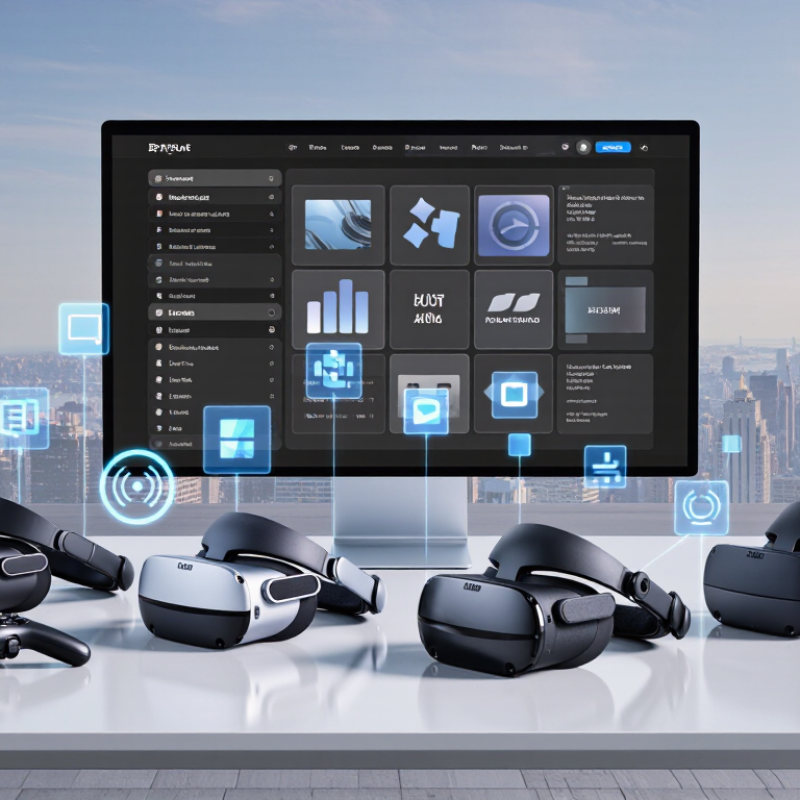
What Are the Best Virtual Reality Devices from China?

What Defines a Virtual Reality Device Made in China?

A virtual reality device made in China is not defined by its label alone. The phrase can describe a product designed, assembled, or substantially manufactured in China, and those details may differ. A headset’s display, lenses, sensors, and processor can also come from different suppliers. That is common in electronics. To judge what “made in China” means for a specific device, check the manufacturer’s product documentation and supply-chain disclosures rather than relying on the packaging.

Performance depends on more than where a device is assembled. Look for clear image quality, stable motion tracking, comfortable weight distribution, and low input delay. Try moving your head while viewing a fixed virtual object; noticeable wobble can make an experience uncomfortable. Check how the headset handles heat, how long its battery lasts, and whether its software receives maintenance. Small design choices matter. A heavy front section, for example, can press against the nose during longer sessions. Specifications help, but they do not replace hands-on testing.

Tips: Check fit with your usual glasses, inspect the return and support terms, and test the headset in a well-lit room before extended use. Ask which parts and stages of production are actually based in China. Claims can be vague. Independent reviews and clear technical documentation offer useful cross-checks, though reviews may not reflect your own comfort or needs.

What Are the Best Virtual Reality Devices from China?

What Defines a Virtual Reality Device Made in China?

China’s rising research and development investment provides context for its technology and manufacturing ecosystem, but it does not measure VR headset quality or determine a product’s country of origin.

China’s national R&D expenditure, 2019–2023 (trillion yuan, rounded). Source: National Bureau of Statistics of China, annual statistical communiqués. To compare VR devices, also assess factors such as display resolution, tracking, comfort, software compatibility, and after-sales support; these national figures do not rank individual products.

How Has China’s Virtual Reality Industry Developed?

China’s virtual reality industry grew from university research and industrial simulation into a broader technology sector. Early systems were costly and often tethered to computers. They served design studios, training centers, and research labs more than ordinary homes. The shift was gradual. As display components and motion sensors became easier to source, manufacturers could build lighter headsets at more accessible prices. Mobile internet expansion also helped developers test shared, interactive experiences.

Growth has not depended on hardware alone. Local suppliers now contribute displays, lenses, tracking components, and manufacturing expertise, while software teams create applications for education, tourism, fitness, and workplace training. A trainee can practise a maintenance task with virtual tools before handling real equipment. Useful, but not effortless. Comfort, battery life, motion sickness, and the shortage of polished content still affect everyday use. Faster networks can support connected experiences, yet they do not automatically make them compelling. China’s progress is therefore best understood as an expanding ecosystem, not a finished market. Its next gains will depend on reliable devices, practical applications, and careful user testing. Developers still have room to learn from awkward menus and sessions that feel too long.

Which Chinese VR Devices Stand Out in the Market?

Chinese VR devices stand out through practical design choices: standalone operation, sharp displays, and competitive pricing. The strongest options are not always the ones with the highest resolution. A clear image can still feel tiring if the headset presses on the nose or traps heat during a long session. Comfort matters. Buyers should compare field of view, lens clarity, tracking stability, and access to useful software. These details shape everyday use more than a headline specification.

China’s Ministry of Industry and Information Technology set a target of more than 25 million VR terminal sales by 2026 in its 2022–2026 Virtual Reality Industry Action Plan. This is a policy target, not a record of sales already achieved. Still, it signals sustained investment in devices and applications. For shoppers, that makes hands-on testing especially useful: check whether text stays readable when you turn your head, and whether controllers remain responsive in a bright room.

Tips: Try the headset for at least ten minutes. Notice pressure on your cheeks, not just image sharpness. Confirm that your preferred games or work apps are supported before buying; a capable device can still feel limited.

How Do Leading Chinese VR Devices Compare in Features?

Chinese VR devices vary more by design than by country of origin. Standalone headsets combine display, processing, and tracking in one unit, making setup quick and room placement simple. Tethered models use a computer for demanding applications, but a cable can restrict movement. Compare resolution alongside lens clarity: a sharp panel may still show blur near the edges. Check refresh-rate options, too. Higher settings can feel smoother, though they may increase power use or require stronger hardware.

Tracking is another practical difference. Inside-out cameras avoid external sensors, while hand tracking can make menus easier to use without controllers. Neither works equally well in every room; dim lighting and blank walls can reduce reliability. Fit matters. For a useful trial, wear the headset for twenty minutes and note pressure around the forehead, heat, and weight on the nose. Battery life, field of view, audio quality, and software support deserve equal attention. Specifications can change by configuration, so verify the exact model and test the intended apps. Trade-offs remain. I would not judge a device by resolution alone; comfort and stable tracking often matter more during a long session.

What Should Buyers Consider When Choosing a Chinese VR Device?

When choosing a Chinese VR device, start with fit, not headline resolution. Try it for at least 15 minutes. Check whether the headset presses on your cheeks, shifts when you look down, or fogs during use. A clear display can still feel tiring if the lenses do not match your eyes. Ask whether the interpupillary distance adjusts, and test text at the edges of the view.

Tracking and software matter just as much. Test the controllers in a dim room and near the edge of the play area. Look for drift, missed hand movements, and noticeable delay. Confirm that your required apps work in your region and that the device supports your computer or phone. IDC’s Worldwide Quarterly AR/VR Headset Tracker reported 8.8 million global shipments in 2022, down 20.9% from 2021. That market-wide decline is not a quality score, but it makes long-term software support worth checking.

Inspect the details. Can you replace the face cushion? Is the battery removable, or does it last through your typical session? Ask how often firmware updates arrive and how long security support is expected to continue. Read the warranty terms, including repair shipping and dead-pixel coverage. Also review what data the headset collects and where account settings are managed. Specs are useful. They do not reveal every comfort problem, and a quick shop demo may miss one.

What Are the Best Virtual Reality Devices from China? – What Should Buyers Consider When Choosing a Chinese VR Device?

There is no single best device for every buyer. Compare the device type and verified specifications with your intended use, software, comfort requirements, and support needs. Figures below are general reference points, not specifications for a particular product.

Device Type or Buyer Factor Typical Characteristics Best Suited To What Buyers Should Check
Standalone VR headset Runs applications on the headset; usually does not require a PC for basic VR use. Wireless freedom depends on the model and network conditions. Home entertainment, training, demos, and users who prioritize simple setup. Processor performance, storage, battery life, supported app store, update policy, and whether required apps are available in the buyer’s region.
PC-tethered VR headset Uses a compatible computer for rendering. Performance depends on the headset, graphics hardware, connection, and software. High-detail simulations, PC VR games, and applications that require computer-based rendering. Required PC specifications, connection type, cable length, supported operating systems, and compatibility with the intended VR software.
Mixed-reality-capable headset May combine virtual content with a view of the surrounding environment using cameras or other sensors. Capabilities vary considerably. Spatial apps, product visualization, guided workflows, and experiences that use the physical room. Passthrough image quality, depth sensing, room-mapping features, privacy controls, and whether the software supports the required mixed-reality functions.
Display and refresh rate Many current headsets advertise refresh rates in the 72–120 Hz range. Resolution, lens design, and rendered image quality also affect perceived clarity. All users, especially those sensitive to blur, visual discomfort, or small text. Confirm the supported refresh modes and resolution per eye; check whether the device can sustain the selected mode with the intended apps.
Tracking and controllers Inside-out tracking uses sensors on the headset; some systems also support external tracking hardware. Controller features differ by device. Room-scale use, interactive training, and applications requiring accurate hand or controller input. Tracking volume, lighting requirements, controller availability, hand-tracking support, and compatibility with accessories or replacement parts.
Comfort and fit Weight distribution, face interface, strap design, and adjustment range can matter as much as headline specifications during longer sessions. Extended use, shared devices, and users who wear prescription glasses. Total weight, balance, interpupillary-distance adjustment, glasses clearance, replaceable face pads, and access to hygiene accessories.
Software and language support Available apps, interface languages, account requirements, and regional services vary by device and sales market. Buyers with specific games, training content, business tools, or localization needs. Check the exact app catalog, language options, account region restrictions, licensing terms, and offline-use support before purchase.
Warranty, compliance, and after-sales service Warranty coverage, repair options, product documentation, and applicable certifications depend on the seller, model, and destination country. Every buyer; particularly schools, businesses, and importers purchasing multiple units. Verify local regulatory requirements, written warranty terms, return costs, repair location, spare-part availability, and support response times.

Practical buying tip: shortlist devices only after confirming regional availability, app compatibility, and local service. Compare tested performance and total ownership cost rather than relying on a single specification.