
Blog

7 Blue Light Therapy Buying Tips for Global Buyers

Blue Light Therapy is moving from specialist clinics into homes, salons, and professional skincare practices worldwide. Yet buying decisions remain surprisingly uneven. Device labels may show attractive LED counts, while hiding wavelength accuracy, irradiance, treatment distance, and tested skin-contact materials.

Grand View Research’s 2024 LED light therapy analysis identifies dermatology and acne care as important application areas. Fortune Business Insights’ 2024 market report also describes continued growth in light-based therapy equipment. These reports indicate commercial momentum, not guaranteed clinical performance. The market is still not perfectly transparent. Buyers must examine evidence behind each technical claim.

Dermatologist Joshua Zeichner, MD, explains, “Blue light works by killing acne-causing bacteria on the skin.” This statement helps clarify the therapy’s intended mechanism, but it does not promise identical results for every user. Wavelength commonly matters. Many acne-focused devices target the blue spectrum near blue-violet ranges, while power delivery and exposure time also influence practical use. Some products provide impressive specifications but limited independent testing. That should prompt reflection.

Global buyers should therefore assess regulatory status, electrical safety certifications, warranty coverage, language support, and after-sales service. A clinic in London may need different compliance documentation than a distributor in Singapore or Toronto. Packaging should state treatment instructions clearly. A reliable supplier should provide photobiological safety information, test reports, and realistic contraindication guidance. Marketing confidence is not clinical evidence. This introduction presents seven practical buying tips for evaluating Blue Light Therapy equipment with greater care, professional judgment, and a healthier respect for uncertainty.
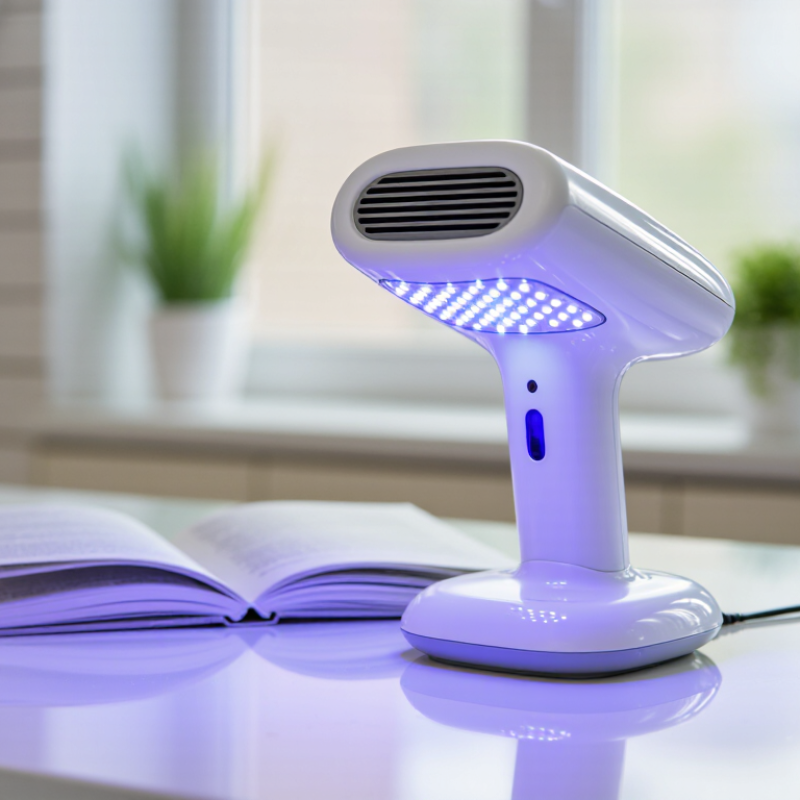
7 Blue Light Therapy Buying Tips for Global Buyers

Define Your Blue Light Therapy Goals and Target Treatment Area

Before comparing blue light therapy devices, define the result you want. Acne management, surface skin support, and general wellness require different expectations. A device for facial breakouts may not suit the scalp, chest, or another treatment area. Be specific.

Write down the target area, treatment frequency, and acceptable time commitment. Measure the area with a ruler. Check whether the light reaches it evenly. A small handheld unit can miss the edges of a broad chest area. A face mask may fit poorly around the nose or jaw. Comfort matters more than impressive specifications.

Review the stated wavelength, irradiance, session time, and safety instructions. These details should be clear and supported by credible technical documentation. Use eye protection when the instructions require it. People taking photosensitizing medicines or managing light-sensitive conditions should seek professional advice before use. My first mistake was focusing on power instead of coverage. More intensity is not automatically better. It may increase discomfort or reduce compliance. Keep a simple log with dates, skin changes, and any irritation. Results can be gradual, inconsistent, or difficult to separate from other skincare changes. That uncertainty deserves attention. A reliable purchase begins with a realistic goal and a treatment area the device can actually cover.

Compare Light Wavelengths, Intensity, and Treatment Coverage

7 Blue Light Therapy Buying Tips for Global Buyers

Start by checking the exact wavelength, not only the phrase “blue light.” Devices commonly use blue bands around 405–470 nanometres, but their intended uses may differ. A narrower wavelength can offer more consistent testing, while a broad range may provide wider exposure. Ask for independent measurement data. Marketing language is not enough.

Compare intensity in milliwatts per square centimetre and dose in joules per square centimetre. Intensity shows power at the skin; dose also includes treatment time. A brighter device is not automatically better. Too much exposure may increase irritation, especially for sensitive skin. Follow the manufacturer’s tested schedule, and confirm whether measurements were taken at the recommended treatment distance. Small details matter.

Treatment coverage affects convenience and consistency. A face panel may expose both cheeks, while a small handheld unit requires repeated positioning. Check the illuminated area, distance markings, timer accuracy, and whether light reaches curved areas evenly. Uneven coverage can create uneven results. Look for eye protection guidance and clear safety instructions. I would also question impressive claims without test reports or clinical context. My own buying mistake would be trusting peak intensity instead of delivered dose. That number can look excellent, yet become weak several centimetres away. Experiences vary, so patch testing and professional advice remain sensible for ongoing skin concerns.

Evaluate Device Safety, Certifications, and User Protection Features

Global buyers should treat safety evidence as a purchasing requirement, not a marketing bonus. Check whether the device follows IEC 62471 photobiological safety testing. This standard evaluates optical radiation risks, including blue-light exposure. The CIE identifies approximately 435–440 nanometres as the most sensitive range for retinal blue-light hazard assessment. Ask for the complete test report, not only a certificate logo.

Protection details matter during real use. Look for automatic session timers, adjustable intensity, thermal cut-off controls, stable eye distance, and shielding that reduces direct glare.

The housing should resist cracking, and materials touching skin should have suitable biocompatibility evidence under ISO 10993. Electrical safety should align with IEC 60601-1 where the product is classified as medical equipment.

A CE mark alone does not prove treatment effectiveness or equal approval in every market.

Evidence can be less impressive than advertisements. A 2023 Cochrane review examined 17 randomized trials involving 619 participants and found little evidence that blue-light filtering improved short-term eye strain; it also noted limited safety data. That review did not test every therapeutic device, so its limits deserve attention.

Request wavelength accuracy, irradiance measurements, maximum exposure time, and post-market incident data. User instructions should warn against staring into LEDs, exceeding recommended sessions, or using the device with photosensitizing medication without medical advice. Even experienced buyers can miss this last detail.

Check Product Quality, Usability, Warranty, and After-Sales Support

Global buyers should inspect blue light therapy products beyond attractive photos and low prices. Ask for independent test reports, electrical safety documentation, and clear output specifications. Check wavelength accuracy, irradiance, treatment area, and heat control. A product listing that says “professional strength” proves little without measurable data. Request photos of the device, cable, buttons, and protective eyewear before ordering. Small details matter.

Usability affects regular treatment. Look for adjustable straps, stable panels, readable controls, and instructions in a language your staff understands. A timer and automatic shutoff can reduce user error. Cleanable surfaces are helpful in clinics and shared settings. Test whether the device feels comfortable after ten minutes, not just during a brief demonstration. My practical mistake was judging comfort from appearance alone.

Review the warranty before payment. Confirm its length, covered components, return conditions, and whether international shipping is included. Ask how repairs are handled when a power supply fails. Reliable after-sales support should provide a reachable email, response times, replacement-part guidance, and troubleshooting documents. Keep invoices, serial numbers, and delivery photos. Some suppliers respond quickly before the sale, then become vague afterward. That warning deserves attention. Do not assume local repair shops can safely service imported equipment. A written support process is stronger than a friendly promise.

Calculate Total Costs, Shipping Requirements, and Import Considerations

7 Blue Light Therapy Buying Tips for Global Buyers

Calculate landed cost before comparing unit prices. Add the device, packaging, inspection, insurance, freight, customs duty, broker fees, and local taxes. The World Bank’s Logistics Performance Index 2023 covers 139 economies and highlights customs efficiency as a major logistics factor. Delays can therefore become a real cost. Ask for a destination-specific quotation. “Free shipping” rarely means free delivery. Numbers matter.

Shipping requirements depend on the product design. Confirm voltage, plug type, carton dimensions, and gross weight before payment. If the device contains a lithium battery, request the UN 38.3 test summary and applicable air-cargo documents. IATA’s 2024 Air Cargo Market Analysis reported an 11.3% annual increase in global air-cargo demand. Capacity may improve, but dangerous-goods rules still apply. A small battery can create a large delay. I learned this the hard way.

Import review should match the product’s intended claims. A cosmetic light may face different requirements from a device claiming medical treatment. Check the destination authority’s classification, labeling rules, language requirements, and registration process. Request an accurate commercial invoice, packing list, certificate of origin, serial-number list, and electrical safety reports. IEC 62471 can support photobiological safety assessment, while IEC 60601 standards may apply to medical electrical equipment. Do not assume one certificate satisfies every market. The International Trade Centre’s Trade Map can help verify tariff codes, but final classification belongs with a qualified customs professional. Mistakes happen. Leave a contingency reserve of 10–15% for exchange-rate changes, inspections, and storage.