How to Choose the Best Water Flow Control Valve for Your Needs?
Choosing the right water flow control valve is critical for various applications. According to a report by MarketsandMarkets, the global valve market is projected to reach $101 billion by 2025, reflecting the growth in industries relying on precise fluid control. Inadequate valve selection can lead to inefficiencies and increased costs.
Every application has distinct requirements. Different environments demand various valve types and materials. A poorly chosen water flow control valve may cause leaks or operational failures. Data from Valve Manufacturers Association indicate that a significant percentage of industry complaints stem from improper valve choice.
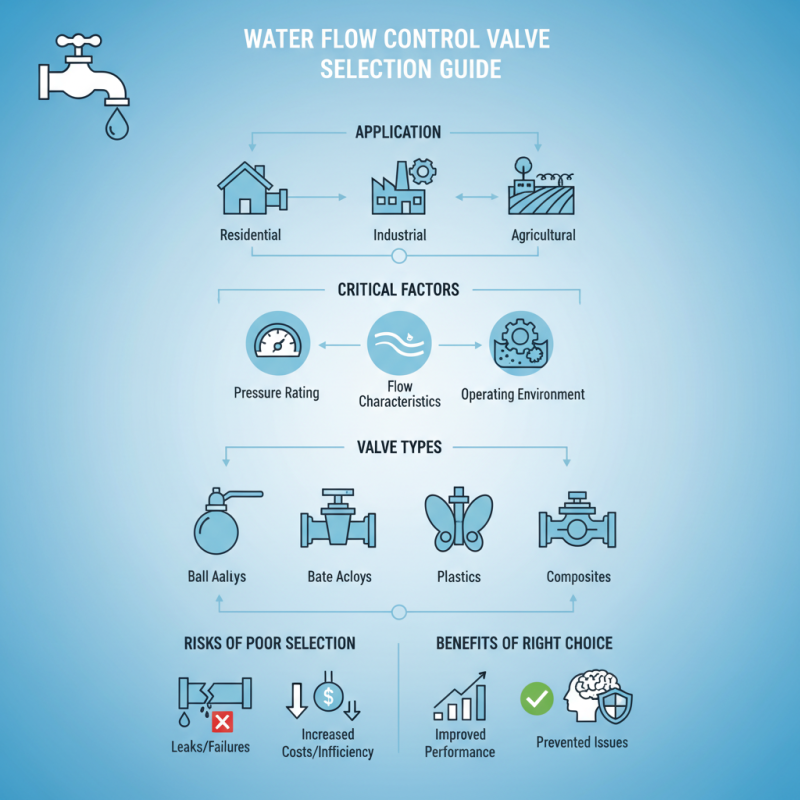
Considerations include pressure ratings, flow characteristics, and operating environment. The right valve ensures effective water management, improving overall system performance. Many users overlook critical factors during selection, leading to dissatisfaction. Investing time in research can prevent future headaches and elevate operational efficiency.
Understanding Different Types of Water Flow Control Valves and Their Applications
When selecting a water flow control valve, understanding the various types is essential. There are several common types: globe valves, gate valves, ball valves, and butterfly valves. Each valve type has unique functionalities. For instance, globe valves provide excellent throttling capabilities, making them ideal for regulating flow. In contrast, gate valves are better suited for fully opening or closing flow.
Tips: Consider what pressure and temperature range your application requires. Always check the valve material for compatibility with your fluid.
Ball valves allow for quick shut-off capabilities, making them popular in residential applications. Butterfly valves are efficient for large pipelines and offer lightweight solutions with minimal resistance. It’s crucial to consider the installation space available. Some spaces might not fit a larger valve. This could cause installation issues later.
Tips: Measure the space accurately before purchase. Don’t forget to account for pipe fittings. Reflect on the flow direction too; improper installation can lead to failure.
Water Flow Control Valve Types and Their Applications
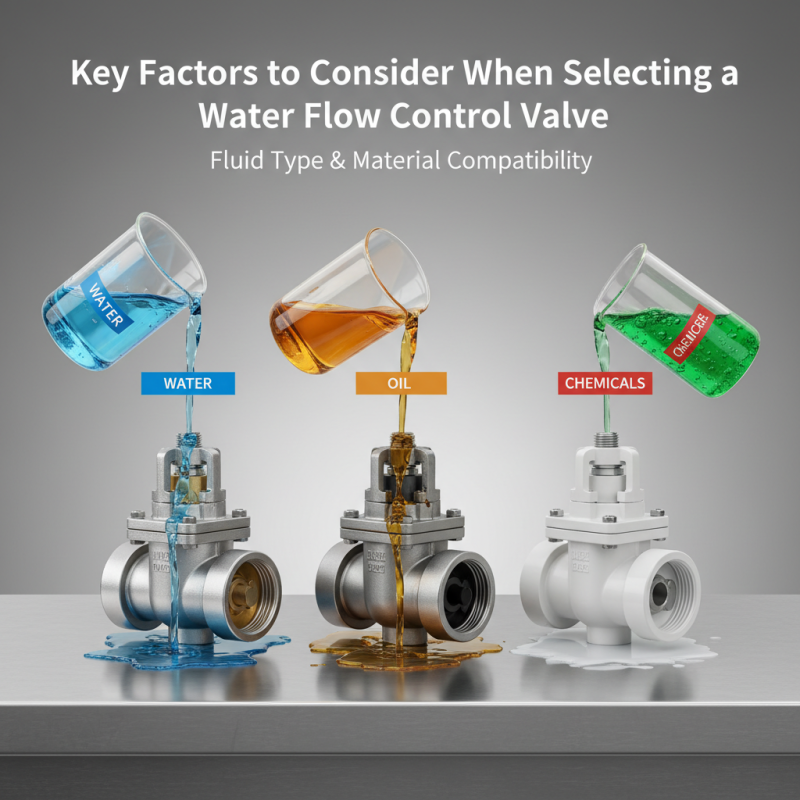
Key Factors to Consider When Selecting a Water Flow Control Valve
When selecting a water flow control valve, a few key factors deserve attention. First, consider the fluid type. Different fluids, such as water, oil, or chemicals, require valves made from specific materials. Compatibility is essential. The wrong material can lead to leaks or valve failure.
Next, evaluate the valve size. A valve that's too small may restrict flow, while one that's too large can cause inefficiencies. Measure the pipe diameter before making a choice. Another crucial aspect is the pressure rating. Valves must withstand the system's pressure without failing. Failing to choose the correct rating can lead to serious problems.
Lastly, think about the operating environment. Will the valve be exposed to extreme temperatures or corrosive conditions? These factors will influence your choice. Don't rush the decision-making process. Mistakes can lead to costly repairs and maintenance. Each factor is important, so take the time to weigh your options carefully. A well-chosen valve can optimize your flow control efficiently.
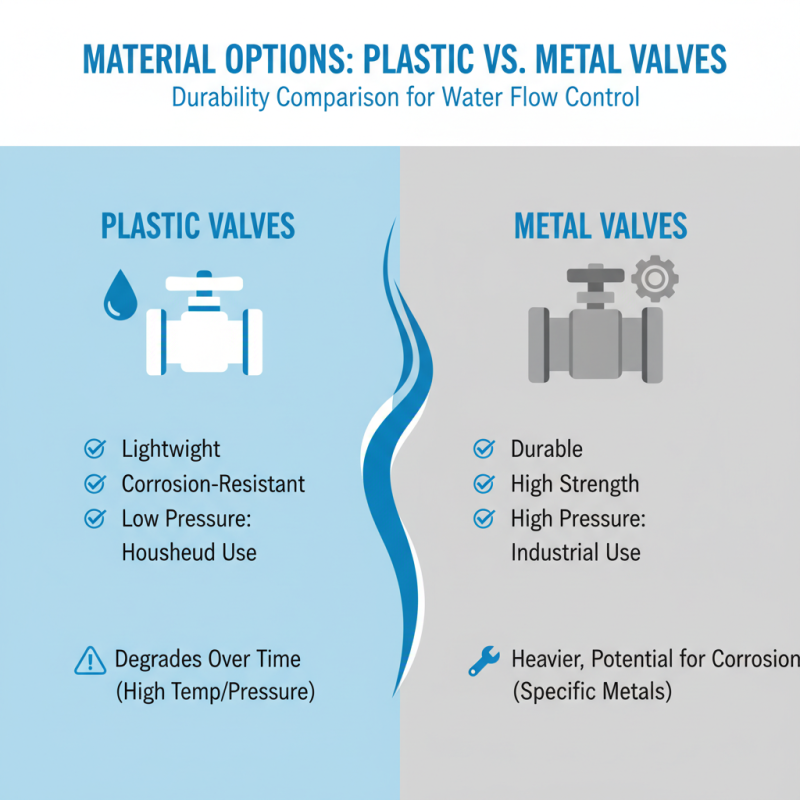
Evaluating Material Options: Plastic vs. Metal Valves for Durability
When selecting a water flow control valve, material choice is crucial. Plastic valves are lightweight and resistant to corrosion, making them a popular option. They work well in household applications, where pressure is relatively low. However, plastic can degrade over time, especially under high temperatures.
On the other hand, metal valves provide added strength and durability. They can withstand higher pressures and extreme conditions. Stainless steel, for example, is both sturdy and resistant to rust. Yet, metal options are heavier and generally more expensive. If budget is a concern, this might be a point of reflection.
Consider your specific needs carefully. What pressures will your valve face? Are environmental factors like temperature a concern? Sometimes, the decision isn't clear-cut. Balance your requirements against potential wear over time. Evaluate if the durability of metal justifies the cost or if plastic suffices for your setting. Choosing wisely can lead to better long-term performance. Make your selection based on realistic expectations and specific usage scenarios.
Flow Rate and Pressure Ratings: How to Match Your Valve to System Requirements
Choosing the right water flow control valve involves considering key factors. Flow rate and pressure ratings are critical to matching your valve to existing system requirements. Each valve is designed to operate within specific limits. If you exceed these limits, efficiency drops. System failures may also occur, causing delays and expenses.
When selecting a valve, first, assess your system's flow rate. This measure indicates how much fluid flows through the system. Verify the maximum pressure your system can handle. Pressure ratings are equally important. Using a valve with too high or low ratings may cause malfunction.
**Tips:** Always consult technical specifications. They provide essential information for effective selection. Use pressure gauges and flow meters for accurate measurements. Consider potential future changes in your system. Will you need higher capacity later? Balancing current needs with future growth is vital. Keep in mind, overlooking these details can lead to costly mistakes. Be cautious, and ensure you have accurate data before making a purchase.
How to Choose the Best Water Flow Control Valve for Your Needs?
| Valve Type |
Flow Rate (GPM) |
Pressure Rating (PSI) |
Material |
Application |
| Ball Valve |
10 - 100 |
150 |
Brass |
Water Supply |
| Gate Valve |
20 - 200 |
300 |
Stainless Steel |
Drainage |
| Globe Valve |
5 - 50 |
200 |
PVC |
Irrigation |
| Check Valve |
2 - 20 |
150 |
Brass |
Prevent Backflow |
| Pressure Relief Valve |
- |
50 - 150 |
Stainless Steel |
Safety Systems |
Maintenance and Longevity: Ensuring Optimal Performance of Your Valve
Maintaining a water flow control valve is crucial for its longevity and optimal performance. Regular checks can prevent leaks and keep the system running smoothly. Look for signs of wear, like discoloration or buildup around the valve. These indicators often signal that maintenance is needed.
Tips: Clean the valve regularly. This simple step can enhance its efficiency. If you notice any malfunction, address it immediately. Delaying repairs can lead to bigger issues later.
Always keep the valve lubricated. Use the recommended lubricant to ensure seamless operation. Dry or corroded valves tend to fail earlier. It’s essential to take a moment to understand the maintenance needs of your specific valve type.
Remember to check the pressure settings periodically. Too high or too low can damage the valve over time. A little attention can go a long way in extending the life of your flow control valve. Your efforts matter, even if they seem small.