
Blog
How to Choose the Best Foldable Sunroom from China?
Choosing the best Foldable Sunroom from China requires more than comparing attractive photos and low prices. Buyers must examine materials, engineering details, supplier experience, and after-sales support. A reliable supplier should explain the frame alloy, fabric composition, panel thickness, waterproofing method, wind resistance, and folding mechanism clearly. Vague answers deserve caution.
In practical use, small details matter. Check whether the folded unit fits your storage area. Ask for installation drawings, packed dimensions, product videos, and recent project references. A sunroom placed beside a garden may face rain, strong sunlight, dust, and repeated opening. Its hinges should move smoothly, while seals should remain flexible after temperature changes. Independent inspection reports can add confidence, but documents should be verified rather than accepted blindly.
The “best” model depends on your climate, space, budget, and intended use. A lightweight design may suit seasonal gatherings, while a reinforced structure may perform better in exposed locations. I would not trust a supplier who promises perfect performance without discussing local conditions. That is unrealistic. Confirm production standards, customization limits, warranty terms, replacement parts, and communication responsibilities before payment. Factory visits, video inspections, or third-party quality checks can reveal details that brochures hide. Even careful research has limits. Samples may perform well while large orders require closer control. For this reason, compare several manufacturers and record every specification in writing. A thoughtful decision may take longer, but it reduces costly surprises and creates a safer, more comfortable outdoor room.
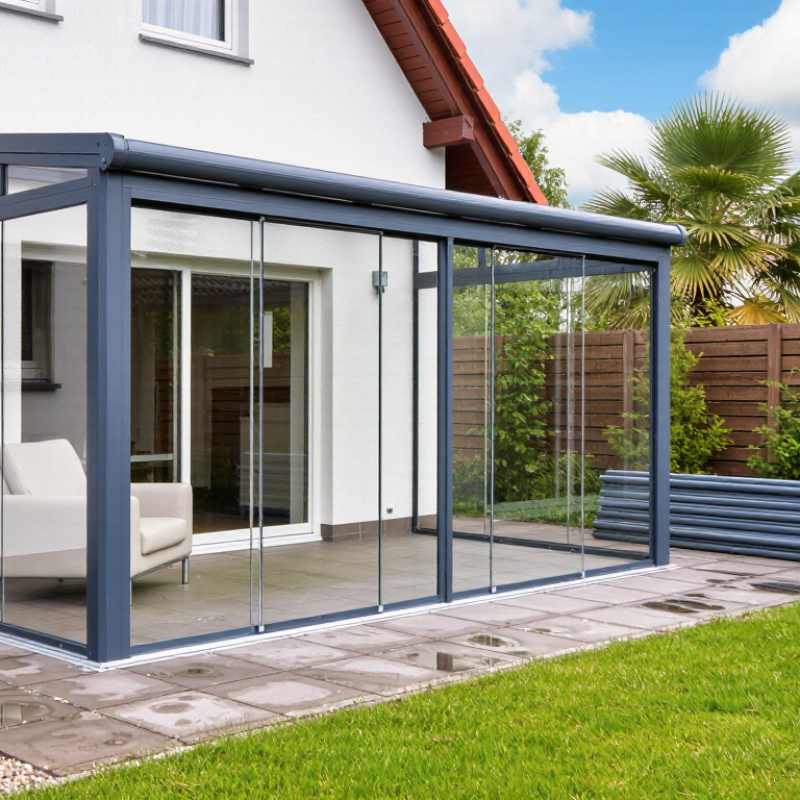
Define Your Foldable Sunroom’s Space, Climate, and Intended Use
Choosing the best foldable sunroom from China begins with your space, climate, and intended use. Measure the opening, floor area, roof height, and drainage path. Measure twice. A compact balcony may need a light folding system, while a garden room requires stronger framing and safer anchoring. Leave clearance for doors, ventilation, and snow or rain runoff. My planning mistake would be treating every square metre as usable space.
Climate determines more than fabric colour. The World Meteorological Organization reported that 2023 was approximately 1.45°C above the pre-industrial average. Hotter conditions increase the need for shading, airflow, and UV-resistant roof materials. In coastal areas, salt-resistant hardware deserves attention. In windy regions, request tested wind-load data and installation limits. Ask the supplier for test reports, material specifications, and replacement-part availability. Photos are not evidence.
Intended use sets the performance target. For occasional dining, prioritize quick folding, insect screens, and easy cleaning. For a home office, check glare control, ventilation, sealing, and electrical planning. The International Energy Agency reports that buildings consume about 30% of global final energy, so passive shading can support lower cooling demand. However, a sunroom is not automatically energy efficient. Inspect gasket quality, panel joints, and thermal bridges before ordering. A detailed site drawing is more reliable than a showroom promise.
How to Choose the Best Foldable Sunroom from China? - Define Your Foldable Sunroom’s Space, Climate, and Intended Use
| Selection Dimension | Typical Requirement | Recommended Foldable Sunroom Specification | Best-Fit Application | Important Checks Before Ordering |
|---|---|---|---|---|
| Available Floor Space | Small balcony or compact terrace, approximately 4–8 m² | Depth of 1.5–2.0 m; lightweight folding panels; inward or stacking operation; minimum clear passage of about 800–900 mm | Reading corner, small seating area, balcony enclosure | Confirm balcony load capacity, opening clearance, drainage position, and local building restrictions |
| Medium Outdoor Area | Approximately 8–20 m² on a patio, deck, or garden terrace | Depth of 2.0–3.5 m; multiple folding modules; roof slope for rainwater runoff; integrated gutter and downspout | Dining area, home office, family lounge, seasonal entertaining | Measure the finished foundation, verify anchor locations, and allow space for fully folded panels |
| Large Usable Area | More than 20 m² or a multi-zone outdoor extension | Modular spans with reinforced posts, independent roof drainage, zoning for ventilation and shading, and engineered connections | Restaurant terrace, event space, large family room, commercial outdoor area | Request structural calculations for the complete assembled system, including foundations and connection details |
| Hot and Sunny Climate | High solar exposure, strong summer heat, and frequent glare | Low-emissivity or solar-control glazing, external shading, roof ventilation, UV-resistant seals, and light-colored roof finishes | Daytime lounge, plant area, dining space used mainly in spring and autumn | Check solar heat-gain performance, shading compatibility, ventilation area, and glass safety classification |
| Cold or Snowy Climate | Low winter temperatures, frost, and possible snow accumulation | Thermally improved aluminum profiles, insulated roof panels or double glazing, weather-resistant gaskets, and a project-specific snow-load design | Three-season room or four-season extension when properly engineered | Verify the certified snow-load value for the installation location; do not rely on a generic rating |
| Coastal or Humid Climate | Salt spray, high humidity, wind-driven rain, and corrosion risk | Powder-coated or anodized aluminum, stainless or corrosion-resistant fasteners, EPDM-type seals, sloped sill drainage, and sealed joints | Seaside balcony, waterfront patio, humid garden room | Ask for coating specifications, corrosion-resistance testing, drainage details, and a maintenance schedule |
| Wind-Exposed Location | Open rooftop, corner building, exposed terrace, or storm-prone region | Reinforced frames, positive locking hardware, engineered anchoring, laminated safety glass where appropriate, and a location-specific wind design | Rooftop terrace, high-rise balcony, open garden pavilion | Confirm design wind speed, exposure category, anchor pull-out strength, and whether the structure must be closed during severe weather |
| Three-Season Use | Use during mild weather with occasional rain and wind protection | Single or double glazing, large operable panels, adjustable screens, roof overhang, and simple manual folding hardware | Seasonal dining, outdoor relaxation, garden viewing | Prioritize ventilation, waterproof thresholds, smooth operation, and easy cleaning access |
| Four-Season Use | Regular occupancy throughout the year with heating or cooling | Thermally broken profiles, insulated roof, double glazing, airtight weather seals, controlled ventilation, and professionally designed heating and cooling | Home office, dining room, guest area, year-round living space | Check thermal calculations, condensation control, energy performance, electrical routing, and local permit requirements |
| Frequent Opening and Closing | Panels will be operated daily or several times per week | Low-friction rollers or hinges, accessible adjustment points, corrosion-resistant hardware, and replaceable seals | Flexible dining area, hospitality terrace, entertainment space | Request cycle testing, operating-force information, spare hardware availability, and warranty terms |
| Privacy and Noise Control | Urban setting, neighboring buildings, traffic noise, or close property lines | Translucent or frosted sections, acoustic laminated glass, privacy screens, and carefully sealed frame joints | Urban balcony, bedroom extension, quiet work area | Confirm visible-light transmission, acoustic performance, cleaning access, and compliance with local appearance rules |
| Low-Maintenance Requirement | Limited time for cleaning, adjustment, and seasonal servicing | Durable coated aluminum, accessible drainage channels, removable screens, stainless or treated hardware, and replaceable weather seals | Rental properties, commercial premises, holiday homes, busy households | Obtain the cleaning method, inspection interval, replacement-part list, and after-sales service process in writing |
Note: Wind, snow, drainage, glass, and foundation requirements must be verified against the applicable building codes and the actual installation site. Generic product ratings should not replace a project-specific structural assessment.