
Blog

How to Choose the Best Golf Range Mats?

Choosing the right Golf Range Mats can change how practice feels, sounds, and supports your swing. A poor mat may feel hard underfoot, twist during impact, or hide important contact errors. A well-designed mat offers realistic resistance, stable footing, and enough shock absorption for repeated practice. These details matter during a short session and become more important after several weeks of use.

A reliable choice begins with practical testing, not attractive product photos. Compare pile height, base thickness, fiber density, drainage, and overall weight. Notice how the mat reacts when an iron strikes slightly behind the ball. Does the club stop sharply, or slide naturally across the surface? Golf professionals, range managers, and experienced players often notice these differences quickly. Their feedback can support manufacturer specifications, but it should not replace hands-on evaluation.

Not every mat suits every golfer. Some players prefer a firm surface for precise feedback, while others need softer cushioning for older joints. Indoor users may prioritize low movement and easy storage. Outdoor facilities may need weather resistance and fast drainage. Small details matter.

I have found that even premium mats can disappoint when installed on uneven ground. That mistake is easy to overlook. This guide examines construction, comfort, durability, maintenance, and value before recommending a final option. It also considers the compromises behind each design, because the “best” mat depends on where, how, and how often you practice.
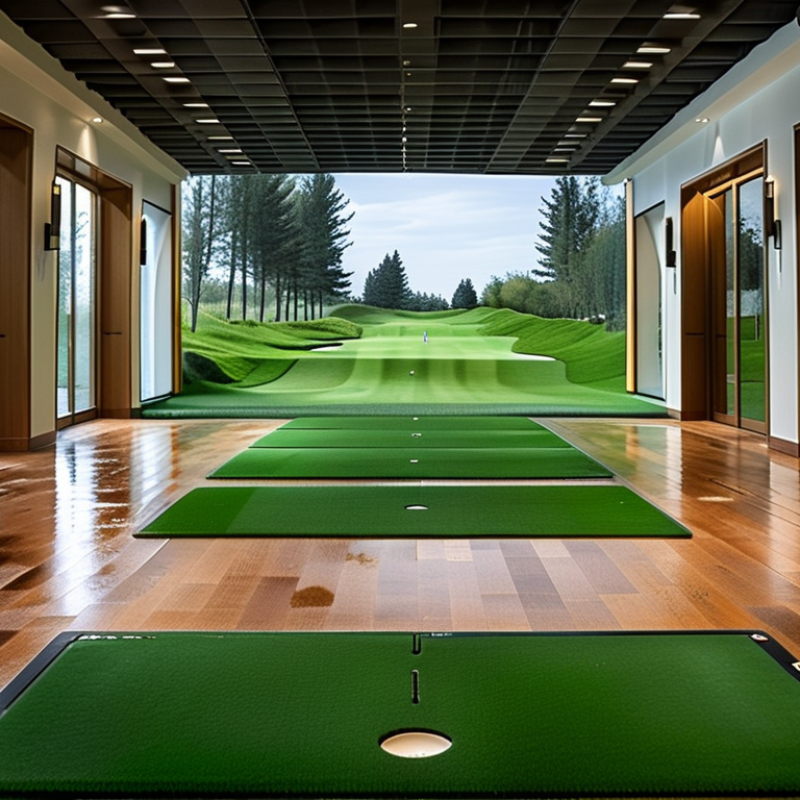
How to Choose the Best Golf Range Mats?

Understanding Golf Range Mat Types and Their Intended Uses

How to Choose the Best Golf Range Mats?

Understanding Golf Range Mat Types and Their Intended Uses

Golf range mats are not interchangeable. Each type supports a different practice purpose. Thin carpet-style mats suit short sessions and light indoor use. They offer basic footing but limited shock absorption. Heavy-duty synthetic turf mats are better for frequent outdoor practice. Their dense surface handles repeated swings and changing weather more effectively.

Hitting mats with built-in tee holes support drivers, fairway woods, and irons. Some include replaceable hitting sections, which can extend service life. Portable mats work well for home practice or temporary training areas. However, lightweight models may shift during a powerful swing. A rubber-backed stance mat can improve stability, especially on concrete. It still cannot fully imitate natural turf.

Pay attention to pile height, base thickness, drainage, and joint design. A thicker base usually reduces harsh feedback through the wrists and elbows. Yet excessive softness can hide poor contact. Check whether the mat allows both wooden and rubber tees. That detail matters for realistic practice. Place the mat on a level surface, then test your stance before buying several units. No mat does everything well. Even an expensive model may feel wrong if its surface conflicts with your swing or local climate. Regularly inspect curling edges, worn turf, and trapped moisture. Small defects can change ball contact and create an unsafe footing.

Evaluating Turf Quality, Shock Absorption, and Ball Response

How to Choose the Best Golf Range Mats?

A quality range mat should resemble firm fairway turf, not a thin carpet. Dense fibers should stand upright after repeated swings. Check the base for movement and exposed seams. A stable mat keeps your stance consistent during practice. I once tested a soft mat that felt comfortable at first. After several sessions, it compressed and changed my swing feedback. That mistake taught me to inspect recovery, not just appearance.

Shock absorption protects your joints and improves training comfort. Press your palm into the surface, then compare it with a firmer section. Excessive softness may hide poor contact. A balanced mat should cushion impact without making your feet sink. Look for layered construction and enough thickness to reduce vibration. Still, no mat perfectly copies natural ground. Your knees may respond differently outdoors.

Ball response reveals another important detail. Use the same club and swing speed on several shots. Watch launch height, bounce, and roll after impact. A reliable mat should produce predictable contact from different lies. Some surfaces create unusually clean shots, which can build false confidence. Tips: Test the mat with irons and woods. Take slow practice swings first. Check turf recovery after ten minutes. Rotate the hitting area regularly to prevent uneven wear. Ask experienced instructors about long-term durability, but trust your own physical feedback too.

How to Choose the Best Golf Range Mats?

Comparative benchmark scores for common golf mat constructions, evaluated by turf quality, shock absorption, and ball response. Scores use a 0–100 reference scale; higher values indicate stronger overall performance.

Nylon fibers generally provide strong resilience and consistent ball interaction, while rubber or foam bases improve impact absorption. A balanced construction should offer durable turf, reduced vibration, and a stable ball response without feeling excessively soft.

Choosing the Right Mat Size, Thickness, and Surface Design

How to Choose the Best Golf Range Mats?

Mat size controls your stance, swing path, and confidence. For irons, a 4-by-5-foot mat usually supports both feet and a full club length. A 5-by-5-foot option gives more room for alignment errors. Choose a longer mat if you practice drivers or fairway woods. The R&A’s Golf Participation Report 2024 recorded 66.6 million golfers worldwide, showing why range surfaces must support varied practice habits. That figure does not tell us every golfer needs a larger mat.

Thickness affects comfort and joint protection. A dense mat around 15–25 millimeters thick can reduce harsh feedback from firm concrete bases. Thicker is not always better. Excessive softness may hide poor contact and change your balance. The Golf Facility Market Report 2024 identifies durability and golfer comfort as major facility concerns, but individual testing still matters. Stand on the mat before buying it.

Surface design should match your practice goals. Short, dense turf suits controlled iron shots and clearer strike feedback. Longer fibers feel more forgiving, yet they can encourage a steep swing or mask fat contact. A replaceable hitting strip may extend service life in busy practice areas. I would avoid trusting one specification alone. My own preference can change after ten minutes of repeated swings. Check fiber direction, base stability, drainage, and tee compatibility. Small details matter.

How to Choose the Best Golf Range Mats? - Choosing the Right Mat Size, Thickness, and Surface Design

Mat Category Typical Size Typical Thickness Surface Design Recommended Use Main Advantages Important Considerations
Compact Practice Mat 3 × 5 ft
(0.9 × 1.5 m)
0.5–1 in
(13–25 mm)
Short synthetic turf with a single hitting area Small indoor spaces, balconies, and occasional practice Lightweight, easy to store, and generally the lowest-cost option Limited stance area; may move on smooth floors without a non-slip base
Standard Home Practice Mat 4 × 5 ft
(1.2 × 1.5 m)
1–1.5 in
(25–38 mm)
Medium-pile turf with a defined hitting strip General home use with irons, wedges, and short clubs Balanced size, comfort, portability, and practice versatility Needs a level, firm surface; may not provide enough room for a full driver stance
Large Full-Stance Mat 5 × 5 ft
(1.5 × 1.5 m)
1–2 in
(25–50 mm)
Longer turf with separate ball and stance zones Indoor simulators, garages, patios, and complete club practice Provides room for normal stance width and a wider range of swing positions Heavier and less convenient to move; requires more storage space
Commercial Training Mat 5 × 10 ft or larger
(1.5 × 3 m or larger)
1.5–2 in
(38–50 mm)
Dense turf, multiple hitting positions, and replaceable hitting strips High-frequency practice, teaching areas, and shared facilities Durable layout with several hitting locations to distribute wear Higher weight and cost; installation usually requires a dedicated area
Fairway-Style Mat 4 × 5 to 5 × 5 ft
(1.2 × 1.5 to 1.5 × 1.5 m)
0.75–1.5 in
(19–38 mm)
Short, dense fibers designed to imitate closely mown fairway turf Clean ball striking and practice with irons or fairway woods Low-friction surface gives a consistent ball lie Does not reproduce the resistance of deep rough or natural soil
Rough-Style Mat 4 × 5 to 5 × 5 ft
(1.2 × 1.5 to 1.5 × 1.5 m)
1–2 in
(25–50 mm)
Longer, softer fibers that partially surround the ball Practicing shots from lies that are less clean than fairway conditions Adds variety and helps practice club interaction from longer turf Can hide inconsistent contact and may feel less stable underfoot
Hybrid Fairway and Rough Mat 5 × 5 ft
(1.5 × 1.5 m)
1–2 in
(25–50 mm)
Two contrasting turf zones with different pile heights Players who want varied lies without buying multiple mats Supports both clean-contact and rough-lie practice in one setup The transition between surfaces may reduce usable hitting space
Portable Roll-Up Mat 2 × 4 to 4 × 6 ft
(0.6 × 1.2 to 1.2 × 1.8 m)
0.25–0.75 in
(6–19 mm)
Flexible low-pile turf, often with a rubber or foam backing Travel, temporary outdoor practice, and quick setup Easy to transport and store in a small space Thin backing may provide less shock absorption and can curl if stored improperly
Shock-Absorbing Premium Mat 5 × 5 ft or larger
(1.5 × 1.5 m or larger)
1.5–2.5 in
(38–64 mm)
Dense turf over a multi-layer foam or rubber shock-absorbing base Frequent practice, faster swing speeds, and long training sessions Improved underfoot stability and reduced impact transfer compared with thin mats More expensive and heavier; a firm, level foundation is still necessary
Selection Guide: Choose a mat at least 4 × 5 ft for a comfortable home setup, approximately 1–2 in thick for regular practice, and a surface design that matches the lies you want to rehearse. A shock-absorbing base and a non-slip underside are especially useful for frequent sessions.

Comparing Durability, Weather Resistance, and Maintenance Needs

How to Choose the Best Golf Range Mats?

Choosing a golf range mat starts with its working environment. Durability matters because repeated swings compress fibers and stress the hitting surface. Look for dense synthetic turf, a stable rubber base, and reinforced edges. A thick mat can reduce club shock, but thickness alone does not guarantee long service. I once chose a soft, heavy mat that felt excellent at first. After several weeks, the hitting area became uneven. That mistake taught me to inspect fiber recovery, not just comfort.

Weather resistance becomes essential for outdoor practice. Sunlight can weaken turf fibers, while rain may soften the base or encourage unpleasant odors. Choose a mat with UV-resistant materials and drainage holes underneath. The surface should dry reasonably quickly after a wet session. In cold regions, avoid leaving water trapped inside the base. Freezing can cause cracking. However, weather ratings are not always tested under identical conditions. Check the seller’s technical information carefully, and remain skeptical of vague claims.

Maintenance should fit your actual routine. Brush away loose grass and soil after practice. Rinse the mat occasionally, then let it dry fully before storage. Rotate the mat when possible, especially if you practice from one stance repeatedly. This spreads wear across the surface. Keep the base flat and avoid folding it sharply. A small maintenance habit matters. Still, no mat lasts forever. Heavy use, poor drainage, and neglected cleaning can shorten its life faster than expected.

Matching Features and Cost to Your Practice Environment

Choosing the best golf range mat depends on where and how you practice. A home garage needs different features from an outdoor hitting station. Measure the available space first. A narrow mat may fit indoors, but it can limit your stance and swing path. For outdoor use, choose a heavier base that stays stable on concrete, soil, or artificial turf.

Shock absorption matters when you practice often. A dense rubber layer can reduce stress on your wrists, elbows, and knees. However, very soft mats may feel unnatural and affect your contact feedback. I once practiced on a thin mat that looked affordable, but my wrists felt tired after several sessions. The low price was not the real saving. Look for realistic turf fibers, secure tee openings, and enough surface area for both irons and woods.

Your local conditions should guide the final choice. Wet climates require drainage and materials that dry quickly. Hot, sunny locations need fade-resistant surfaces. For occasional practice, a basic mat may meet your needs. Frequent golfers may benefit from replaceable hitting sections, stronger backing, and better shock control. Compare the full cost, including storage, maintenance, and possible replacement parts. Some mats feel excellent at first, yet compress quickly under repeated use. That detail is easy to overlook. A practical test is valuable: stand on the mat, make several swings, and notice whether your feet remain level and your joints feel comfortable.