
Blog
10 Control Valves Buying Tips for Global Buyers
Buying control valves across international markets involves more than comparing prices and connection sizes. A valve may look suitable on a specification sheet, yet fail when exposed to abrasive slurry, rapid pressure changes, or outdoor corrosion. Global buyers must connect process conditions, supplier capability, documentation, and long-term maintenance before approving an order.
The right decision begins with accurate operating data. Confirm the medium, temperature, pressure range, flow rate, shutoff requirement, and control signal. A chemical plant may need a corrosion-resistant alloy, while a water facility may prioritize easy servicing and reliable availability. Check body materials, trim design, actuator sizing, positioner compatibility, and fail-safe action. Small details matter.
Ask for test certificates, material records, calibration reports, and traceable quality documents. An experienced supplier should explain these records clearly, not hide behind technical language. Factory acceptance testing can reveal leakage, unstable movement, or actuator problems before shipment. That can prevent expensive installation delays.
Still, no buying checklist removes every risk. Process data can be incomplete. Supplier claims may also require verification. Request references from comparable projects and inspect production evidence where practical. A low purchase price may become costly after customs handling, spare parts, training, and downtime are included. Think beyond delivery.
These ten buying tips help global buyers compare control valves with greater confidence. They encourage careful questions, realistic specifications, and decisions supported by evidence rather than assumptions. Mistakes happen. The goal is to identify them early.
Understanding Control Valve Types and Their Industrial Applications
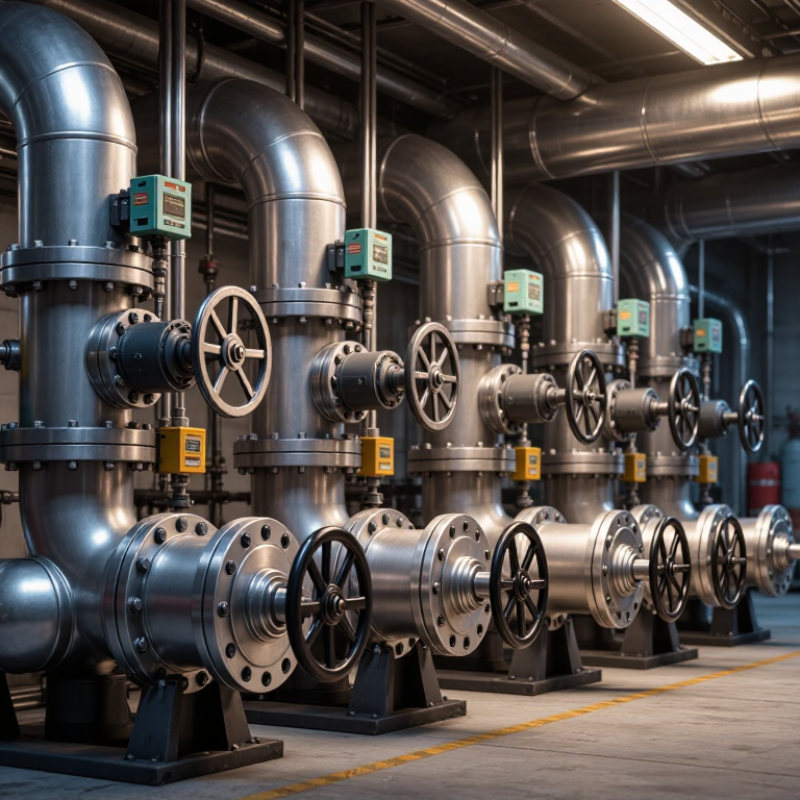
Control valves buying decisions improve when valve type matches the process, not just the pipe size. Globe valves offer precise throttling for steam, water, and chemical dosing. Butterfly valves suit large pipelines because they are compact and lightweight. Ball valves provide fast, reliable control, especially with clean liquids and gases. Diaphragm valves handle corrosive or contaminated media while protecting internal mechanisms.
Check the fluid, pressure, temperature, and required flow range before comparing quotations. Confirm the valve’s flow coefficient, connection size, and pressure rating. Select body and trim materials that resist corrosion. Review actuator torque carefully, especially for larger butterfly valves. Specify the fail-open or fail-closed position for safe shutdowns. Noise and cavitation also deserve attention. A valve can appear suitable on paper but perform poorly near its minimum opening.
Consider control accuracy, response time, maintenance access, spare parts, and documentation. Ask for tested performance data, not only catalog claims. In a water treatment line, a diaphragm valve may outlast a cheaper metal design. In a high-temperature steam line, incorrect packing can cause early leakage. I have seen teams focus on purchase price and overlook actuator air consumption. That mistake becomes expensive during years of operation. A clean specification helps, but site conditions can still surprise you. Leave room for engineering review.
10 Control Valves Buying Tips for Global Buyers – Understanding Control Valve Types and Their Industrial Applications
| No. | Buying Tip | Recommended Control Valve Type | Typical Industrial Applications | Key Selection Data | Important Verification Point |
|---|---|---|---|---|---|
| 1 | Match the valve to the process fluid. Confirm whether the medium is clean, corrosive, abrasive, viscous, or carrying suspended solids. | Globe valve for general throttling; lined or corrosion-resistant designs for aggressive fluids. | Steam, cooling water, chemical dosing, process water, and liquid chemical services. | Fluid composition, concentration, temperature, viscosity, solids content, and required flow rate. | Check body, trim, seat, and gasket materials for chemical compatibility and corrosion resistance. |
| 2 | Select the correct valve characteristic. The relationship between valve travel and flow affects control stability. | Equal-percentage, linear, or quick-opening trim. | Equal-percentage trim is common for pressure control and heat-transfer duties; linear trim suits level or flow control with relatively constant pressure drop. | Process gain, expected pressure drop, turndown ratio, and control-loop response. | Do not choose a characteristic only from the pipe size; it must match the control-loop requirements. |
| 3 | Size the valve using real operating conditions. Avoid selecting a valve solely by matching the line diameter. | Globe, rotary plug, or butterfly valve sized by flow coefficient. | Flow, pressure, temperature, and level control in power, water, chemical, and general process plants. | Minimum, normal, and maximum flow; inlet and outlet pressure; fluid density; vapor pressure; and temperature. | Calculate the required Cv or Kv and check for excessive velocity, flashing, cavitation, and noise. |
| 4 | Choose a valve design suitable for the pressure drop. High differential pressure can create vibration, noise, and trim damage. | Multi-stage or anti-cavitation globe trim; eccentric rotary plug for demanding services. | High-pressure steam, boiler feedwater, hydrocarbon processing, and pressure-reducing stations. | Maximum differential pressure, shutoff pressure, fluid temperature, and allowable acoustic level. | Request a cavitation and noise assessment when liquid pressure may fall below vapor pressure or gas velocity is high. |
| 5 | Compare linear and rotary valve construction. Consider space, torque, maintenance, and flow capacity. | Globe valve for precise throttling; butterfly or ball valve for compact, high-capacity service. | Globe valves: steam and precise process control. Butterfly valves: HVAC, water, and large-diameter utility lines. Ball valves: gas and clean liquid control. | Nominal size, available installation space, required rangeability, torque, and allowable leakage. | Rotary valves are often more compact, while globe valves can provide strong throttling performance at higher pressure drops. |
| 6 | Define the required shutoff class. Throttling performance and tight isolation are related but different requirements. | Globe or characterized rotary valve for control; soft- or metal-seated designs selected according to temperature and leakage limits. | Steam, fuel gas, water, chemical processing, and critical utility systems. | Specified leakage class, operating temperature, pressure rating, seat material, and required isolation frequency. | A control valve should not automatically be treated as a substitute for a dedicated isolation valve unless the design permits it. |
| 7 | Specify the actuator and fail position. The valve must move to a safe condition when power or instrument air is lost. | Pneumatic diaphragm or piston actuator; electric or hydraulic actuator where required. | Process shutdown, steam control, fuel systems, water treatment, and hazardous-area installations. | Required thrust or torque, available air pressure, stroke time, fail-open or fail-closed position, and duty cycle. | Define the failure mode from a documented process-safety assessment, not from actuator preference alone. |
| 8 | Check the control signal and feedback system. Ensure compatibility with the plant automation architecture. | Actuated control valve with positioner, travel feedback, and optional diagnostic functions. | Distributed control systems, programmable logic control systems, remote pumping stations, and automated process skids. | Input signal, communication protocol, position feedback, response time, air quality, and hazardous-area classification. | Common analog control signals include 4–20 mA; verify the required communication and certification before ordering. |
| 9 | Confirm pressure-temperature ratings and standards. Global projects often require multiple codes and certifications. | Valve construction selected according to the applicable pressure class, temperature range, and service standard. | Refineries, chemical plants, power generation, municipal water systems, food processing, and offshore facilities. | Nominal pressure rating, design temperature, end connection, face-to-face dimension, testing requirements, and material certificates. | Verify applicable regional requirements, including pressure-equipment, electrical, emissions, fire-safe, and hazardous-area rules. |
| 10 | Evaluate lifecycle cost and maintainability. Purchase price is only one part of the total cost of ownership. | Maintainable globe, butterfly, ball, or plug valve configuration with replaceable trim and accessible actuator components. | Continuous-process plants, utility systems, water infrastructure, and facilities with limited maintenance access. | Expected service life, spare-parts availability, inspection interval, energy consumption, downtime cost, and local service capability. | Request manuals, dimensional drawings, material lists, test records, spare-parts recommendations, and maintenance procedures. |
Related Posts
-
2026 How to Choose Control Valves for Optimal Performance?
-

Exploring the Future of Control Valves in Sustainable Industrial Applications
-
How to Choose the Right Control Valves for Your Needs?
-

2026 Top Pneumatic Control Valve Innovations and Trends to Watch
-
Top Motorized Valves for 2025 Which One is Right for Your Needs
-
Top 5 Benefits of Using Pneumatic Butterfly Valves in Industrial Applications