What is a Pneumatic Rotary Actuator and How Does it Work?
A pneumatic rotary actuator is a vital component in many industrial applications. It converts compressed air into rotational motion, allowing machines to perform tasks efficiently. Common uses include valve control and robotic mechanisms.
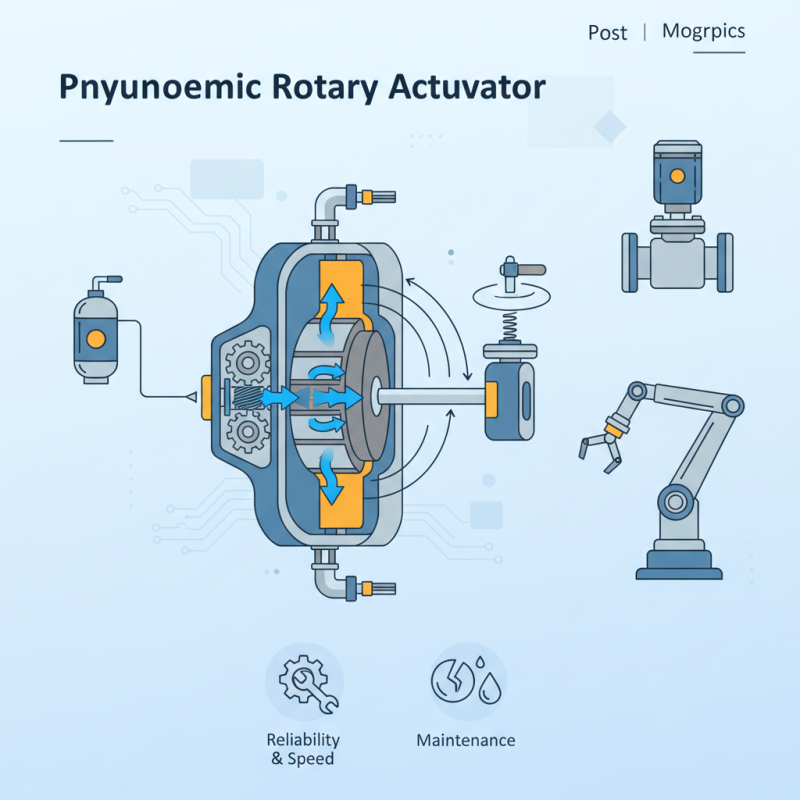
The working principle of a pneumatic rotary actuator revolves around the use of air pressure. Compressed air enters the actuator, pushing against a rotor. This action causes the rotor to turn, enabling precise adjustments in various systems. Understanding this mechanism is essential for engineers and technicians alike.
In the industry, pneumatic rotary actuators are favored for their reliability and speed. However, they are not without flaws. Issues such as air leakage can hinder performance. Regular maintenance is necessary to ensure optimal operation. Overall, grasping the intricacies of a pneumatic rotary actuator is crucial for enhancing productivity in automated environments.
Definition and Purpose of Pneumatic Rotary Actuators
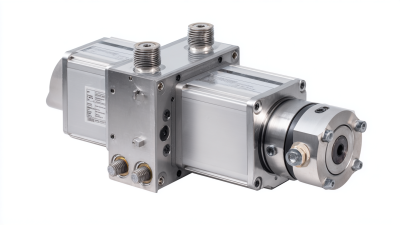
Pneumatic rotary actuators are devices that convert compressed air into rotational motion. They are essential in various industrial applications. Their primary purpose is to automate processes requiring rotational movement, such as valves and dampers. By utilizing air pressure, these actuators provide reliability and efficiency.
The design of pneumatic rotary actuators often includes a simple structure, typically featuring a cylindrical housing. Inside, a rotor pivots, driven by the air pressure. This mechanism enables smooth and controlled movement. However, factors like air supply quality can impact performance. Contaminated air can lead to malfunctions. Regular maintenance is vital for optimal operation.
In many cases, these actuators are preferred for their quick response times. Yet, they may not offer the same precision as electric motors. Understanding their limitations is crucial for users. Assessing the specific requirements of a task can lead to better actuator choices. Balancing speed and accuracy is often a challenging aspect of the selection process.
Principle of Operation: How Pneumatic Rotary Actuators Function
Pneumatic rotary actuators are critical components in various industrial applications. They convert compressed air into rotational motion. This mechanism allows them to operate machinery, valves, and other devices efficiently. A report from the International Society of Automation highlights that pneumatic actuators make up about 30% of the actuator market in manufacturing settings. This figure underscores their widespread use and reliance within the industry.
The principle of operation involves a simple yet effective design. Compressed air enters the actuator, filling a chamber, creating pressure on a piston. This pressure activates a gear mechanism, generating rotational motion. The speed and force of the movement depend on the air pressure and actuator dimensions. Some studies suggest that optimizing air pressure can enhance performance by up to 20%. Yet, many industries overlook these adjustments, limiting efficiency.
Maintenance is crucial for these actuators, as wear and tear can affect performance. Regular inspections help identify leaks and mechanical issues that can compromise operation. Innovative manufacturers are exploring predictive maintenance technologies, which could significantly reduce downtime. However, the implementation of such measures is still inconsistent within many industries, prompting a need for broader adoption.
What is a Pneumatic Rotary Actuator and How Does it Work?
| Dimension |
Description |
Value |
| Type |
Rotary actuators powered by compressed air |
Pneumatic |
| Operation Principle |
Using air pressure to generate rotational motion |
Air Pressure |
| Torque Range |
The torque generated during operation |
10-500 Nm |
| Rotation Angle |
The angle of rotation achievable |
90°, 180°, 360° |
| Applications |
Common uses in industry |
Valves, Dampers, Robotics |
| Advantages |
Benefits of using pneumatic actuators |
Fast operation, High force output |
| Disadvantages |
Drawbacks of pneumatic technology |
Air supply requirements, Potential leaks |
Components of Pneumatic Rotary Actuators Explained
Pneumatic rotary actuators are vital in many industrial applications. They convert compressed air into mechanical motion. Understanding their components helps in grasping how they function effectively.
At the core of a pneumatic rotary actuator, you'll find the cylinder. This cylinder houses a piston that moves in response to air pressure. The movement creates rotational force. Another critical component is the output shaft. It transfers the torque generated by the piston to the load or mechanism it operates. In many designs, gears are integrated to enhance the rotational output.
Seals and bearings are essential in ensuring smooth operation. They prevent air leaks and reduce friction, which can otherwise lead to inefficiency. Sometimes, issues can arise if the seals wear out. This wear might compromise actuator performance. Regular maintenance is crucial for ensuring these components remain functional and reliable over time.
Pneumatic Rotary Actuators Performance Comparison
Applications of Pneumatic Rotary Actuators in Various Industries
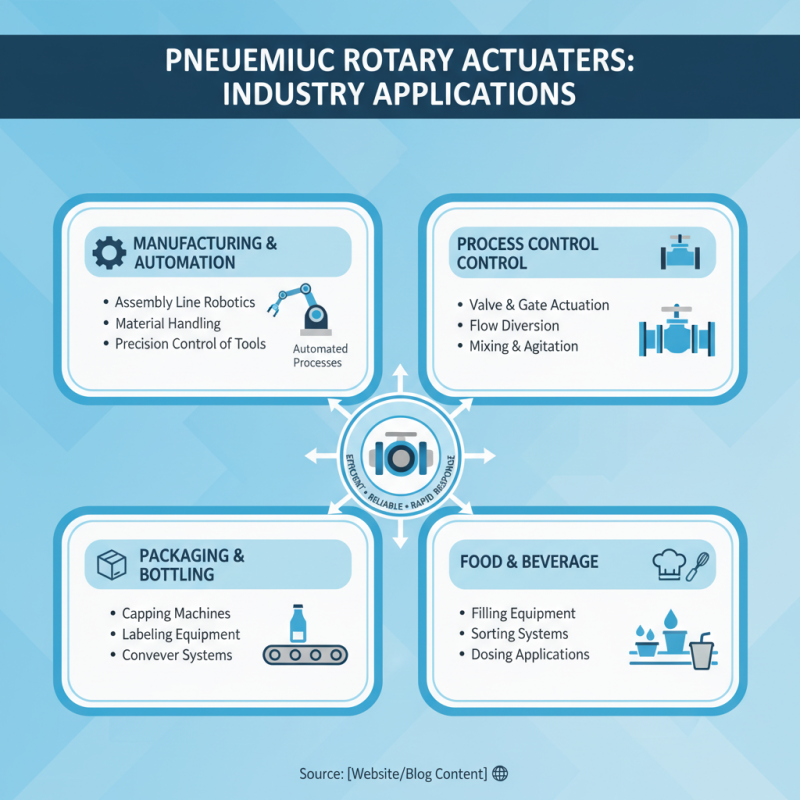
Pneumatic rotary actuators find numerous applications across various industries due to their efficiency and reliability. In manufacturing, they are essential for automating processes. They control valves and gates with precision. This enhances the production workflow and reduces manual labor. Their rapid response time also improves machine performance.
In the automotive sector, these actuators are commonly used in assembly lines. They handle tasks such as clamping and positioning components. This helps manufacturers to maintain high-quality standards while increasing output rates. Moreover, they are crucial for testing systems that require precise movement.
Oil and gas industries also utilize pneumatic rotary actuators for controlling pipeline valves. This is vital for ensuring safety and preventing leaks. However, reliance on pneumatic systems can be a double-edged sword. Maintenance is essential; otherwise, reliability can diminish. It’s crucial for engineers to be aware of potential failures and design systems accordingly. Balancing efficiency and reliability remains a challenge for many industries.
Advantages and Limitations of Using Pneumatic Rotary Actuators
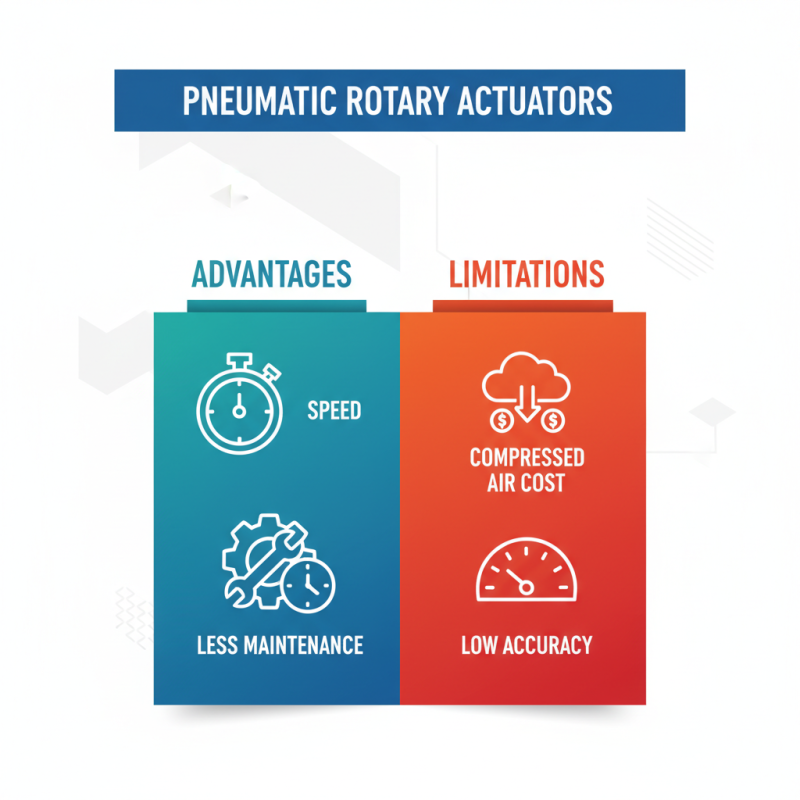
Pneumatic rotary actuators provide several advantages in various applications. Primarily, they are known for their speed. These actuators can deliver rapid motion, which is crucial in environments where time is essential. Their design allows for quick rotations, making them ideal for assembly lines and automation processes. Moreover, they require less maintenance compared to electric actuators. This reliability appeals to industries looking to minimize downtime.
However, there are limitations to consider. Pneumatic systems can be less precise in control compared to electric alternatives. When high accuracy is needed, this can become a significant drawback. Additionally, pneumatic actuators often depend on compressed air systems. This requirement complicates setup and may increase energy costs. Users must ensure that their facilities have adequate air supply, which can sometimes be a logistical challenge.
Despite these challenges, pneumatic rotary actuators have a solid place in modern automation. Assessing the specific application requirements remains essential. Users should reflect on their needs and the environment before making a decision. Balancing speed against precision is crucial for effective use. Understanding these trade-offs will aid in selecting the best actuator type for any application.