Essential Tips for Choosing Pipe Adapter Fittings Today?
When selecting Pipe Adapter Fittings, understanding their critical role in fluid systems can enhance performance and safety. According to industry studies from the American Society of Mechanical Engineers (ASME), the proper choice of fittings can reduce leak incidence by up to 30%. Therefore, choosing the right pipe adapter fittings is not just about compatibility; it’s about long-term efficiency and reliability.
The market for pipe fitting components is projected to reach $95 billion by 2025, demonstrating the significance of proper selection. A well-chosen fitting ensures a seamless connection, which can prevent costly downtimes and accidents. Experts recommend evaluating material compatibility, pressure ratings, and installation simplicity. Often overlooked, these factors directly impact the overall system's lifespan and performance.
However, many still face challenges in making informed decisions. Misunderstanding specifications or underestimating environmental factors can lead to issues. It is crucial to balance quality with affordability. As the demand for efficient piping solutions grows, taking the time to assess various options will ultimately pay off in sustainability and cost-effectiveness.
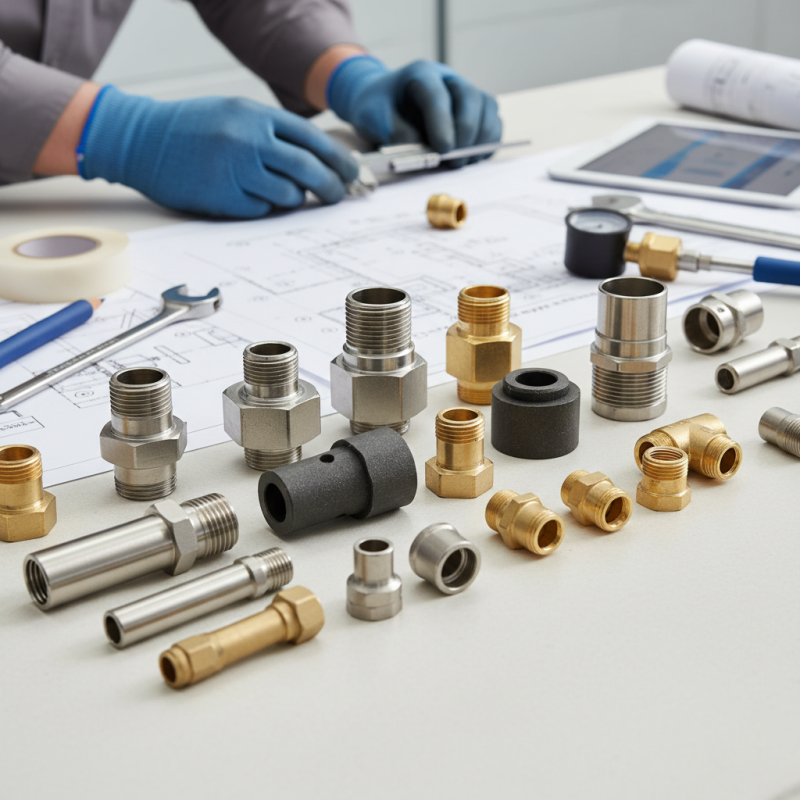
Understanding Pipe Adapter Fittings: Types and Applications
When selecting pipe adapter fittings, understanding the different types and their applications is crucial. Commonly, these fittings include couplings, elbows, and tees. Each type serves a specific purpose in connecting pipe systems. Couplings connect two pipe ends, while elbows change the direction of the flow. Tees allow branching from a main line.
Material choice affects durability and compatibility. Brass and PVC are common options, but there are others. Brass is robust but may corrode over time. PVC is lightweight and resistant to chemicals, ideal for residential systems. Improper selection can lead to leaks or inefficiencies.
Consider the pipe’s diameter and pressure requirements. A mismatch can result in problematic situations. It's essential to assess your specific needs before purchasing. Many overlook the importance of common mistakes in installation, such as inadequate sealing or over-tightening. This can cause damage and lead to costly repairs. Taking the time to understand these aspects will ensure a more reliable plumbing system.
Key Considerations for Selecting the Right Pipe Adapter Material
When selecting the right pipe adapter material, several factors come into play. The application’s requirements are crucial. Different materials boast unique strengths. For instance, metal adapters offer durability but can be prone to corrosion. Plastic alternatives provide lightweight options but may lack heat resistance. Understanding these traits helps guide your choice.
Temperature and pressure ratings are critical. High-pressure environments may necessitate robust materials such as stainless steel. However, if the context involves chemicals or acids, compatibility becomes vital. Some materials can degrade or leach harmful substances. It's essential to consult material compatibility charts when uncertain.
Another consideration is installation ease. Some materials are straightforward, while others need specialized tools. Not everyone has experience with advanced installation techniques. It’s necessary to assess your comfort level. Reflect on previous projects. Did you encounter difficulties with certain materials? Learning from past experiences can lead to better choices today.
Essential Tips for Choosing Pipe Adapter Fittings Today
This chart shows the most commonly used materials for pipe adapter fittings and their respective popularity based on industry applications.
How to Measure Pipe Sizes Accurately for Adapter Fit
Accurate measurements are crucial when selecting pipe adapter fittings. Proper sizing ensures a secure connection, reducing leaks or failures. A report from the American Society of Mechanical Engineers states that improper sizing can lead to a 30% increased risk of joint failure. Therefore, measuring correctly is non-negotiable.
When measuring pipe sizes, start with the outer diameter (OD) and inner diameter (ID) using calipers. This step is often overlooked. Many people rely on nominal pipe sizes, which can lead to confusion. Remember, a 1-inch pipe doesn't always measure one inch. Additionally, consider the wall thickness, especially in thicker pipes.
Tips: Always double-check your measurements. If unsure, consult industry charts or standards for reference. Taking time to ensure accuracy pays off in the long run. A small oversight in measuring can lead to significant issues down the line. Each fitting varies slightly, knowing this can save costly errors.
Identifying Common Mistakes When Choosing Pipe Adapter Fittings
Choosing pipe adapter fittings may seem straightforward. However, many make common mistakes that can lead to inefficiencies. A report from the American Society of Mechanical Engineers emphasizes that improper fittings can cause leaks and system failures, wasting time and resources.
Inadequate research is often a pitfall. Many individuals overlook specifications such as size, material compatibility, and pressure ratings. This can result in selecting a fitting that does not meet operational requirements. According to a study by the Institute of Plumbing, 30% of plumbing failures are due to incompatible fittings. It's crucial to take into account the environment in which the fittings will operate.
Here are a few tips: Always check the material compatibility. Use fittings designed for specific fluids to avoid corrosion. Measure twice, and consider all dimensions before purchasing. Additionally, consulting with professionals can help clarify doubts. Avoid taking shortcuts; thorough evaluations lead to better performance.
Maintenance Tips for Ensuring Longevity of Pipe Adapter Connections
Maintaining the integrity of pipe adapter connections is crucial for system efficiency. Regular inspections can reveal weak points before they become serious issues. A report by the American Water Works Association (AWWA) states that improper fittings account for 30% of pipeline failures. Ensuring that connections are secure is not just a recommendation; it’s a necessity.
One effective maintenance tip is to monitor the pressure levels regularly. Variations can indicate leaks or weak seals. Furthermore, applying proper torque when tightening fittings is essential. Over-tightening can lead to cracks, while under-tightening can cause leaks. A well-documented guideline found in industry standards suggests that a torque of 20-25 ft-lbs is often optimal for most pipe fittings.
Another area to pay attention to is the environment surrounding the pipes. Corrosive substances can damage fittings over time. If the installation site is near chemicals, consider using protective coatings. It's vital to conduct routine checks to identify any signs of corrosion early. Regular maintenance not only extends the life of the fittings but also enhances overall system reliability.