
Blog

China Top 10 Red Light Therapy Face Mask Suppliers

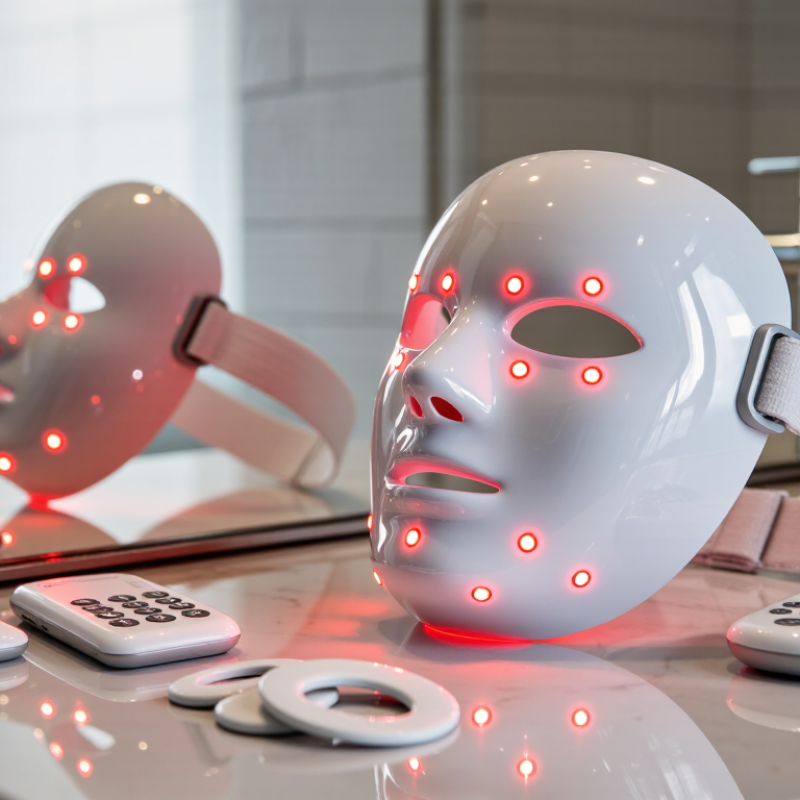
A red glow in a bathroom mirror can make a face mask look persuasive. But buyers need more than polished photos. This guide to China’s top 10 red light therapy face mask suppliers compares product specifications, manufacturing transparency, quality controls, customization options, and after-sales support. It also distinguishes clearly stated facts from claims that need independent verification. Small details matter: wavelength ranges, timer settings, eye protection guidance, and the fit around the nose can shape the user experience.

Red Light Treatment Face products are not interchangeable. Photomedicine researcher Dr. Michael R. Hamblin’s published work emphasizes that light source, wavelength, and dose are important factors in photobiomodulation. That is a useful lens for assessing supplier claims, not a guarantee that any mask will produce a particular result. Ask for test reports and clear instructions. Check what the documents actually cover. A certificate or lab report should not be treated as proof of every marketing claim.

The supplier list aims to help importers, distributors, and private-label brands ask better questions before requesting samples. A ranking can look cleaner than real purchasing decisions. It cannot replace hands-on testing, careful review of documentation, or feedback from intended users. Some manufacturers may offer excellent customization yet provide limited public evidence; that gap deserves attention. The right partner is not always the one with the brightest promises. It is the one whose specifications, support, and evidence hold up under scrutiny.
China Top 10 Red Light Therapy Face Mask Suppliers

Understanding Red Light Therapy Face Masks and Their Applications

Red light therapy face masks use light-emitting diodes to deliver selected wavelengths to the face. Many devices use red light, while some also include near-infrared light. Their intended cosmetic uses may include supporting the appearance of smoother skin or a more even-looking complexion. They are not a substitute for diagnosis or treatment by a qualified health professional.

Light matters. Wavelength, output, session length, and distance from the skin can differ between devices, so one mask’s instructions should not be applied to another. Fit matters too. A loose mask may leave areas unevenly exposed, while a tight one can feel uncomfortable. Results vary, and visible changes may be modest or take time. The evidence is still developing; that uncertainty deserves honest attention.

When comparing suppliers, look for clear technical specifications, user instructions, and information about eye protection and device testing. A dependable supplier should explain how often to use the mask and when to stop, such as if irritation occurs. Check that the mask sits comfortably and can be cleaned according to its instructions. Small details count. A polished product page alone is not proof of performance.

How China’s Top 10 Suppliers Are Selected and Evaluated

Selecting China’s top red light therapy face mask suppliers requires more than comparing product photos or quoted prices. A reliable review examines factory capability, documented quality controls, and evidence behind technical specifications. We look for clear wavelength data, measured light output, and consistent coverage across the mask surface. Details matter. If a supplier cannot explain how measurements were taken, its figures deserve closer scrutiny.

Sample evaluation helps reveal what brochures often miss. Reviewers can check fit, strap adjustment, control clarity, timer accuracy, and heat during a normal session. We also assess material finish, cable strain relief, and whether instructions explain use and care plainly. These checks do not establish medical effectiveness; they help compare product design and manufacturing consistency. A neat sample is useful, but repeatability across production batches matters more.

Supplier assessments also consider traceable inspection records, communication, customization limits, lead times, and after-sales support. We give greater weight to verifiable documents and specific answers than broad assurances. No scorecard is perfect. Factory visits may show only one moment, and samples may not represent every shipment. A fair ranking should state its criteria, note evidence gaps, and avoid treating supplier claims as independently proven facts.

Profiles of Leading Chinese Red Light Therapy Face Mask Suppliers

Chinese red light therapy face mask suppliers vary in engineering depth, production scale, and customization options. A useful supplier profile should explain more than product appearance. Look for details about LED wavelength consistency, output testing, mask materials, and quality-control checks. These details matter.

Some manufacturers focus on original equipment production, while others offer design support and small-batch development. Their experience with flexible circuits, heat management, and skin-contact materials can affect comfort and durability. Ask how each batch is inspected and whether test reports match the exact model offered. A polished sample is helpful, but it cannot represent every production run. No supplier is perfect; even clear documentation may leave practical questions unanswered.

Tips: Request a sample and inspect its fit, controls, cable, and finish. Ask for wavelength and irradiance test data, plus warranty and service terms. Compare written specifications carefully. Do not rely on broad claims alone.

Comparing Supplier Products, Technologies, and Manufacturing Capabilities

Comparing the top 10 red light therapy face mask suppliers requires more than checking LED counts. Compare wavelength ranges, measured irradiance at the skin, treatment timers, fit, and eye protection. Grand View Research’s 2024 LED light therapy market report estimated the global market at about US$1.1 billion in 2023, with projected growth through 2030. This signals rising interest, not proof that every mask works equally well. Small differences in light output matter.

Manufacturing capability is equally important. Ask suppliers for wavelength and irradiance test records, batch traceability, heat-management results, and evidence of repeatable quality checks. A flexible silicone mask may feel comfortable, yet fit can shift light exposure around the nose and cheeks. Check whether the supplier tests finished products, not only individual LED components. Product samples are useful, but one sample cannot confirm consistent production. That part is easy to overlook.

Tips: Request test data for the exact model and operating distance. Compare warranty terms, replacement-part access, and production lead times. If performance claims lack clear measurement methods, treat them cautiously.

China Top 10 Red Light Therapy Face Mask Suppliers - Comparing Supplier Products, Technologies, and Manufacturing Capabilities

Anonymous supplier-evaluation matrix covering ten core comparison areas. This is a sourcing framework, not a verified ranking or a claim about any specific supplier.

Comparison Area Product and Technology Benchmark Manufacturing Capability to Assess Evidence to Request
1. Wavelength options Red-light masks commonly specify wavelengths in the approximate 630–660 nm range. Some models add near-infrared LEDs, often specified around 810–850 nm. Exact output depends on the product design. LED sourcing, wavelength-bin control, circuit design, and consistency between production batches. Model-specific spectral test report, LED specifications, and batch inspection records.
2. Irradiance and dose reporting Irradiance and treatment dose are product-specific. A meaningful comparison requires the measurement distance, test method, units, and treatment duration—not just an LED count. Ability to measure optical output on finished masks and maintain documented calibration procedures. Finished-product irradiance map, measurement conditions, and dose calculation for the recommended session.
3. LED layout and coverage Mask designs vary in LED quantity, spacing, and coverage of areas such as the forehead, cheeks, nose, and chin. More LEDs alone do not establish more uniform exposure. Optical and mechanical design capability, including repeatable LED placement and coverage testing. LED layout drawing, coverage map, and test results across the intended treatment area.
4. Treatment controls Common design features include timed sessions, preset modes, and adjustable intensity. Available modes and settings differ by model. Controller assembly, firmware version control, timer verification, and functional testing. User manual, control-function test procedure, and sample production inspection checklist.
5. Fit and materials Flexible masks may use silicone or other polymer materials; fit, weight, eye-area design, and cleaning instructions are model-dependent. Material traceability, molding or forming control, dimensional inspection, and assembly consistency. Material specifications, dimensional drawings, cleaning guidance, and applicable material test reports.
6. Electrical and optical safety Safety assessment should match the product’s intended use and markets. IEC 60601-1, IEC 60601-1-2, and IEC 62471 are standards buyers may ask suppliers to assess for applicability; listing a standard does not prove compliance. Design-risk review, electrical testing access, EMC pre-compliance capability, and corrective-action processes. Current test reports for the exact model, issuing laboratory details, and applicable declarations or certificates.
7. Quality management Quality-system credentials should be checked for scope, issuing body, validity, and whether the certified site and activities cover the product. Document control, incoming inspection, in-process checks, final inspection, complaint handling, and traceability. Quality-system certificate and scope, audit information, sample inspection records, and lot-traceability example.
8. Production and capacity Capacity, lead time, minimum order quantity, and customization options vary by factory, model, and component availability. In-house versus outsourced processes, line capacity, production scheduling, and contingency planning for key components. Factory profile, process flow, stated capacity with assumptions, and a production schedule for a sample order.
9. Verification and quality control Useful controls include checks for LED operation, controller functions, charging or power performance, appearance, and packaging. Written acceptance criteria, calibrated equipment, defect handling, and inspection records tied to production lots. Quality-control plan, sample final inspection report, and documented procedures for nonconforming products.
10. Customization and export readiness Private-label packaging, manuals, accessories, and product configuration may be available, subject to validation and order requirements. Artwork and revision control, packaging checks, export documentation support, and change-management procedures. Customization specification, approved sample process, packaging documents, and a list of changes requiring re-testing.

Important: Wavelength ranges above describe commonly specified product options, not the verified specifications of particular suppliers. Confirm every performance, safety, certification, and manufacturing claim against current documents for the exact model and production site.

Key Factors for Sourcing Red Light Therapy Face Masks from China

China Top 10 Red Light Therapy Face Mask Suppliers

Key Factors for Sourcing Red Light Therapy Face Masks from China

Supplier selection should begin with measurable performance, not product photos. Ask for wavelength and irradiance results taken at the actual treatment distance, such as 2–3 centimeters from the mask. Request the testing method, instrument calibration details, and reports covering heat buildup and photobiological safety. IEC 62471 provides a recognized framework for assessing optical radiation hazards. A polished sample proves little by itself.

Grand View Research’s 2024 Red Light Therapy Market report estimated the global market at about US$1.1 billion in 2023. This is a market estimate, not proof that every mask performs well. Use it as demand context, then assess each supplier’s evidence. Check whether quality procedures are documented, whether production batches are traceable, and whether the supplier can share inspection records. ISO 13485 certification may be relevant for medical-device quality systems, but certification alone does not verify a specific mask’s output.

Request samples from the production line, not only a specially prepared showroom unit. Compare fit, strap tension, cable strain relief, controller settings, and temperature after a full session. Confirm the bill of materials, packaging, lead time, and defect-handling process in writing. Small details matter. A supplier may answer quickly but still provide incomplete test data; that should prompt follow-up, not an immediate rejection. One awkward sample can reveal more than a neat catalog.