
Blog

China Top 10 Power Tool Organizers Suppliers?

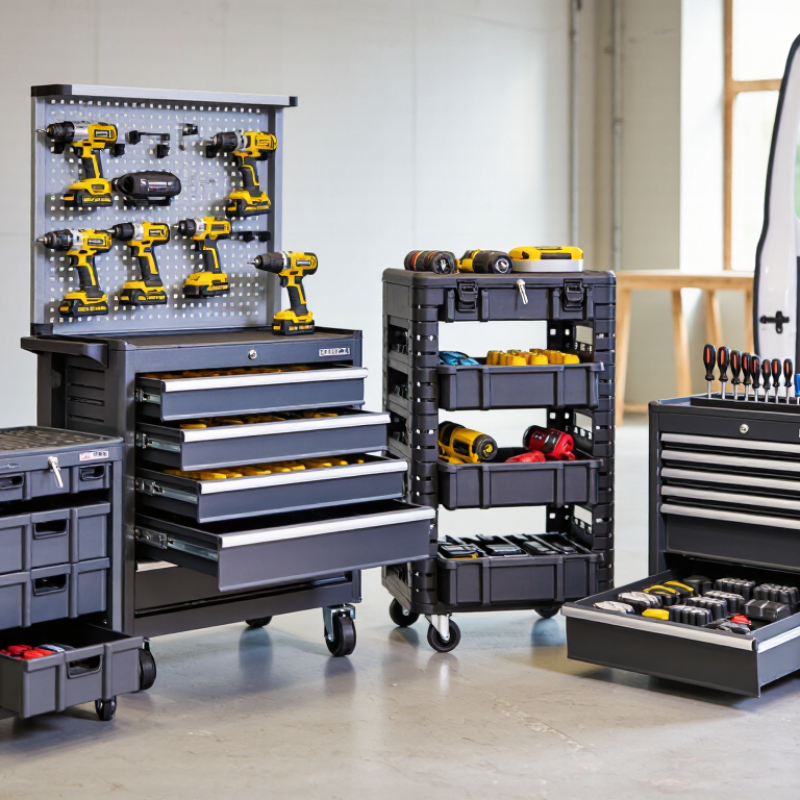
China’s power tool manufacturing sector has expanded beyond drills, saws, and batteries. It now offers practical Power Tool Organizers for workshops, service vans, warehouses, and home garages. These products include wall panels, rolling cabinets, modular cases, drawer systems, and compact holders for cordless tools.

Tool-storage specialist Mark Clement once said, “Good organization is measured in minutes saved, not shelves filled.” That principle guides this supplier review. A reliable organizer should protect tools, reduce searching time, and remain stable under daily workshop use. Details matter. Check steel thickness, drawer load ratings, locking systems, wheel quality, and surface coating. Examine how batteries, chargers, blades, and accessories fit inside the system.

The China Top 10 Power Tool Organizers Suppliers list will compare manufacturing experience, product range, customization ability, quality controls, export support, and customer feedback. Factory audits and sample testing deserve attention. Product photos can hide thin panels or weak hinges. That happens.

No ranking is perfect. Supplier strengths can change with materials, production schedules, and order volume. A company may excel at mobile cabinets but perform poorly with custom inserts. Buyers should request samples, inspection reports, packaging details, and clear warranty terms before placing large orders. Pricing also needs context. A cheaper organizer may require stronger packaging or replacement parts later. This guide aims to provide a practical starting point for distributors, retailers, contractors, and workshop owners seeking dependable Power Tool Organizers from China.
China Top 10 Power Tool Organizers Suppliers?

Defining Power Tool Organizers and Supplier Selection Criteria

Power tool organizers are storage systems designed to keep drills, drivers, saws, batteries, and accessories secure. They may include wall panels, rolling cabinets, molded cases, or modular bins. A useful organizer should reduce searching, prevent tool damage, and fit the user’s working space. Its design must match real workshop routines, not only product photographs.

When comparing China’s top 10 power tool organizer suppliers, examine their materials, production experience, and quality controls. Steel thickness, plastic durability, drawer movement, and load capacity deserve practical testing. Ask for factory photographs, sample units, inspection records, and packaging details. Reliable suppliers explain tolerances, customization limits, replacement parts, and delivery schedules clearly. Certifications can support credibility, but they should be verified against the actual product. I have seen attractive samples fail under repeated drawer use. That mistake is easy to overlook.

Tips: Request one sample before placing a large order. Load it with real tools and batteries. Check sharp edges, wheel stability, lock strength, and installation instructions. Confirm whether dimensions remain consistent across batches. A supplier should also provide traceable quality records and responsive technical support. Do not judge only by the lowest quotation. A cheaper organizer may use thinner panels or weaker fittings. Still, supplier claims require independent checking. Even experienced buyers can miss small defects during a quick review.

Overview of China’s Top 10 Power Tool Organizer Suppliers

China’s top 10 power tool organizer suppliers reflect a mature manufacturing base, not a single product category. Their portfolios commonly include molded cases, drawer cabinets, wall panels, mobile carts, and modular bins. Grand View Research estimated the global power tools market at approximately USD 36.7 billion in 2023. This creates steady demand for safer, more organized storage in workshops and service vehicles.

The leading supplier group usually combines injection molding, metal fabrication, and assembly under one production system. Several suppliers offer custom foam inserts, anti-rust coatings, lockable drawers, and trolley structures. These details matter. A 20-kilogram tool case needs reinforced hinges and balanced handles. Small workshops may prefer stackable boxes, while industrial buyers often request rolling cabinets with replaceable casters. According to Mordor Intelligence, Asia-Pacific remains a major growth region for tool-related manufacturing, supported by expanding construction and maintenance activity.

Supplier evaluation should include more than factory photos. Buyers should verify material thickness, load testing, sampling procedures, packaging quality, and production traceability. ISO 9001 certification can support process control, but it does not guarantee every shipment will be perfect. That is a common weakness. The International Organization for Standardization emphasizes documented quality systems, while actual performance still depends on inspection discipline. In reviewing China’s ten leading supplier profiles, I would also examine response speed, mold ownership, replacement-part support, and tolerance consistency. A polished catalog may hide uneven drawer alignment or fragile foam. Field testing remains essential.

China Top 10 Power Tool Organizers Suppliers? - Overview of China’s Top 10 Power Tool Organizer Suppliers

Rank Anonymized Supplier Profile Main Manufacturing Region Organizer Types OEM / ODM Common Materials Typical Customization Small-Batch Suitability Recommended Buyer Type
1 Profile A — Modular Storage Specialist Zhejiang Wall-mounted racks, stackable cases, drawer systems Yes PP, ABS, steel, aluminum Mold design, color matching, labels, packaging Medium Distributors
2 Profile B — Heavy-Duty Workshop Storage Supplier Jiangsu Tool cabinets, mobile carts, metal organizers Yes Cold-rolled steel, stainless steel, PP Dimensions, powder coating, drawer layouts Low–Medium Professional workshops
3 Profile C — Portable Case Manufacturer Guangdong Carrying cases, organizer boxes, removable trays Yes PP, ABS, EVA, aluminum Foam inserts, hinges, locks, printing Medium–High Online retailers
4 Profile D — Injection-Molded Organizer Supplier Zhejiang Parts bins, compartment boxes, plastic tool trays Yes PP, HDPE, ABS, PC Compartment size, mold tooling, color, logo Low–Medium Hardware wholesalers
5 Profile E — Garage and Wall-Storage Supplier Shandong Pegboards, shelves, hooks, wall rails Yes Steel, aluminum, PP, nylon Panel dimensions, hook layouts, coating, packaging Medium Garage-equipment dealers
6 Profile F — Soft Tool-Bag and Textile Organizer Supplier Fujian Tool bags, belts, pouches, folding organizers Yes 600D polyester, nylon, EVA, webbing Fabric, pockets, stitching, zippers, embroidery High Hardware and DIY retailers
7 Profile G — Aluminum and Protective Case Supplier Guangdong Protective cases, transport boxes, equipment cases Yes Aluminum, ABS, EVA, plywood Interior foam, locks, handles, surface finish Medium Industrial users
8 Profile H — Retail-Ready Storage Supplier Anhui Display organizers, retail packs, small storage boxes Yes PP, PET, steel wire, cardboard Blister packs, color boxes, barcode labels, inserts High Supermarkets and e-commerce
9 Profile I — Compact DIY Storage Supplier Hebei Portable boxes, small parts cases, drawer organizers Yes PP, ABS, steel, transparent PS Tray layout, lid design, color, carton packaging Medium–High DIY retailers
10 Profile J — Integrated Tool-Storage Solutions Supplier Shanghai and surrounding region Workshop systems, carts, cabinets, custom storage projects Yes Steel, aluminum, PP, rubber, wood composite Complete layout design, engineering, color, installation support Low–Medium Industrial procurement teams

Note: The supplier names are intentionally anonymized. Regional production clusters and product categories reflect common manufacturing capabilities in China; buyers should independently verify factory ownership, certifications, testing reports, minimum order quantities, lead times, and export compliance before placing an order.

Comparing Product Types, Materials, Features, and Customization Options

China’s power tool organizer suppliers commonly produce wall panels, rolling cabinets, drawer units, and modular cases.

Each type serves a different workshop layout. Wall panels save floor space and keep frequently used tools visible. Rolling cabinets support heavier equipment and mobile maintenance work. Drawer units protect small parts from dust and impact. Modular cases suit technicians who travel between job sites.

Select the type after checking tool weight, storage volume, and available space.

During supplier inspections, I examine drawer alignment, wheel movement, weld quality, and surface coating.

Small defects matter.

Material selection affects service life and handling comfort.

Powder-coated steel offers strength and resists workshop abrasion.

Aluminum reduces weight but may dent under heavy impact.

ABS and reinforced polymer cases resist moisture and are easier to carry.

Foam inserts prevent tools from shifting during transport. However, soft foam can wear quickly with daily use. This detail is often underestimated.

Suppliers should provide material specifications, load tests, and sample approval before production.

Useful features include adjustable dividers, locking drawers, anti-slip feet, label holders, and smooth full-extension slides.

Customization may cover dimensions, drawer layouts, foam shapes, colors, handle styles, and hole patterns.

Some workshops need narrow cabinets for crowded aisles. Others require deeper drawers for drills and batteries.

A reliable supplier should confirm drawings, tolerances, packaging, and inspection standards in writing.

I once overlooked handle clearance during evaluation, causing awkward access.

That mistake reinforced the value of testing a complete sample, not only reviewing attractive photographs.

Evaluating Manufacturing Capacity, Quality Control, and Certifications

China’s top ten power tool organizer suppliers should be assessed beyond catalog size. Manufacturing capacity matters when seasonal orders arrive suddenly. Request monthly output, machine lists, workforce data, and recent production records. A factory may claim high capacity, yet its assembly floor can look surprisingly quiet.

Quality control needs measurable evidence. ISO’s Survey 2022 recorded more than 1.2 million ISO 9001 certificates worldwide, showing its broad value as a management benchmark. However, certification alone cannot prove consistent organizer performance. Check incoming-material inspection, dimensional testing, load testing, and batch traceability. For plastic cases, compare wall thickness, hinge cycles, odor, and drop-test results. For metal organizers, inspect coating adhesion, weld strength, and corrosion resistance.

Safety documentation should match the product’s intended use. Suppliers should explain relevant testing against recognized standards, including ISO 9001 systems and applicable IEC 62841 requirements where powered-tool compatibility is claimed. Independent laboratory reports are more persuasive than factory photographs. I would also request three production samples from different batches. One sample can hide weak hinges or uneven drawers. This is often overlooked. The Global Power Tools Market report by Grand View Research projects continued market growth, increasing pressure on suppliers to scale without weakening inspection. Auditors should review corrective-action records, calibration dates, and rejected-unit rates. Perfect records deserve questions, too. Real factories usually show some defects and explain how they were fixed.

China Top 10 Power Tool Organizers Suppliers: Evaluation Index

An anonymized screening benchmark comparing manufacturing capacity, quality control, and certification readiness across a ten-supplier shortlist. Scores are normalized to 100 and are intended for supplier comparison rather than an audited ranking.

Manufacturing capacity reflects production scalability and tooling capability; quality control covers process consistency and inspection systems; certification readiness reflects the availability of recognized management and product-compliance documentation.

Choosing the Right Chinese Supplier for Your Business Needs

China Top 10 Power Tool Organizers Suppliers should be evaluated by business fit, not ranking alone. A supplier may offer molded cases, wall panels, rolling cabinets, or modular bins. Your product mix decides the better choice. Grand View Research valued the global power tools market at approximately USD 36.1 billion in 2023, with continued growth expected through 2030. This growth increases demand for safer, more efficient tool storage. It also attracts inexperienced manufacturers.

Create a practical scorecard for the ten shortlisted suppliers. Check material thickness, load testing, drawer movement, corrosion resistance, and packaging strength. Request samples with real drills, batteries, and hand tools inside. A 10-kilogram load should not bend a shelf after repeated use. Review ISO 9001 records, inspection procedures, export experience, and independent laboratory reports. Ask for production photos, carton dimensions, minimum order quantities, and realistic lead times. The International Trade Centre recommends using detailed trade data when comparing supplier markets and product categories. Price is only one variable.

Do not rely on attractive catalog images. Factory audits can reveal crowded assembly areas, weak labeling, or inconsistent plastic finishing. Small defects become expensive returns. A perfect scorecard is unrealistic. I would reserve part of the decision for communication quality, because unclear replies often predict later delays. Confirm customization ownership, replacement policies, payment stages, and shipment documentation before approving samples. A suitable Chinese supplier should make quality measurable, delivery visible, and problems easy to report.