
Blog

What Are the Top Residual Circuit Breaker Types in 2026?

Choosing a Residual Circuit Breaker in 2026 is less about finding one “best” device and more about matching protection to the circuit. A home kitchen, an EV charging point, and a workshop with variable-speed equipment can produce different residual-current patterns. The wrong type may miss a relevant fault, cause nuisance trips, or simply fail to suit the installation. Small details matter: appliance electronics, earthing arrangements, rated current, and the manufacturer’s instructions all deserve attention.

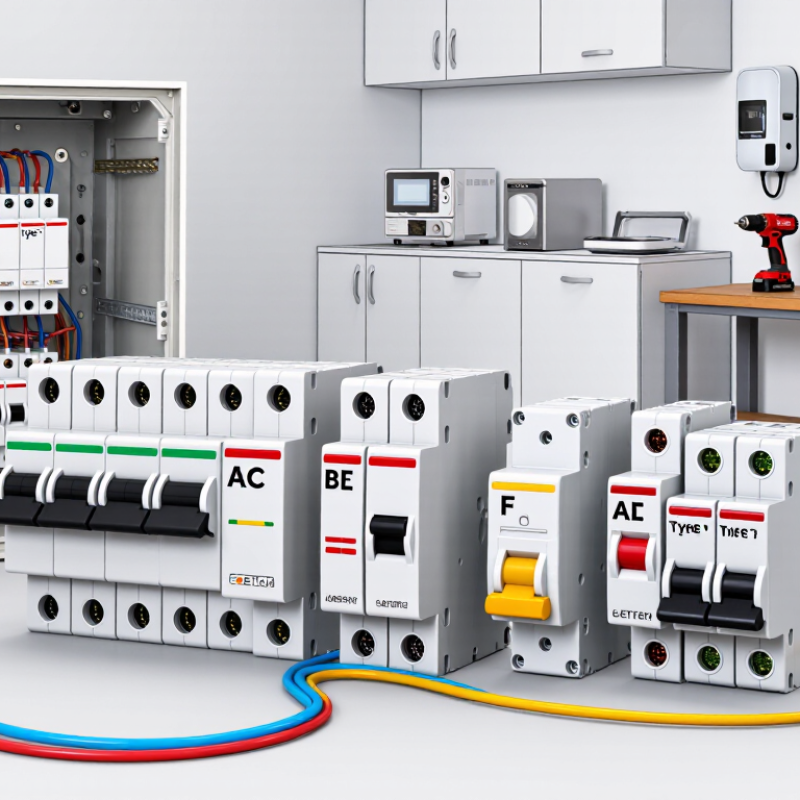
This guide compares common options, including Type AC, Type A, Type F, and Type B devices, alongside RCCBs, RCBOs, and selective breakers. Their functions overlap, but they are not interchangeable. An RCCB detects residual current yet generally needs separate overcurrent protection; an RCBO combines both functions. Type selection also depends on the connected equipment and applicable local standards. Check the product documentation. Do not rely on a label alone.

One note on attribution: no source articles or verifiable expert quotation were provided, so I will not invent a named expert’s words. A practical principle for this comparison is: “Choose protection for the fault current your equipment can produce, not merely for the device you already know.” It is a useful starting point, not a substitute for a qualified assessment. Even a tidy comparison chart can hide uncertainty: product ranges and requirements vary by market, and installation conditions are easy to underestimate.
What Are the Top Residual Circuit Breaker Types in 2026?

How Residual Circuit Breakers Detect Earth-Leakage Currents

What Are the Top Residual Circuit Breaker Types in 2026?

How Residual Circuit Breakers Detect Earth-Leakage Currents

A residual circuit breaker compares the current flowing out through the live conductor with the current returning through neutral. Both pass through a small toroidal transformer inside the device. In normal conditions, their magnetic effects cancel. If current escapes to earth, the balance shifts and the breaker trips. The sensing principle is simple. The fault paths are not always simple.

Breaker type matters because electrical loads can produce different residual-current waveforms. Type AC detects sinusoidal AC leakage; Type A also detects pulsating DC. Types F and B cover additional mixed-frequency or smooth-DC conditions. IEC 62423 specifies Type F and Type B devices. A workshop tool, inverter, or electric-vehicle charger may need a different type from a basic lighting circuit. Check the equipment instructions and have a qualified electrician assess the installation.

Sensitivity matters too. IEC 60364-4-41 sets 30 mA as the maximum rated residual operating current for specified additional-protection applications. That figure is a design benchmark, not a guarantee that every fault will be harmless. A damaged cable may leak intermittently, while moisture can create a changing path to earth. Testing the device and choosing the right type are both important. A label alone cannot tell the whole story.

Type AC and Type A: Core Protection for Common Circuits

Type AC and Type A residual circuit breakers cover many everyday circuits, but they do not detect identical fault currents. Type AC responds to sinusoidal alternating residual current. It may suit straightforward loads, such as conventional resistive heating, when the circuit design and applicable requirements permit it. Type A also detects pulsating direct residual current, which can occur in equipment with electronic controls or rectifiers. That matters.

In a home, a washing machine, induction appliance, or electronically controlled lighting may produce leakage patterns that a Type AC device is not designed to detect. Type A is often the more suitable choice for these mixed loads, but suitability depends on the equipment and installation. Not always. A circuit label alone cannot reveal every leakage-current characteristic, and newer equipment may require another device type.

Selection should follow the appliance documentation, circuit design, and local electrical requirements. A qualified electrician can check compatibility, rating, and coordination with other protective devices. Neither type replaces overcurrent protection. The test button is useful for routine checks, yet it does not confirm that the entire installation is correctly designed. One practical detail is often missed: adding electronic equipment later can change what a circuit needs. Review the choice when the load changes, rather than assuming an older selection remains appropriate.

Type F and Type B: Protection for Inverter-Based Equipment

In 2026, inverter-based equipment makes residual-current protection more demanding. Variable-speed drives can produce leakage currents with changing frequencies. A Type F residual current device is designed for certain single-phase inverters and mixed-frequency residual currents. It can suit equipment such as some washing machines, heat pumps, and small drives. Check the equipment documentation; “inverter” alone does not identify the right protection.

Type B provides broader detection, including smooth direct-current residual currents and a wider range of frequencies. It may be specified for three-phase drives, photovoltaic inverters, or other systems where DC leakage is possible. The exact requirement depends on the inverter design and installation. A mismatch can leave a protection gap. This detail is easy to miss.

Tips: Check the manufacturer’s instructions for the required device type, rated current, and trip sensitivity. Have a qualified electrician assess the circuit and verify the selection against applicable standards. Do not assume Type B is always better; it may be unnecessary for some equipment. Installation conditions matter, and product guidance can be imperfect or unclear. When specifications conflict, pause and confirm before choosing.

What Are the Top Residual Circuit Breaker Types in 2026? — Type F and Type B: Protection for Inverter-Based Equipment
Comparison point Type F Type B
Standards reference Defined by IEC 62423 in addition to the applicable requirements for Type A devices. Defined by IEC 62423 in addition to the applicable requirements for Type A devices.
Residual-current waveforms detected AC, pulsating DC, and specified composite residual currents associated with single-phase frequency converters. AC, pulsating DC, smooth DC, and specified composite residual currents, including currents with frequencies up to 1 kHz under the standard’s test conditions.
Smooth DC capability Designed to tolerate superimposed smooth DC residual current up to 10 mA under the applicable standard test conditions; it is not a substitute for Type B where smooth-DC detection is required. Designed to detect smooth DC residual current, subject to the device’s rated residual operating current and applicable standard requirements.
Typical equipment examples Some single-phase inverter-driven appliances, such as variable-speed washing machines, heat pumps, and air-conditioning equipment, when the equipment manufacturer specifies Type F. Some three-phase frequency converters, variable-speed drives, photovoltaic inverters, and other converter-based equipment when the manufacturer or installation rules require detection of smooth DC residual current.
Common rated residual operating currents 30 mA is commonly used where additional personal protection is required. Other ratings are available for different protection purposes and installation designs. 30 mA devices are available for additional personal protection; other ratings may be used for equipment or installation protection as permitted by applicable rules.
Key selection consideration Suitable only when the likely residual-current waveform and the equipment instructions are compatible with Type F. Confirm the required RCD type in the manufacturer’s documentation. Consider where smooth DC or a broader range of residual-current waveforms may occur. Check the equipment instructions, local wiring rules, and the complete protection arrangement.
Important limitation Not every inverter-based appliance requires Type F; selection depends on the equipment design and applicable installation requirements. Not every inverter-based installation requires Type B. For example, some equipment incorporates residual-DC detection that may affect the required upstream RCD type, subject to local rules and manufacturer instructions.
Selection note: Choose an RCD type based on the equipment manufacturer’s instructions, the expected residual-current waveform, system configuration, and applicable local electrical regulations. Rated residual operating current and time-delay characteristics are product-specific; this comparison is general guidance, not a substitute for design verification.

Comparing Sensitivity, Compatibility, and Typical Applications

What Are the Top Residual Circuit Breaker Types in 2026?
Comparing Sensitivity, Compatibility, and Typical Applications

Type AC, A, F, and B devices differ mainly in the residual-current waveforms they detect. Type AC responds to sinusoidal alternating current; Type A also detects pulsating direct current. Type F handles certain mixed-frequency currents from single-phase electronic equipment, while Type B covers smooth direct current and a wider range of frequencies. IEC 62423 specifies requirements for Type F and Type B residual-current devices. Compatibility matters: a device that misses a fault waveform may not provide the intended protection. That distinction is easy to miss.

Sensitivity is a separate choice. Ratings such as 10 mA, 30 mA, 100 mA, and 300 mA describe operating thresholds, not waveform capability. IEC 60364-4-41:2017 calls for additional protection with devices rated no higher than 30 mA in specified situations, including many socket-outlet circuits. The exact requirement depends on the installation and local rules. For typical household circuits, Type A at 30 mA is often considered where electronic loads are present; heat pumps or variable-speed equipment may call for Type F or B, subject to equipment instructions. RCCBs need separate overcurrent protection, while RCBOs combine residual-current and overcurrent functions. Selection is not always tidy: check the load’s leakage characteristics, the existing protective devices, and the manufacturer’s technical documentation before choosing.

Top Residual Circuit Breaker Types in 2026

A comparison of the residual-current waveforms covered by common RCD types.

How to read the chart: 1 means the waveform is included in the type’s defined detection scope; 0 means it is not. Type A includes Type AC coverage; Type F adds composite-frequency residual currents; Type B also covers smooth DC residual current.

Typical applications: Type AC is suited to sinusoidal-AC loads where local rules permit; Type A is common for circuits supplying electronic equipment; Type F is used for certain single-phase inverter appliances; Type B is used where smooth DC residual currents may occur, such as some inverter or EV-charging installations. A 30 mA trip rating is common for additional personal protection, but sensitivity is separate from RCD type. Select the device according to the equipment, installation design, and applicable regulations.

How to Select a Residual Circuit Breaker for 2026 Installations

Choosing a residual circuit breaker for 2026 installations starts with the connected equipment, not a trend list. Type AC detects sinusoidal alternating residual current, while Type A also responds to pulsating direct current found in many electronic appliances. Variable-speed drives may require Type F or Type B, depending on their design and the current they can produce. Check each appliance’s technical documentation.

Then match the device to the installation: rated current, sensitivity, number of poles, and required breaking capacity all matter. An RCBO combines residual-current and overcurrent protection; an RCCB needs separate overcurrent protection. Coordination with upstream devices also deserves attention. It is easy to overlook that detail when a panel is crowded. Confirm the supply arrangement and applicable local requirements with a qualified electrical professional.

Tips: Photograph the panel and note the loads before selecting a replacement. Check the manufacturer’s instructions for equipment that may produce smooth DC residual current. Avoid choosing a more sensitive device by guesswork; nuisance trips can disrupt service, while an unsuitable type may not provide the intended protection. The right choice depends on the actual circuit.