
Blog

What Are the Top Silent Diesel Generator Set Types in 2026?

Choosing a Silent Diesel Generator Set in 2026 means balancing dependable backup power with sound control, fuel use, and installation space. The International Energy Agency’s Electricity 2024 report projects global electricity demand to grow by an average of 3.4% annually from 2024 through 2026. That pressure makes resilient backup systems important for data centers, hospitals, construction sites, and remote facilities. Power needs differ sharply. A compact canopy unit beside a shop is not the same solution as a containerized set serving an industrial campus.

IEA Executive Director Fatih Birol describes the wider shift as the “Age of Electricity.” For operators, that shift makes practical details matter: load profile, runtime, ventilation, service access, and measured sound levels. This guide compares common types, including canopy-enclosed, containerized, and mobile silent diesel generator sets. It also considers where each design fits, and what buyers should verify before choosing. A quieter enclosure is not automatically the best fit.

Acoustic performance depends on the enclosure, cooling airflow, exhaust treatment, distance, and site layout. Treating a catalog noise figure as a complete answer can be a costly mistake. Still, no enclosure is magic. The sections ahead offer a grounded way to compare configurations, read specifications, and match a set to real operating conditions. The goal is not to declare one universal winner. It is to identify the right type for the job.
What Are the Top Silent Diesel Generator Set Types in 2026?

How Silent Diesel Generator Sets Reduce Operating Noise

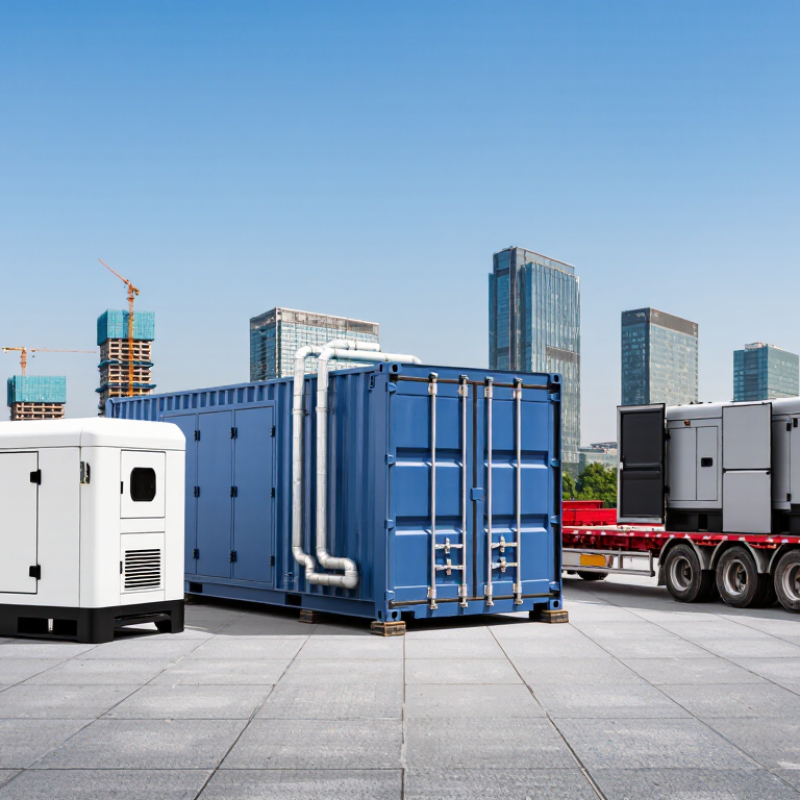
Silent diesel generator sets reduce noise through several layers working together. A compact acoustic-canopy model surrounds the engine and alternator with lined panels, while a containerized set uses a larger enclosure for higher-output installations. Mobile sets can combine an acoustic housing with a trailer, though road-ready packaging does not automatically make them quiet at every site.

Not truly silent. The enclosure absorbs and blocks some engine and combustion noise, but it must still admit cooling air. Baffles guide airflow through openings without leaving a direct path for sound. A properly sized exhaust silencer reduces sharp pulses from the engine; flexible connections and vibration isolators help limit rumble traveling through the frame and concrete pad. Small gaps matter. A loose access panel can rattle, and poorly routed cables may transmit vibration into nearby structures.

Good noise control also depends on operation. A set under heavy load can sound different from one running lightly, and nearby walls may reflect noise toward homes or work areas. Keep vents unobstructed, inspect seals and mounts, and follow the manufacturer’s maintenance schedule. In practice, the quietest enclosure is not always the best choice if it restricts cooling or makes servicing awkward. That trade-off deserves attention. Check sound data under stated test conditions, then assess the actual installation, including distance, barriers, and ground vibration.

Which Enclosure Designs Distinguish Silent Generator Types?

In 2026, silent diesel generator sets are often distinguished by their enclosures rather than their engines. A compact acoustic canopy suits construction sites, farms, and backup installations with limited space. Its lined panels reduce engine and exhaust noise, while louvered openings direct cooling air through the housing. Check door seals and service clearance; tight packaging can make routine maintenance awkward.

Containerized enclosures are common for higher-capacity or frequently relocated units. Their steel shells provide weather protection and room for larger cooling systems, access doors, and exhaust treatment. They can be practical beside a warehouse or at a remote worksite. The trade-off is size: a truck may deliver the unit, but the site still needs a stable, level pad and clear airflow paths.

A purpose-built acoustic room offers another option for indoor or fixed installations. Wall panels, lined ventilation ducts, and a properly routed exhaust can control noise without enclosing the whole generator in a small canopy. Not perfectly silent. Noise readings depend on distance, load, reflections, and installation quality, so compare test conditions rather than relying on the enclosure label alone. I would also verify how filters, batteries, and emergency controls remain accessible; quieter is not automatically easier to operate.

The chart compares enclosure design features, not noise ratings. A value of 1 means a feature is commonly incorporated in that enclosure type; 0 means it is not inherent to the type. Actual specifications vary by generator, installation, and manufacturer.

How Portable, Trailer-Mounted, and Stationary Sets Differ

Portable silent diesel sets suit temporary, modest loads: roadside repairs, outdoor events, or a small pump. Their wheels and compact enclosure simplify movement, but fuel capacity and runtime can limit overnight use. Check the rated output against starting loads; motors often draw more power at startup. Space matters. A portable unit near a doorway may still send exhaust or noise where people gather. “Silent” means quieter, not noiseless. NIOSH recommends limiting occupational noise exposure to 85 dBA over eight hours, but placement and distance affect actual exposure.

Trailer-mounted sets bridge portability and higher output. A crew can tow one between construction sites, then connect it to temporary distribution equipment. They need firm parking, room for towing access, and secure cable routing. It gets messy when a site changes weekly. Stationary sets fit hospitals, commercial buildings, and data centers that need fixed backup power, automatic transfer, and planned servicing. They usually offer greater capacity, but need prepared foundations, ventilation, fuel storage, and regular testing. The IEA’s Electricity 2024 report projected data-center electricity demand could exceed 1,000 TWh in 2026, underscoring the importance of dependable backup planning. That projection does not mean every facility needs a larger generator; load assessment and outage duration should guide selection. A quiet enclosure cannot replace proper siting or maintenance.

What Are the Top Silent Diesel Generator Set Types in 2026? — How Portable, Trailer-Mounted, and Stationary Sets Differ
Generator Set Type Typical Capacity Range Mobility and Setup Indicative Sound Level Common Applications Main Advantages Key Trade-Offs
Portable silent diesel set Approximately 5–20 kW for many compact models; actual ranges vary by design. Compact, generally moved by hand or vehicle. Usually needs a level surface, safe outdoor placement, and suitable electrical connections. Many sound-attenuated models are designed for roughly 65–75 dB(A) at 7 m; check the specific model’s test conditions. Small worksites, outdoor events, temporary retail, farms, and backup for selected household or small-business loads. Easy to transport and deploy; relatively small footprint; useful where power needs are temporary or modest. Lower output and fuel capacity than larger sets; runtime depends on tank size and load; not all models include road-ready towing equipment.
Trailer-mounted silent diesel set Approximately 20–500 kW across common rental and temporary-power applications. Mounted on a towable trailer for relocation by a suitable vehicle. Requires a safe parking area, access for delivery, and correctly rated cables. Sound-attenuated versions are often specified around 65–75 dB(A) at 7 m, but enclosure, load, and measurement method affect results. Construction sites, roadworks, emergency response, temporary facilities, and events requiring higher-capacity mobile power. Combines substantial output with easier relocation; often available with larger fuel tanks and practical service access. Needs towing and maneuvering space; transport rules and site access may apply; typically larger and heavier than portable units.
Stationary silent diesel set Approximately 10–3,000 kW or more, depending on the installation and duty rating. Installed at a fixed site, commonly on a prepared base with permanent fuel, exhaust, ventilation, and electrical provisions. Enclosed models may be engineered for low-noise operation; published levels vary widely by enclosure and installation, so compare model-specific ratings. Building standby power, data and communications facilities, hospitals, industrial sites, and continuous or prime-power applications. Supports larger loads and permanent integration; can be configured for automatic standby operation and site-specific noise control. Higher installation and civil-work requirements; relocation is difficult; ventilation, exhaust routing, fuel storage, and maintenance access need planning.
Comparison note: Capacity figures are indicative market ranges, not guaranteed limits. Generator ratings, runtime, and acoustic performance depend on the model, duty rating, load, enclosure, distance, and test method. Sound levels shown at 7 m are approximate reference values where stated; verify the manufacturer’s rating and local noise requirements before selection.

Which Silent Generator Types Serve Homes, Businesses, and Industry?

For homes, a compact canopy-enclosed diesel set is usually the practical choice. Its steel enclosure reduces engine and exhaust noise, while a transfer switch can support essential circuits such as refrigeration, heating, and well pumps. The U.S. Energy Information Administration’s 2020 Residential Energy Consumption Survey covered 123.5 million homes, but household backup needs vary widely. A small home may need only selected circuits; electric heating can change the calculation sharply. Quiet matters at night.

Businesses often use larger acoustic-canopy units or containerized sets. These suit shops, clinics, offices, and warehouses that need longer runtime or three-phase power. EIA’s 2018 Commercial Buildings Energy Consumption Survey counted about 5.9 million U.S. commercial buildings, reflecting very different operating loads. For installation, check ventilation, exhaust routing, service access, and the enclosure’s stated sound level at a defined distance. “Silent” does not mean sound-free.

For industrial sites and data centers, modular containerized diesel sets can be configured to support heavy or critical loads. The International Energy Agency’s Electricity 2024 report projected data-center electricity use could exceed 1,000 TWh globally in 2026. That figure is not a generator-sizing guide, but it signals why backup capacity and fuel planning matter. I would still verify real load profiles and site noise limits; specifications alone can miss how sound carries between buildings.

What Factors Shape Silent Diesel Generator Choices in 2026?

What Are the Top Silent Diesel Generator Set Types in 2026?

What Factors Shape Silent Diesel Generator Choices in 2026?

Choosing a silent diesel generator set starts with the job it must perform. A clinic, a farm, and a construction site have different load patterns and operating hours. List essential equipment, then account for starting surges from pumps or compressors. An undersized set may struggle when several motors start together.

Noise still travels. Check the stated sound level, its measurement distance, and the enclosure’s placement relative to nearby rooms. “Silent” usually means sound-attenuated, not noiseless.

Site conditions shape the choice just as much as rated power. High temperatures, altitude, and restricted airflow can reduce available output, so confirm derating with the supplier. Allow space for cooling air, exhaust routing, fuel access, and routine maintenance. A tightly packed enclosure may look neat but make filter changes awkward.

Consider whether the set is for standby or longer, regular operation, and match its rating to that duty. Also assess transfer equipment, fuel capacity, monitoring, and applicable noise and emissions requirements. No checklist catches every site quirk; a walk-through can reveal a blocked service door or a neighbor’s bedroom window.