
Blog

Where to Buy China Top Alloy Wheel Curing Ovens?

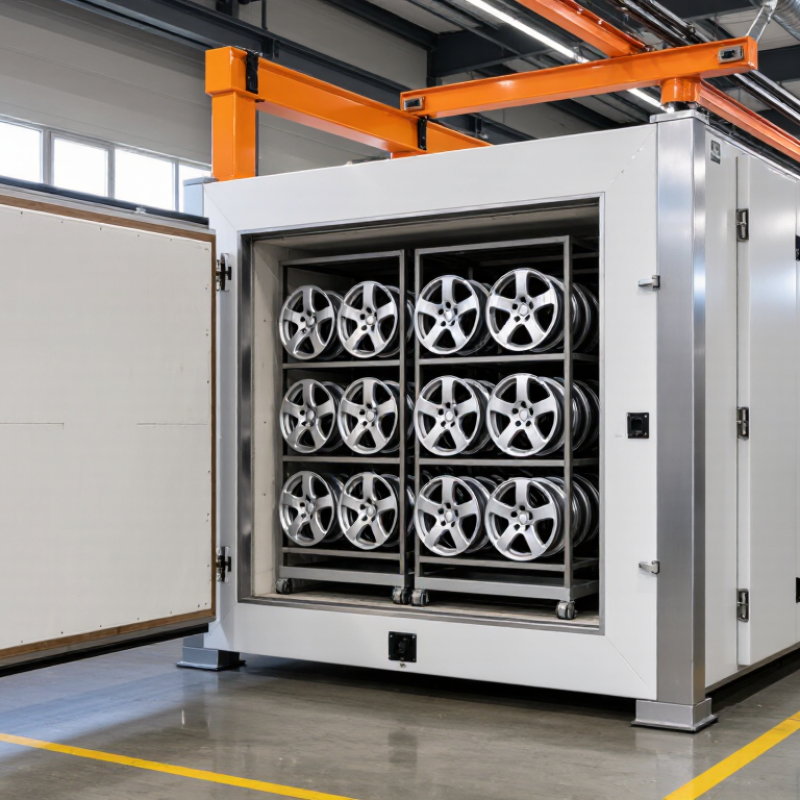
Choosing where to buy a China-made top Alloy Wheel Curing Oven starts with the production task, not the sales slogan. A wheel refinishing shop may need a compact batch oven, while a factory line needs steady throughput, repeatable temperature control, and safe loading access. Ask suppliers for chamber dimensions, heating range, temperature-uniformity data, insulation details, and sample cycle times. Those numbers matter. A polished brochure cannot show whether a 20-inch wheel rack clears the door or whether heat reaches each coated surface evenly. Request a layout drawing and a sample production recipe before comparing prices.

Reliable suppliers should explain how their ovens are tested, installed, and supported after delivery. Ask for a factory walkthrough, customer references, control-system details, warranty terms, and a list of recommended spare parts. If possible, define an acceptance test using your wheel sizes and coating process. A low quote may be tempting, but freight, commissioning, or replacement components can change the real cost. Be cautious of broad performance claims without test conditions. Even careful checks have limits; a remote video cannot replace an on-site inspection. The right supplier is one that answers technical questions clearly, documents key specifications, and discusses practical constraints before you place an order.
Where to Buy China Top Alloy Wheel Curing Ovens?

Set the Cure Specification: Typical Powder Coatings Cure at 160–200°C

For alloy wheels, 160–200°C is a common powder-coating cure range, but it is not a universal oven setting. The required temperature and hold time depend on the coating’s technical data sheet. Crucially, cure time usually begins when the wheel itself reaches the specified metal temperature—not when the oven air reaches its setpoint. The Powder Coating Institute’s technical guidance highlights this distinction. A hot oven display can be reassuring, but it does not prove that a thick wheel spoke or hub is fully cured.

When comparing curing ovens, ask how temperature uniformity is checked under a realistic load. Wheel size, rack spacing, airflow, and batch density can create cooler zones. Attach thermocouples to representative wheel surfaces and record the heating curve; do not rely only on the controller reading. ASTM D3451 provides guidance for testing powder coatings, while the coating supplier’s data sheet should define the cure schedule. A common mistake is choosing an oven by maximum temperature alone. I would also verify usable chamber dimensions and repeatability before purchase.

Tips: Run a loaded temperature test before production. Check the slowest-heating wheel area, and keep the test record. If the finish looks acceptable, still verify cure; appearance alone can mislead.

Calculate Oven Capacity: Wheel Load, Chamber Size, and 10–30-Minute Dwell

When sourcing an alloy-wheel curing oven from China, calculate the batch before comparing chamber sizes. Count the wheels loaded per cycle, then allow room for racks, wheel spacing, and airflow. Measure the largest wheel, including its width, and check how it will sit on the rack. A tightly packed load may fit, but it can block heat circulation. Leave practical clearance.

A stated 10–30-minute dwell time needs careful interpretation. It usually refers to time at the specified part temperature, not the entire heating cycle. Follow the coating supplier’s cure schedule, and ask how the oven measures and maintains temperature across a full load. An empty-chamber reading may not represent production conditions. Small detail. Big impact.

Before ordering, request the usable chamber dimensions, rated batch load, temperature-uniformity data, and details of the control system. Ask whether the supplier can run a test using representative wheels and racks. Check that the proposed capacity matches your wheel sizes and daily output, with some room for future changes. A compact layout can look efficient on paper; in practice, airflow and loading access may suffer. Recheck the layout before approving the final specification.

Where to Buy China Top Alloy Wheel Curing Ovens? - Calculate Oven Capacity: Wheel Load, Chamber Size, and 10–30-Minute Dwell

Planning Configuration Usable Internal Chamber (W × D × H) Wheel Diameter Assumption Approx. Position Pitch Positions per Layer Layers Estimated Wheels per Batch Dwell-Time Options
Compact batch oven 1.2 × 1.2 × 1.8 m Up to 18 in (457 mm) Approx. 0.63 m per position 1 × 1 = 1 5 5 10, 20, or 30 minutes
Standard batch oven 1.5 × 1.5 × 2.0 m 18–20 in (457–508 mm) Approx. 0.68 m per position 2 × 2 = 4 6 24 10, 20, or 30 minutes
Large batch oven 2.0 × 2.0 × 2.4 m 22–24 in (559–610 mm) Approx. 0.74 m per position 2 × 2 = 4 6 24 10, 20, or 30 minutes

Capacity basis: These are illustrative planning estimates for bare wheels loaded horizontally on suitable racks, with clearance included in the approximate position pitch. Confirm rack geometry, loading access, airflow, and usable chamber dimensions with the oven supplier before specifying a capacity. Dwell time means time at the coating’s required part-metal temperature; heat-up, cool-down, and loading time are additional. Follow the coating manufacturer’s cure schedule and verify temperature uniformity with a representative load.

Compare Chinese Suppliers: Temperature Uniformity, Controls, and Test Records

When looking for a China-made alloy wheel curing oven, compare suppliers by evidence, not headline temperature alone. Ask for a temperature-uniformity map taken with the oven loaded, using several calibrated probes across the usable chamber. A single empty-chamber reading tells little. Check the mapped range against your coating process and wheel size; tolerances should be stated in writing.

Controls matter on every shift. Review the controller’s recipe storage, alarm history, over-temperature protection, and sensor calibration procedure. Ask how operators confirm actual part temperature rather than relying only on the display. Request sample test records that identify the date, load arrangement, probe locations, setpoint, measured results, and acceptance limits. Good records are specific. Blurred screenshots are not enough.

Chinese suppliers can be found through industrial sourcing platforms, trade fairs, or direct factory inquiries, but verify who builds the oven and who handles commissioning. Request a live demonstration, a recent inspection report, and references from comparable wheel-coating lines. Clarify installation scope, spare sensors, training, and response times before paying a deposit. If results differ between runs, ask for the raw data and repeat the test under agreed conditions. This may feel fussy. It is cheaper than guessing later.

Check Safety Standards: ISO 13577-1, NFPA 86, and Applicable CE Requirements

When comparing China-made alloy wheel curing ovens, check safety evidence before comparing price or heating capacity. ISO 13577-1:2023 sets general safety requirements for industrial furnaces and associated processing equipment. NFPA 86:2023 addresses ovens and furnaces, including fire protection and operating safeguards. Ask suppliers to identify the editions used and provide risk assessments, wiring diagrams, burner documentation, and test records. A certificate alone is not proof that the delivered oven matches the tested design. Small details matter.

NFPA’s report Structure Fires in Industrial and Manufacturing Properties estimated 37,910 such fires annually in the United States from 2011 to 2015, with about $1.2 billion in direct property damage each year. These figures cover many facility types, not curing ovens alone, but they show why fire controls deserve close review. For equipment entering the European market, confirm which CE requirements apply to its design and intended use, and request the EU Declaration of Conformity and technical documentation. Check that emergency stops, airflow monitoring, over-temperature limits, and gas shutoff devices are clearly specified and tested. I would also verify safeguards during a witnessed factory test; paperwork can miss awkward access points or slow shutdown behavior. That gap matters.

Where to Buy China Top Alloy Wheel Curing Ovens? Check Safety Standards

Use this timeline when evaluating suppliers: verify the oven’s documented conformity against the standards and legal requirements applicable to its design and destination market.

ISO 13577-1:2016 and NFPA 86:2023 are edition-year references. Regulation (EU) 2023/1230 entered into force in 2023 and generally applies from 20 January 2027. CE is a conformity marking, not a standalone safety standard; confirm which EU legislation applies to the specific oven and placing-on-the-market date. This timeline does not indicate product certification.

Compare Total Cost: Energy Use, Warranty, Factory Testing, and Installation

When sourcing a China-made alloy wheel curing oven, compare the delivered cost, not just the quotation. Ask each supplier for measured energy use at your working temperature and batch load. A figure from an empty, cold test may not reflect daily production. That matters. Check insulation thickness, door seals, heater control, and expected warm-up time. Request sample production data, including kilowatt-hours per batch, and confirm the test conditions in writing. Small differences add up. Freight, duties, and spare parts can also change the final price.

Read the warranty line by line. Confirm coverage for heaters, fans, controls, and labor, plus the response time for technical support. Ask what is excluded, and who pays for replacement-part shipping. Factory testing should include temperature uniformity across the chamber, safety interlocks, and a witnessed run using your process settings. Request a test report and clear acceptance criteria before payment. Installation costs deserve equal attention. Clarify whether the supplier provides remote guidance, on-site commissioning, operator training, and electrical requirements. Even a detailed quotation can miss local setup work; I would verify cable, foundation, and ventilation needs with your installer before comparing offers.