
Blog

Why Invest in a Feed Pellet Mill?

A Feed Pellet Mill can turn loose ingredients into consistent pellets that are easier to handle, store, and distribute. For a farm or feed business, that change may reduce dust and make daily feeding more predictable. But buying a mill is not automatically a smart investment. The right choice depends on production goals, ingredient supply, energy costs, and the people who will operate it.

Consider a practical example: a small producer handles grain, protein ingredients, and mineral premixes in separate batches. A suitable mill can help create a more uniform product, while a conditioner may support better pellet durability. Yet results depend on formulation, moisture, die selection, and operating settings. A machine cannot correct poor-quality ingredients by itself. Nor does a larger capacity guarantee lower costs if the mill sits idle.

Before investing, compare expected output with actual demand. Check motor power, spare-part availability, cleaning access, and routine maintenance needs. Ask suppliers for performance data using ingredients similar to yours, and confirm what that data includes. Small details matter. A blocked die or delayed replacement part can interrupt production at an inconvenient time.

The business case should include more than the purchase price. Estimate labor, electricity, repairs, ingredient handling, and possible savings from producing feed on site. Then test those estimates against a cautious sales or usage forecast. The answer may be yes—or not yet. A careful assessment helps show whether a Feed Pellet Mill fits the operation, rather than merely looking impressive on a specification sheet.
Why Invest in a Feed Pellet Mill?

Alltech Estimated Global Feed Production at 1.29 Billion Tonnes in 2022

Global feed production reached an estimated 1.29 billion tonnes in 2022, according to an industry estimate. That scale matters to anyone considering a feed pellet mill. It signals sustained demand for manufactured feed, but it does not guarantee a profitable market in every region. Local livestock numbers, ingredient prices, transport costs, and seasonal demand matter more to an individual operator.

A pellet mill can turn a prepared mash into compact, easier-to-handle feed. In practice, buyers should compare expected daily output with real orders, not the machine’s maximum rating. Check power use, die availability, maintenance access, and whether local ingredients need grinding or conditioning first. A dusty store room, uneven moisture, or frequent die changes can disrupt production. Small details count.

The global figure is impressive. It can also mislead. A farm producing a few tonnes daily may need a modest unit, while a cooperative serving several farms may justify larger capacity. Estimate raw-material supply and sales before investing, and leave room for downtime. These calculations are imperfect; prices and demand can shift. A careful site assessment can reveal whether the mill will solve a real bottleneck or simply add equipment to maintain.

How a Feed Pellet Mill Converts Mash into Uniform, Dense Pellets

Why Invest in a Feed Pellet Mill?

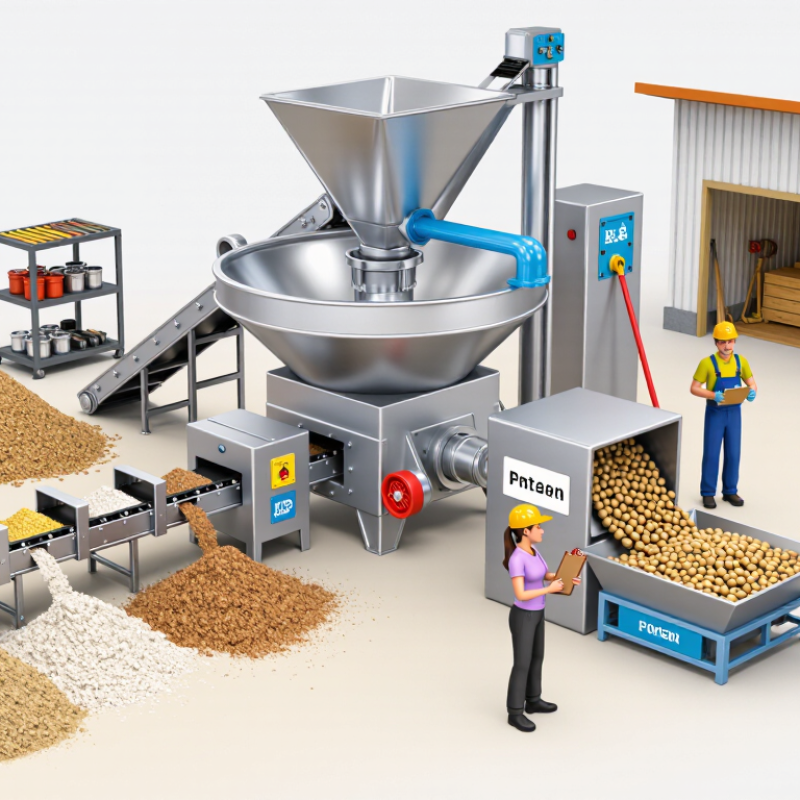
A feed pellet mill turns loose mash into compact, evenly sized feed. In the conditioner, steam and moisture warm the mash and help its particles bind. The softened material passes through die holes, where rollers press it into strands. A cutter trims those strands to length. Pellets then need cooling; warm pellets can retain moisture and break more easily during handling.

The 2024 Global Feed Survey estimated global feed production at 1.29 billion metric tonnes across 142 countries. That figure covers total feed production, not pellet output, but it shows the scale of the sector. Consistent pellet size can help reduce segregation during storage and transport, while density makes bulk handling more predictable. Small details matter. Die condition, moisture, and formula all affect pellet durability and fines.

A mill does not guarantee better nutrition. High heat or poor conditioning can damage sensitive ingredients, and fibrous recipes may resist compression. Operators should check pellet length, moisture, and fines after cooling, then adjust settings gradually. A practical caution: one recipe’s ideal settings may fail with another. The process is useful, but it still needs attentive control.

Steam Conditioning at 70–90°C: Impacts on Pellet Quality

Why Invest in a Feed Pellet Mill?
Steam Conditioning at 70–90°C: Impacts on Pellet Quality

Steam conditioning is more than heating mash. At 70–90°C, steam softens particles, adds moisture, and helps bind ingredients as they pass through the die. Kansas State University feed-manufacturing guidance describes this temperature range as common operating practice. The exact setting depends on formula, moisture, and mill design.

Heat matters. In a 1996 review, Thomas and van der Poel identified conditioning and ingredient properties as key influences on pellet durability. Adequate heat can improve starch binding and reduce fines, while poorly controlled steam may create wet clumps or unstable pellets. A conditioner outlet thermometer is useful, but it cannot show whether steam reached every particle. Check pellet durability and fines after the cooler, too.

Small details count. Steam should be dry and evenly distributed; a leaking trap can quietly undermine consistency. Higher temperatures are not automatically better. Excessive heat may damage heat-sensitive nutrients, and long retention can change the result. There is a catch. A practical trial records mash moisture, conditioner temperature, retention time, and finished-pellet quality for each formula. That gives operators evidence for adjustment, rather than relying on the dial alone.

Pellet Durability Index Targets Often Exceed 90%, Depending on Feed Type

A feed pellet mill can produce pellets designed to withstand conveying, storage, and farm handling. For many feed types, a Pellet Durability Index (PDI) target may exceed 90%. That figure is a useful benchmark, not a universal guarantee. A poultry ration and a high-fiber cattle feed can behave differently under the same settings.

PDI reflects how well pellets resist breaking during a defined tumbling test. The result depends on formulation, moisture, conditioning, die compression, and cooling. A warm pellet may seem firm at the mill outlet, then crumble if it is packed before cooling. Small changes matter. Too little moisture or uneven conditioning can increase fines, while excessive moisture may create drying problems.

Operators should test representative samples and record both PDI and fines at key points, such as after cooling and after transport. Adjust one process variable at a time, then retest; otherwise, the cause of a change can be hard to identify. Feed type sets the starting point, but routine measurements show whether the mill is holding the target. A result just above 90% may be acceptable for one product, yet insufficient for another’s handling needs. The target deserves review.

Why Invest in a Feed Pellet Mill? — Pellet Durability Index Targets Often Exceed 90%, Depending on Feed Type
Feed Type Illustrative PDI Planning Range Why Durability Matters Factors That Can Affect Results
Broiler poultry feed 90–95% Helps limit fines during conveying and handling, supporting more consistent feed delivery. Particle size, formula, conditioning temperature and moisture, die specifications, and cooling.
Layer poultry feed 88–94% Durable pellets can reduce breakage between production, transport, and feeding. Mineral content, fiber level, ingredient grind, binder use, and pellet dimensions.
Swine feed 90–95% A higher PDI may help reduce fines, although pellet size and feeding system requirements also matter. Cereal type, fat addition timing, conditioning, die compression ratio, and post-pellet handling.
Cattle and other ruminant feed 85–95% The appropriate target depends on the ration, pellet size, storage, and handling conditions. Forage and fiber content, ingredient moisture, formulation, and required pellet structure.
Aquafeed Often 90% or higher as a handling goal; product-specific Pellet integrity during handling is useful, but PDI alone does not show how a pellet performs in water. For aquatic feeds, also assess water stability, sinking or floating behavior, and nutrient leaching.
Multi-species or custom formulations Set through product trials; targets may exceed 90% A defined target helps balance pellet quality, throughput, energy use, and the needs of the end user. Ingredient variability, mill settings, conditioning consistency, and the distance and method of transport.
Note: These are indicative planning ranges, not universal specifications. PDI results depend on the test procedure, sample preparation, feed formulation, and processing conditions. Compare results only when the same test method is used; determine production targets through product-specific trials.

Investment Metrics: Capacity, Energy Use per Tonne, Labor, and Payback

A feed pellet mill should be assessed by saleable output, not its nameplate capacity alone. Compare tonnes per hour under the feed formulas, moisture levels, and pellet sizes you actually plan to produce. A machine rated for eight tonnes per hour may deliver less when the die is worn or the mix needs extra conditioning. Ask for operating data, and verify it with a production trial where possible.

Energy use per tonne is a practical comparison point. Record electricity consumption alongside finished output over a representative shift; brief tests can hide startup losses and downtime. Track labor too. One operator may manage feeding and monitoring, while another worker handles bagging, clearing blockages, or routine checks. Small gaps add up. Numbers can mislead.

Estimate payback using realistic daily throughput, operating days, maintenance, labor, and the value of pellets retained or sold. Include the cost of dies, rollers, and planned service, not just the purchase price. Then test a slower-production scenario. What if orders fall, or power costs rise? The calculation may look less attractive, and that is useful. A spreadsheet cannot predict every stoppage; keep a margin for the inconvenient details.

Why Invest in a Feed Pellet Mill?

Illustrative investment metrics by production capacity

1 t/h line
2 operators per shift
Illustrative payback: 4.5 years
3 t/h line
3 operators per shift
Illustrative payback: 3.2 years
6 t/h line
5 operators per shift
Illustrative payback: 2.8 years

Larger lines can spread labor and fixed costs across more output, but actual energy use and payback depend on feed formulation, operating hours, utilization, local electricity and labor costs, and equipment investment. Figures shown are planning assumptions, not guaranteed performance; validate them with a site-specific feasibility study.