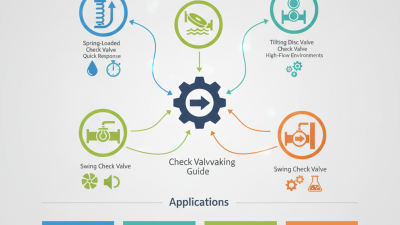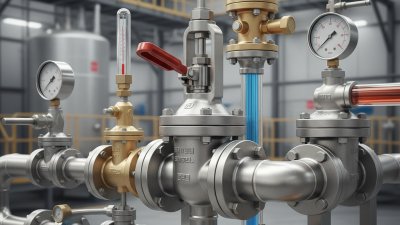
Choosing the best check valves in 2026 is not a brand-only decision. Buyers must match valve type, materials, pressure rating, and closing behavior to the actual service. A swing check valve may suit a large water line, while a spring-assisted design can help limit slam in a faster-closing system. Small details matter.
The market context is growing, but the numbers need care. Grand View Research’s Industrial Valves Market report estimated the broader global market at USD 78.4 billion in 2023 and projected a 4.9% compound annual growth rate through 2030. That figure covers industrial valves generally, not check valves alone. It signals investment across flow-control systems, but cannot prove demand for any specific check-valve design.
John V. Ballun, an engineer and author of A Guide to the Selection and Application of Check Valves, offers a useful principle in his published work: selection should reflect operating conditions, not nominal pipe size alone. That is guidance, not a universal formula. A valve that performs well on a clean-water test bench may behave differently with solids, pulsating flow, or frequent starts. Not always obvious. This guide compares check valves by application, material, pressure and temperature limits, maintenance needs, and supplier support. It also flags trade-offs buyers may overlook, including pressure loss and water hammer. One limitation remains: published market estimates use different scopes and methods. Treat them as context, then verify specifications against your system data.
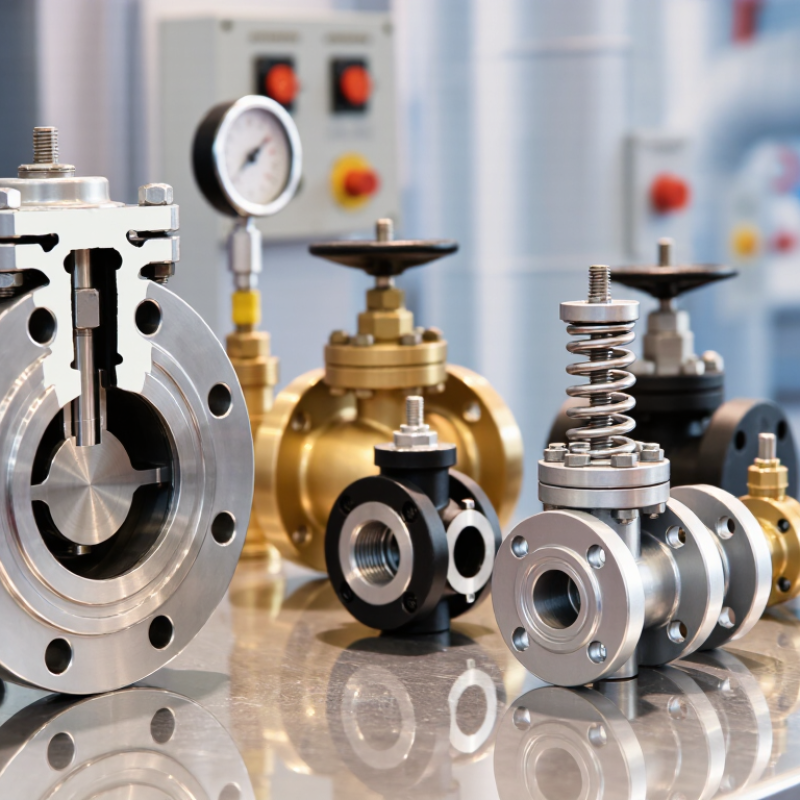
A check valve controls flow by opening in the intended direction and closing when flow reverses. Its moving disc, ball, or flap responds to pressure differences, not an operator’s command. In a pump line, this can limit reverse flow when the pump stops and reduce the chance of sudden pressure changes. The exact effect depends on the system. Small parts matter.
In water systems, a swing-style valve may suit steady flow and a relatively open pipe run. A spring-loaded design can close faster, which may help where flow stops abruptly. But stronger springs also create more resistance. Too much resistance can reduce available pressure. In compressed-air lines, the valve must handle the operating pressure and avoid adding excessive pressure loss. A valve that works well in one setup may not fit another.
Process piping brings other details into focus: fluid temperature, suspended particles, installation angle, and maintenance access. Material selection should match the fluid and service conditions, while the connection size alone cannot confirm suitability. It is easy to choose from a catalog using pressure ratings alone; that can miss pressure surges during startup or shutdown. Field measurements are worth checking, even when they complicate the selection. A correctly sized valve still needs the installation direction and clearance verified before commissioning.
Choosing a check valve starts with the fluid, flow rate, and installation layout. A swing check valve uses a hinged disc and often suits water lines, cooling circuits, and larger pipelines with steady flow. It usually creates modest flow resistance. Yet a sudden flow reversal can make the disc slam, so closure behavior matters. Lift check valves can work well in high-pressure steam or clean process lines, where guided movement supports reliable seating. Their pressure drop may be higher. It depends.
For compact installations, dual-plate check valves fit between flanges and close quickly, making them common in pump discharge and building services. Confirm their permitted orientation and minimum flow conditions before specifying one. Ball check valves are often considered for wastewater or fluids carrying small solids; inspect the seat and ball for wear over time. Keep it simple. Compare pressure and temperature limits, body and seal materials, connection type, and maintenance access. A valve that looks suitable on a drawing may behave differently with pulsating flow or frequent starts. That detail is easy to overlook, and it deserves a second check against actual operating data.
Choosing a check valve starts with the fluid, not the catalog photo. Stainless steel may suit corrosive service, while ductile iron can work well in many water systems. Seal materials also matter: an elastomer that handles one fluid may swell or harden in another. Details matter.
Compare the valve’s pressure rating with both normal operating pressure and possible surges. Check the rating at the actual service temperature; heat can change material limits. Confirm the end connection and installation orientation, too. A mismatch can turn a sound valve into a leak risk. This is easy to miss.
Performance depends on more than the maximum flow figure. Look for cracking pressure, pressure drop, closure behavior, and resistance to water hammer. A spring-assisted design may close quickly, but could add resistance in a low-pressure line. Ask for test data tied to the intended size and duty. I would still verify the assumptions: published figures rarely capture every start-up, shutdown, or fluid variation. Compare documented results with the real operating conditions before selecting a valve.
Compare materials, pressure ratings, and performance against the actual fluid, temperature, and operating conditions.
How to read this chart: Bars show representative ASME B16.34 pressure ratings for ASTM A216 WCB carbon steel at 100°F (about 38°C). Class numbers are designations, not psi values. Actual allowable pressure depends on material, temperature, valve construction, and applicable standards. For selection, also verify media compatibility, pressure drop, cracking pressure, and closure performance.
For global buyers in 2026, check-valve standards should match the installation, not just the supplier’s brochure. API 594 covers several check-valve designs, while ASME B16.34 addresses pressure-temperature ratings and construction. ISO 5208 provides pressure-testing procedures and acceptance criteria. These documents answer different questions; one certificate cannot replace the others. Check the exact edition and scope listed in the quotation.
Regional requirements matter. Equipment entering the European market may need assessment under the Pressure Equipment Directive, with CE marking where applicable. Other markets may require different conformity documents. Ask for material certificates, such as EN 10204 Type 3.1, when traceability is important. ISO 9001 describes a manufacturer’s quality-management system; it does not certify an individual valve. That distinction is easy to miss.
Tips: Match the valve’s pressure class, temperature range, body material, and end connections to the project specification. Request test records tied to the actual order, not a generic sample. Confirm whether the valve is intended for water, steam, gas, or another medium. A polished certificate still cannot prove suitability by itself. I would also verify who issued it and whether its scope covers the selected model. Sometimes the paperwork looks complete, but a small mismatch changes the decision.
A reliable check valve starts with a clear description of the operating conditions. Tell suppliers the fluid, temperature range, working pressure, flow rate, and installation direction. Ask for the valve’s cracking pressure and allowable leakage, not just its nominal size. Small details matter. A datasheet can look complete while omitting the conditions behind its test results.
Match the valve design and materials to the actual service. A swing check valve may suit a larger, steady-flow line, while a spring-assisted design can help limit reverse flow in a compact system. Confirm compatibility with the fluid and check whether the valve needs a specific mounting position. Consider pressure loss, closure speed, and possible water hammer. If the application is unusual, calculations alone may not settle the choice; a controlled trial may be worthwhile.
Assess suppliers by reviewing material certificates, pressure-test records, inspection procedures, and product traceability. Ask how they handle dimensional changes, rejected parts, and replacement requests. Compare quotations against the same technical specification, delivery terms, and testing scope. Then speak with the technical team about a realistic duty point. A polished brochure is not proof of consistent production. I would still verify a sample or request independent inspection when failure would interrupt critical operations. Supplier responses can be imperfect, too; note what remains unanswered before placing an order.
| Category | Valve type or assessment item | Key comparison points | Buyer checks and practical guidance |
|---|---|---|---|
| Check Valve Selection | |||
| Valve type | Swing check valve | A hinged disc opens with forward flow and closes when flow reverses. Pressure loss is often relatively low when the valve is fully open, but closure response depends on flow conditions and design. | Commonly considered for water, wastewater, and larger pipelines. Confirm the permitted installation orientation; standard designs are generally used in horizontal lines or vertical lines with upward flow, subject to the product design. |
| Valve type | Lift check valve | A guided disc or piston lifts from its seat under forward flow. It can provide positive guidance but may have higher pressure loss than a full-opening swing design. | Often considered for smaller lines and applications requiring guided closure. Check flow direction, minimum operating flow, pressure drop, and whether the specific design is suitable for horizontal or vertical installation. |
| Valve type | Dual-plate (double-door) check valve | Two spring-assisted plates pivot toward the open position. Its compact, lightweight construction can suit space-constrained piping; pressure drop and closure behavior vary by design and sizing. | Consider where short face-to-face dimensions or lower installed weight matter. Verify wafer or lug connection details, flange compatibility, spring arrangement, and approved installation orientation. |
| Valve type | Axial-flow or nozzle check valve | A guided disc moves along the flow axis and is commonly spring-assisted. Such designs are intended to respond quickly to flow reversal, but actual surge performance depends on the system and valve selection. | Consider for applications where controlled, rapid closure is important. Request sizing information, pressure-drop data, spring details, and application-specific transient or surge analysis where needed. |
| Valve type | Ball check valve | A ball moves away from the seat during forward flow and returns toward the seat when flow reverses. Internal geometry, ball material, and flow conditions affect pressure loss and sealing. | Often evaluated for wastewater and some solids-bearing services, subject to the model’s passage and media limits. Confirm ball and seat materials, solids size, installation orientation, and maintenance access. |
| Service conditions | Pressure, temperature, and media | Allowable limits depend on body material, trim, end connection, pressure class, temperature, and the applicable design standard. | Provide operating and design pressure and temperature, fluid composition, concentration, solids content, and any corrosion or erosion concerns. Check the supplier’s pressure–temperature rating rather than relying on nominal size alone. |
| Service conditions | Connections and installation | Common end connections include flanged, threaded, butt-weld, and wafer or lug styles. Dimensions and ratings are not interchangeable across standards. | Specify the governing piping standard, pressure class or PN rating, face-to-face requirements, flow direction, pipe orientation, and available installation space. |
| Standards | Design and testing references | Relevant references can include API 594 for applicable check-valve designs, ASME B16.34 for valve pressure-temperature ratings and related requirements, and ISO 5208 for pressure testing of industrial valves. | Confirm the exact edition, scope, product type, and contractual applicability. A standard reference alone does not establish that a particular valve is certified or suitable for the service. |
| Supplier Assessment — Suggested Buyer Checklist | |||
| Technical capability | Product documentation and sizing support | Check that the supplier can provide datasheets, drawings, materials, pressure–temperature ratings, pressure-drop information, and installation requirements for the offered model. | Request documents for the exact size, pressure class, materials, and configuration being quoted. Resolve deviations from the inquiry specification in writing. |
| Quality assurance | Traceability and inspection records | Review the proposed inspection and test plan, material certificates, serial or heat-number traceability, and final test documentation as required by the purchase specification. | Define required records before placing the order. Verify that certificates and reports identify the supplied valve and the applicable acceptance criteria. |
| Manufacturing | Process control and subcontracting | Clarify which operations are performed by the supplier and which are subcontracted, including casting or forging, machining, assembly, coating, and testing. | Ask how changes to materials, production location, or subcontractors are controlled and approved. Match the response to project quality requirements. |
| Commercial | Delivery, warranty, and lifecycle support | Compare quoted lead time, shipment terms, spare-parts availability, warranty conditions, and technical support—not unit price alone. | Confirm delivery dates, packaging and preservation requirements, warranty exclusions, and the process for handling defects or claims in the destination market. |
| Compliance | Export and destination-market requirements | Requirements may vary by country, project, industry, and end use. Documentation, import rules, and local approvals should be checked for the specific destination. | Identify the destination and end-use requirements at inquiry stage. Obtain confirmation of applicable documents and approvals rather than assuming one certificate covers every market. |
| Supplier comparison | Suggested evaluation weighting | Example internal scorecard: technical fit 30%, quality and traceability 25%, delivery capability 20%, lifecycle support 15%, and total cost 10%. | These percentages are a suggested buyer framework, not an industry standard. Adjust them to project risk, service criticality, and procurement priorities. |