Blog

2026 Best Pneumatic Butterfly Valve Types for Global Buyers

The 2026 global valve market is becoming more demanding, not merely larger. Grand View Research estimates the industrial valves market will continue growing through the decade, supported by water treatment, energy, chemical processing, and manufacturing investment. Fortune Business Insights also identifies automation and process modernization as important market drivers. These trends place the pneumatic butterfly valve in a practical position: it offers compact construction, rapid quarter-turn operation, and efficient flow isolation for many medium and large pipelines.

Yet market forecasts do not replace engineering judgment. A valve handling chilled water may need different materials than one exposed to abrasive slurry or corrosive chemicals. Buyers should examine pressure class, temperature range, seat composition, disc material, actuator torque, and available air pressure. API 609 and ISO 5211 are useful reference points for butterfly valve design and actuator mounting. IEC 60534-related control principles may also matter when throttling performance is required. Supplier quality records, factory testing, traceable certificates, and local service capacity deserve equal attention.

This guide compares the best pneumatic butterfly valve types for global buyers in 2026. It considers wafer, lug, flanged, high-performance, and resilient-seated designs. A catalog can make selection look easy. It is not. A cheaper actuator may consume more air, respond poorly, or fail under dirty conditions. Forecasts can also be imperfect. I would not treat any market report as a purchase specification. Real performance depends on verified application data, careful sizing, and honest communication between the buyer and manufacturer.

2026 Best Pneumatic Butterfly Valve Types for Global Buyers

Butterfly Valve Fundamentals: DN25–DN1200, PN6–PN40, and API 609

2026 Best Pneumatic Butterfly Valve Types for Global Buyers

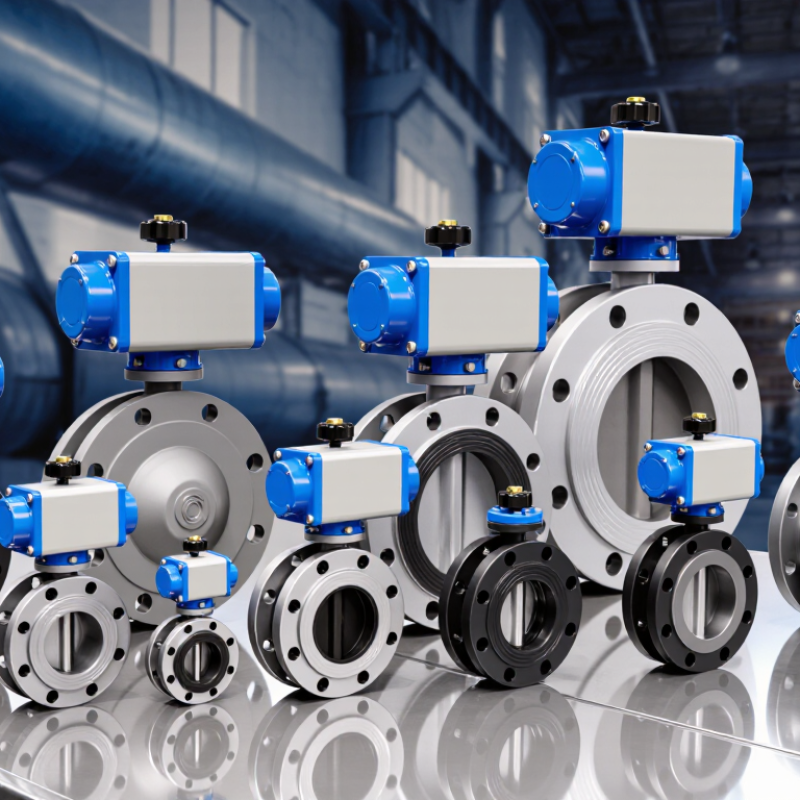
Butterfly valves control flow with a rotating disc inside the pipe. Common sizes range from DN25 to DN1200. Pressure ratings usually span PN6, PN10, PN16, PN25, and PN40. A pneumatic actuator turns the disc quickly, making it practical for water, air, chemicals, and process lines.

Wafer valves suit compact installations.

Lugged valves allow more flexible maintenance.

Double-flanged designs support larger pipelines and heavier operating conditions.

API 609 provides a recognized design reference for butterfly valves. Buyers should check whether the valve follows Category A or Category B requirements.

Seat design, shaft construction, disc material, and pressure testing still require careful review. Resilient seats work well in many moderate-temperature services. Metal-seated designs may handle higher temperatures and more demanding cycles.

Not always.

Actuator sizing must match the valve torque, pressure difference, and operating frequency. A DN1200 valve may need substantial air volume and a reinforced mounting system. Fail-open or fail-closed operation should match the process risk assessment.

I have seen specifications list PN16 while the actual medium requires a higher temperature correction. That small mismatch can create leakage or premature wear.

Air quality matters too. Moisture and oil contamination can damage actuator seals over time.

Buyers should verify face-to-face dimensions, flange drilling, materials, testing records, and local installation requirements before approval.

One detail is easy to miss: DN size describes nominal diameter, not the exact disc diameter.

Wafer, Lug, and Double-Flanged Types: EN 593 and ASME B16.5 Fit

For global buyers, the valve type should follow the piping joint, maintenance plan, and applicable standard. Wafer valves sit between two flanges. They are compact and economical. However, removing one valve may require loosening nearby pipework. Lug valves use threaded inserts or lugs around the body. This design can support dead-end service when the system permits it. Each side can also be isolated during maintenance. Double-flanged valves use separate flanges on both ends. They suit heavier pipelines, larger diameters, and systems needing stronger alignment control. Their weight matters.

EN 593 is a key reference for industrial metal butterfly valves. It addresses design, performance, and testing requirements. ASME B16.5 defines flange dimensions, pressure classes, and facing details. It does not certify the complete valve assembly. A valve drilled for an ASME Class 150 flange may not match a PN16 EN flange, even when sizes appear similar. Check DN or NPS, outside diameter, bolt circle, bolt-hole count, facing, gasket, pressure class, and temperature rating. Do not rely on nominal size alone.

Service conditions should guide material selection. Corrosive water may require a suitable disc and seat combination. Abrasive media can demand stronger seat protection and careful flow evaluation. Before ordering, request dimensional drawings, pressure-temperature charts, leakage criteria, shaft orientation, and test records. Documents expose gaps. A field check is still necessary. Real installations are rarely perfect. I would not treat standard matching as complete until flange drilling, clearance, and maintenance access are verified together.

Resilient-Seated Types: EPDM to 150°C and NBR to 100°C

2026 Best Pneumatic Butterfly Valve Types for Global Buyers

Resilient-seated butterfly valves remain practical for water, HVAC, and general process lines. EPDM seats can reach approximately 150°C, while NBR seats commonly support up to 100°C. These figures are useful, but not universal. Actual limits depend on pressure, cycling frequency, medium concentration, and seat design.

According to Grand View Research, the global industrial valves market was valued at over USD 78 billion in 2023. MarketsandMarkets also forecasts continued growth through 2028, driven by water treatment, energy, and process industries. This expansion increases demand for compact pneumatic control. Yet temperature ratings deserve closer attention than market headlines suggest.

EPDM suits hot water, steam-related service, ozone, and many diluted chemicals. It performs poorly with petroleum oils and hydrocarbon-rich fluids. NBR offers stronger resistance to mineral oils, fuels, and greases, but prolonged heat can harden the seat. A practical selection begins with the medium, not the actuator.

Keep this detail visible. A pipeline carrying warm water may still face sudden thermal spikes. Repeated cycling can accelerate wear. I have seen specifications list 150°C without stating exposure time or pressure. That is incomplete engineering. Buyers should request continuous-temperature data, pressure-temperature curves, compatibility testing, and actuator torque calculations before approving a valve.

2026 Best Pneumatic Butterfly Valve Types for Global Buyers - Resilient-Seated Types: EPDM to 150°C and NBR to 100°C
Valve Type Seat Material Typical Temperature Range Recommended Media Media Compatibility Limits Common Pressure Range Typical Body Materials Pneumatic Actuator and Buyer Notes
Concentric Wafer Butterfly Valve EPDM -40°C to 150°C
Confirm the exact compound and pressure derating.
Water, chilled water, hot water, air, dilute aqueous chemicals, and selected water-treatment fluids. Generally unsuitable for petroleum-based oils, fuels, and many hydrocarbon solvents. Commonly PN 6 to PN 16 or Class 150, depending on design and size. Ductile iron, cast iron, carbon steel, or stainless steel. Compact and economical. Use a double-acting actuator for standard on/off service or a spring-return actuator for fail-open or fail-closed requirements.
Concentric Wafer Butterfly Valve NBR -20°C to 100°C
Actual limits depend on compound, pressure, and service conditions.
Air, water, hydraulic fluids, mineral oils, lubricating oils, and selected fuels. Lower resistance to ozone, weathering, hot water, steam, and some aggressive chemicals than EPDM. Commonly PN 6 to PN 16 or Class 150, depending on design and size. Ductile iron, cast iron, carbon steel, or stainless steel. A practical choice where oil resistance is more important than high-temperature water resistance. Check fuel compatibility before ordering.
Concentric Lug Butterfly Valve EPDM -40°C to 150°C
Verify the manufacturer’s temperature-pressure curve.
Water distribution, HVAC systems, fire-water piping, cooling water, and general utility service. Not normally selected for petroleum products or hydrocarbon-rich process streams. Commonly PN 10 to PN 16 or Class 150; some designs are suitable for dead-end service. Ductile iron, carbon steel, or stainless steel. Threaded lugs permit removal of downstream piping in some installations. Confirm dead-end pressure rating and flange drilling before purchase.
Concentric Lug Butterfly Valve NBR -20°C to 100°C Oil-containing water, compressed air, mineral oils, hydraulic systems, and selected hydrocarbon services. Not preferred for hot water, steam, strong oxidizers, or prolonged outdoor ozone exposure. Commonly PN 10 to PN 16 or Class 150. Ductile iron, carbon steel, or stainless steel. Suitable for compact automated isolation systems. Select actuator torque with a safety margin for seat friction, differential pressure, and service temperature.
Flanged Butterfly Valve EPDM -40°C to 150°C Large-diameter water lines, cooling towers, municipal water, irrigation, and low-to-moderate pressure utility systems. Do not use as a general substitute for hydrocarbon-resistant elastomers. Commonly PN 10, PN 16, or Class 150; higher ratings require a specific valve design. Ductile iron, carbon steel, or stainless steel. Flanged ends simplify alignment on larger pipelines. Compare face-to-face dimensions with the applicable piping standard before shipment.
Flanged Butterfly Valve NBR -20°C to 100°C Industrial oil lines, fuel-related utility systems, compressed air, and hydraulic-fluid service where the valve design permits. Temperature, chemical concentration, and fuel composition can significantly reduce service life. Commonly PN 10, PN 16, or Class 150. Carbon steel, ductile iron, or stainless steel. Recommended for larger oil-compatible pipelines. Confirm fire-safe, antistatic, emission, and hazardous-area requirements separately when applicable.
High-Performance Double-Offset Butterfly Valve EPDM Typically up to 150°C for the seat compound
Body, disc, stem, and packing may have different limits.
Hot-water circulation, HVAC, utility water, and selected chemical-water services. Seat and lining compatibility must be checked against the actual chemical concentration and operating cycle. Often available above PN 16 or Class 150, subject to the pressure-temperature rating. Carbon steel, stainless steel, or alloy steel. Lower operating torque and reduced seat rubbing than concentric designs. Usually costs more but can be advantageous for frequent cycling and larger sizes.
High-Performance Double-Offset Butterfly Valve NBR Typically up to 100°C Oil, fuel, hydraulic fluid, compressed air, and selected industrial hydrocarbon services. Confirm compatibility with aromatic compounds, additives, oxygen service, and high-temperature fluids. Often available above PN 16 or Class 150, subject to the pressure-temperature rating. Carbon steel, stainless steel, or alloy steel. Well suited to automated industrial isolation. Use a positioner and control accessories when throttling rather than simple isolation is required.
Selection note: The listed temperature values are practical reference limits for the stated resilient-seat materials, not universal ratings for every valve. Final selection should verify pressure-temperature curves, elastomer compound, chemical concentration, cycle frequency, flange standard, actuator torque, fail position, and applicable regional safety requirements.

Double- and Triple-Offset Types: 600 psi, 600°C, and API 607

In 2026, global buyers need pneumatic butterfly valves matched to real service conditions. A 600 psi requirement demands careful pressure-temperature verification. It is not automatically a valve class.

Double-offset butterfly valves reduce disc-seat friction during operation. They suit demanding water, gas, and process duties. Metal seats can improve temperature resistance, but sealing performance depends on surface finish and alignment.

Triple-offset valves create a cam-like, non-rubbing seal. They are often better suited to hot steam, hydrocarbons, and repeated thermal cycling. At 600°C, however, the body, disc, stem, packing, and actuator accessories need separate evaluation. The seat alone cannot carry the design.

Temperature changes everything. Pneumatic actuators should be mounted away from extreme heat when possible. Extended stems, heat shields, and suitable packing may protect sensitive components.

Spring-return units need verified torque at startup, shutdown, and emergency conditions. Cold testing can mislead.

For fire-safe applications, request API 607 test evidence for the exact valve design. Confirm the edition, size range, pressure rating, and seat construction. Ask for material certificates, torque curves, leakage results, and pressure-temperature charts.

Do not accept a generic “600 psi, 600°C” statement without limits. That assumption can fail.

In field selection, I would also review cycling frequency and thermal shock. Engineers sometimes focus on maximum temperature and overlook actuator response. That is a costly gap.

Pneumatic Actuator Selection: 3–8 bar Air, 90° Stroke, ISO 5211

2026 Best Pneumatic Butterfly Valve Types for Global Buyers

For most process lines, pneumatic butterfly valves use a 90° quarter-turn stroke. The actuator must match the valve’s breakaway, running, and seating torque. A 3–8 bar air supply is common, but pressure alone does not confirm suitability. Higher pressure can increase torque only when the actuator is correctly sized and regulated.

ISO 5211 defines the mounting interface, not the complete actuator performance. Check flange dimensions, shaft geometry, rotation direction, and available torque tables. Double-acting actuators suit stable air supplies and controlled opening.

Spring-return models provide a defined fail-open or fail-closed position. That choice depends on process risk. It should never be guessed.

The U.S. Department of Energy reports that compressed-air leaks can waste 20–30% of compressor output in poorly maintained systems. Small leaks become expensive. Measure actual pressure at the actuator inlet, especially beside long tubing runs and restrictive solenoid valves.

Select an actuator that reaches required torque at the lowest expected pressure, not at the ideal 8 bar. A practical reserve of 20–30% is often used, although excessive margin may slow response and increase air consumption.

I would still verify this margin through cycle testing. Valve friction changes with temperature, media, and seat wear. That detail is easy to overlook.