The best rotary actuator electric choice in 2026 depends on the motion, load, and environment—not a headline torque figure. In a packaging line, an actuator may index a tray repeatedly; on a mobile machine, it may turn a joint exposed to vibration and dust. Those jobs demand different priorities. Compare rated and peak torque, speed under load, backlash, positioning repeatability, duty cycle, ingress protection, and control compatibility. Check the mounting pattern and cable routing, too. Small details matter.
Automation data offers useful context, but not a product verdict. The International Federation of Robotics’ World Robotics 2024 report recorded 541,302 industrial robot installations worldwide in 2023. IFR President Marina Bill said, “The new peak of more than half a million installations was reached despite the opposite trend in many markets.” That signals sustained automation demand; it does not prove one actuator design is best. Be careful with that distinction. A robot installation count is not an electric-actuator market forecast.
For buyers, the practical test is the actual operating cycle: measure load, acceleration, stops per hour, and allowable positioning error. Then compare manufacturer curves and request test data at the intended voltage and temperature. A compact unit may fit neatly beside a gearbox, yet still overheat during rapid cycling. A high torque rating can also hide poor repeatability. Specifications help, but they are not the whole story. This guide evaluates electric rotary actuators by application fit, measurable performance, integration effort, and support quality. There may be no universal winner—and that is worth admitting.
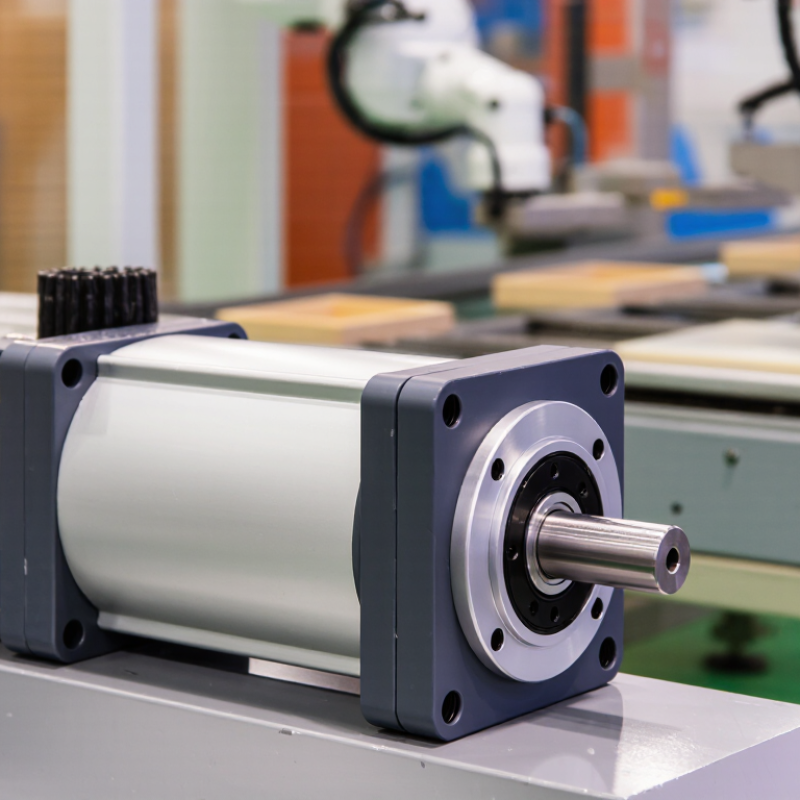
What Is the Best Electric Rotary Actuator in 2026?
What an Electric Rotary Actuator Is and How It Works
An electric rotary actuator turns electrical energy into controlled rotation. Inside, a motor drives an output shaft, often through a gearbox that increases torque and reduces speed. A controller sets the movement, while an encoder or similar sensor reports position. The system can then stop at a target angle or adjust its motion. That matters. Unlike a simple motor, a well-configured actuator can provide repeatable positioning for valves, indexing tables, and robotic joints.
The International Federation of Robotics reported 4,281,585 industrial robots operating worldwide in 2023, in its World Robotics 2024 report. That figure describes robots, not actuators, but it reflects the wider growth of automated equipment that relies on controlled motion. Choosing an actuator still depends on the actual load, required angle, duty cycle, and environment. A compact unit may look suitable on paper, yet struggle with repeated starts or a heavy offset load. Specifications deserve a real-world check.
Tips: Compare rated torque at the required speed, not peak torque alone. Check backlash, feedback accuracy, and heat limits. Test the actuator with the actual load if possible; a clean bench test can miss vibration and mounting issues. No single model is best for every machine.
The best electric rotary actuator in 2026 is the one that fits the actual load, motion profile, and working environment. Peak torque alone can mislead. A valve that turns slowly may need less power than a mechanism that starts and stops repeatedly. Compare continuous torque with startup torque, then check the actuator’s duty cycle. For example, a unit moving a 20-kilogram fixture every few seconds may heat up even when each movement feels easy. Speed matters, too. Faster motion can increase impact at the end of travel. Small details matter.
Repeatability and backlash affect how accurately an actuator reaches its target. In a packaging line, even a small position error can shift a gripper away from its mark. Check encoder feedback, allowable lost motion, and how performance changes under load. Then consider ingress protection, ambient temperature, vibration, and available space. The control interface should work with the existing system, not merely look convenient on a specification sheet. Maintenance access deserves attention as well. A compact actuator may fit neatly, but become awkward to inspect. No single rating settles the choice; test the intended motion where practical, and question assumptions made from unloaded demonstrations.
The best electric rotary actuator depends on the load, motion profile, and operating environment. Quarter-turn models suit valves and dampers, where rotation is limited and repeatable. They are compact and straightforward to control. However, their torque can fall short when a valve sticks or pressure changes. Multi-turn actuators handle repeated rotations and fit applications such as gate valves. They offer controlled positioning, but may need more space and careful setup. Servo-based actuators provide precise speed and position control for automated equipment. That precision comes with higher system complexity. Stepper-driven designs are simpler for predictable loads, though missed steps can cause position errors if resistance rises unexpectedly.
Tips: Check the required torque across the full motion, not only at startup. Allow margin for friction, temperature, and load variation. Confirm the actuator’s feedback method, duty cycle, and enclosure rating before installation. A small test with the actual mechanism can reveal binding that a specification sheet misses.
There is no universal winner. A slow damper may need rugged simplicity more than fine positioning. A packaging machine may value repeatability and rapid response. I would also question any selection based on torque alone; noise, heat, backlash, and maintenance access matter in daily use. Real installations are rarely as tidy as the drawings.
The best electric rotary actuator in 2026 depends on the job, not a universal ranking. Start with the load: a quarter-turn valve, for example, may need different torque at breakaway than during steady movement. Measure the real operating conditions where possible. Guessing from nominal torque alone can lead to a stalled actuator or unnecessary oversizing.
Check required rotation, travel time, and operating frequency. An actuator that moves a damper twice a day has different duty needs from one cycling repeatedly. Compare continuous and peak torque ratings, and allow for changes in friction or process pressure. Stall torque is not a normal operating target. It can generate heat and shorten service life.
The installation environment matters too. Dust, moisture, vibration, ambient temperature, and available power can narrow the choices. Confirm mounting dimensions and control-signal compatibility before ordering; small mismatches can create expensive delays. If positioning accuracy matters, examine feedback resolution and backlash under load. A tidy selection table can still miss a cable route or maintenance clearance. That is worth checking on site. The “best” choice may be less powerful but easier to inspect and service.
There is no single best actuator for every application. The ranges below are general screening guidelines, not guaranteed product specifications; confirm torque, speed, duty cycle, accuracy, and environmental ratings for the actual mechanism and load.
| Application | Typical Output Torque | Typical Output Speed | Control and Feedback Needs | Likely Actuator Approach | Key Selection Check |
|---|---|---|---|---|---|
| Valve positioning Quarter-turn process or utility valves |
About 5–500 Nm; larger valves may require more | Usually a few degrees per second to tens of degrees per second | Open/close control; limit switches or position feedback for modulating service | Geared electric quarter-turn actuator; modulating version when intermediate positioning is needed | Use the valve’s breakaway and running torque, including pressure, temperature, and safety margin. |
| HVAC dampers Airflow and zone control |
Often about 1–20 Nm, depending on damper size and friction | Slow; commonly a full stroke takes tens of seconds | On/off or proportional input; position feedback for closed-loop control | Compact geared actuator, selected for the required stroke and control signal | Check linkage geometry, stall protection, acoustic limits, and any spring-return requirement. |
| Robotic joints Pick-and-place and articulated mechanisms |
Roughly 1–100+ Nm, depending on joint size and load | Moderate to high; determined by motion profile and transmission | Precise position, velocity, and often torque control; encoder feedback is typical | Servo motor with a suitable reduction stage; direct drive where low backlash and high bandwidth justify the size and cost | Evaluate peak and continuous torque, reflected inertia, backlash, thermal limits, and collision requirements. |
| Packaging and indexing machinery Repeated positioning and start-stop motion |
About 0.5–30 Nm for many compact mechanisms; application loads vary widely | Moderate to high, with frequent acceleration and deceleration | Repeatable positioning; stepper control may suit simpler loads, while servo control supports dynamic closed-loop motion | Stepper or servo with gearing chosen to meet the motion profile and load inertia | Size for acceleration torque and cycle rate, not just steady running torque; check motor heating at the actual duty cycle. |
| Solar-panel tracking Slow outdoor azimuth or tilt adjustment |
Highly site- and structure-dependent; commonly tens to hundreds of Nm at the driven axis | Very low; intermittent adjustment rather than continuous rotation | Position commands with limit or position feedback; control may include wind-stow logic | Low-speed geared actuator or drive with an appropriately rated holding mechanism | Calculate wind and structural loads, holding torque, corrosion protection, temperature range, and ingress protection. |
| Laboratory automation Sample handling, small mixers, and instrument mechanisms |
Often below 5 Nm, subject to fixture and process loads | Low to moderate; set by throughput and process needs | Repeatable position or speed; encoder feedback is useful when motion must be verified | Compact stepper or servo actuator, depending on load variation and positioning requirements | Consider repeatability, vibration, cleanliness, service access, and compatibility with cleaning procedures. |
| Automotive or mobile equipment mechanisms Adjusters, latches, and auxiliary controls |
Typically application-specific, from fractions of a Nm to tens of Nm | Low to moderate, often with brief operating cycles | Simple position or end-stop control; feedback and diagnostics depend on system safety needs | Compact geared motor or integrated actuator designed for the supply and control architecture | Verify vibration, shock, temperature, electrical transients, ingress protection, and required qualification standards. |
Selection rule: Start with the load’s required torque and motion profile, then check peak and continuous duty, output speed, positioning accuracy, feedback, power supply, mounting, environment, and safety behavior. Gear reduction can increase output torque and reduce speed, but may add backlash and inertia.
Choosing the best electric rotary actuator in 2026 starts with defining the movement, not comparing product labels. Write down the required rotation angle, operating speed, and how often the actuator will move. Then record the load’s weight, mounting position, and any resistance from seals or connected parts. Small details matter.
Next, size the actuator for both torque and duty cycle. A valve that moves slowly a few times each day has different demands from a machine indexing repeatedly on a production line. Check starting torque, running torque, and the manufacturer’s limits for continuous operation. Include a sensible margin, but avoid oversizing without reason: larger units can cost more and may complicate installation. If the load’s inertia is uncertain, measure it or ask a qualified engineer to verify the calculation.
Finally, match the actuator’s control and feedback to the application. Confirm voltage, wiring, communication signals, position accuracy, and available mounting space. In dusty, damp, or hot locations, review the enclosure rating and temperature range against actual site conditions. Ask for test data, not just a headline torque figure. A small bench test can reveal noise, backlash, or slow response before installation. I have seen specifications look perfect on paper and still miss a practical constraint, such as a cable exiting on the wrong side. Leave room to question the first choice.