Blog

What Is the Best Butterfly Valve Type for 2026?

What Is the Best Butterfly Valve Type for 2026? The answer depends on the fluid, pressure, temperature, and operating frequency. A wafer butterfly valve may suit compact water systems. A lug-style design can support isolated pipe sections. Flanged versions often provide greater installation stability. Each choice has a different mechanical footprint.

Greg McMillan, a recognized process-control engineer, states, “The control valve is the final control element in a control loop.” His principle also matters when selecting a butterfly valve. The valve does not work alone. Its seat, disc, shaft, actuator, and control signal must respond together. A resilient-seated valve may perform well in clean water. A high-performance or triple-offset valve may better handle heat, pressure, or frequent cycling. Material compatibility remains critical. Stainless steel can resist corrosion, but it is not automatically the best option. Elastomers may swell when exposed to certain chemicals. That detail is easy to overlook.

Real service conditions should guide the decision. Picture a plant operator opening a stiff valve beside a vibrating pipeline. The catalogue rating alone cannot explain that problem. Maintenance access, torque margin, leakage requirements, and replacement time also deserve attention. Some assumptions will be wrong. Flow data may be incomplete. Future process changes may be underestimated. This guide examines the main butterfly valve types for 2026, compares their strengths and limitations, and considers where each design may fail. The best choice is not always the newest valve. It is the most dependable match for the actual system.

What Is the Best Butterfly Valve Type for 2026?

Butterfly Valve Basics and How the Main Types Differ

What Is the Best Butterfly Valve Type for 2026?

Butterfly valves use a rotating disc to regulate flow through a pipe. Their compact bodies reduce weight, installation time, and space requirements. The best type depends on pressure, temperature, fluid chemistry, and maintenance access.

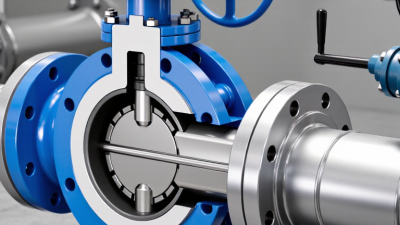
A concentric butterfly valve keeps the stem and disc centered. Its resilient seat suits water, air, and low-pressure services. Double-eccentric designs reduce disc contact with the seat, improving durability in larger pipelines. Triple-eccentric valves create a cam-like sealing action. They handle higher temperatures and demanding industrial fluids more reliably. The wrong choice can cause leakage, torque problems, or premature seat damage. Industry reports reflect strong demand for efficient flow-control equipment. Grand View Research reported that the global industrial valves market was valued at over 76 billion dollars in 2023. Its analysis also forecasts continued growth through 2030, supported by water infrastructure and energy projects. These figures do not make every advanced valve necessary.

Tips: Check the fluid, pressure class, temperature, line size, and actuation frequency. Ask for verified torque data, not only catalogue photographs. For abrasive slurry, inspect the disc edge and seat material carefully. In my experience, engineers sometimes overspecify triple-eccentric valves. That choice can raise costs without improving a clean-water system. However, selecting a basic resilient-seated valve for hot service creates a bigger risk. Standards, test records, and site conditions should guide the final decision.

Key Factors for Choosing a Butterfly Valve in 2026

What Is the Best Butterfly Valve Type for 2026?

Key Factors for Choosing a Butterfly Valve in 2026

Choosing the best butterfly valve starts with the operating medium. Clean water, seawater, chemicals, steam, and abrasive slurry demand different materials. In field inspections, seat damage often reveals a poor compatibility decision. The difference is visible. Check temperature, pressure, flow speed, and expected cycling before selecting the valve body or seat.

Disc design also matters. A concentric valve suits many low-pressure isolation duties. An offset design can reduce friction and improve sealing under demanding conditions. However, a more advanced design is not automatically better. I have seen projects pay for unnecessary performance while overlooking actuator sizing. Confirm torque requirements, shutoff pressure, fail position, and available air or electrical power.

Installation conditions deserve equal attention. Wafer, lug, and flanged connections affect maintenance access and pipeline layout. Leave enough space to remove the actuator and inspect the stem. For 2026 systems, position feedback and condition monitoring can improve maintenance planning. Yet digital features cannot repair incorrect calibration. Request material certificates, pressure-test records, leakage results, and clear operating limits. Select products supported by recognized standards and traceable technical documentation. My earlier selections sometimes focused too heavily on purchase price. Lifecycle cost, spare parts, energy use, and downtime usually matter more. A careful review may feel slower, but it prevents expensive surprises.

What Is the Best Butterfly Valve Type for 2026?

The chart compares common butterfly valve designs across practical selection factors. Scores from 1 to 5 represent relative engineering suitability: higher scores indicate better performance for the listed factor. Concentric valves are typically preferred for economical, low-to-medium pressure service; double-eccentric valves provide reduced seat wear and improved shutoff; triple-eccentric valves are generally selected for demanding high-temperature, high-pressure, and fire-safe applications. Final selection should verify pressure class, temperature, media compatibility, emissions requirements, and applicable standards.

Comparing Wafer, Lug, Flanged, and Double-Flanged Designs

What Is the Best Butterfly Valve Type for 2026?

The best butterfly valve depends on access, pressure, and maintenance priorities. The MarketsandMarkets Industrial Valves report projects the market to grow from about USD 78 billion in 2023 to USD 96 billion by 2028. That growth reflects continued demand for compact flow-control equipment. Wafer valves suit space-limited pipelines. They fit between flanges and usually cost less. However, they need accurate alignment and cannot isolate a pipe section alone.

Lug valves use threaded inserts on both sides. Maintenance teams can remove one pipe section without disturbing the opposite side. This makes them practical for water treatment, HVAC, and moderate-pressure service. Flanged butterfly valves offer stronger connection control and easier installation in larger systems. Their heavier bodies increase cost and handling time. The Global Water Intelligence market outlook also reports sustained infrastructure investment, supporting demand for dependable municipal valve systems.

Double-flanged designs provide excellent stability in large-diameter pipelines. They handle demanding operating conditions better, but their weight requires stronger supports and lifting plans. API 609 and ISO 5752 provide useful dimensional and performance references, yet compliance does not replace site-specific engineering. My field experience suggests that wafer valves are often overused because they look economical. That choice can become expensive when isolation, vibration, or frequent maintenance matters. The “best” 2026 design is not always the newest one. It is the valve that matches pressure, media, access, and failure consequences. Careful selection remains imperfect. That is worth admitting.

What Is the Best Butterfly Valve Type for 2026? – Comparing Wafer, Lug, Flanged, and Double-Flanged Designs

Evaluation Dimension Wafer Butterfly Valve Lug Butterfly Valve Single-Flanged Butterfly Valve Double-Flanged Butterfly Valve
Basic Connection Design Fits between two pipe flanges and is clamped by shared bolts or studs. Fits between flanges and uses threaded or through-lug holes for independent bolting. Uses one integrated flange connection and is generally selected for compact end-of-line or equipment connections. Has an integrated flange on both sides of the valve body for direct connection to two mating pipe flanges.
Typical Nominal Size Availability Commonly available from approximately DN25 to DN1200; larger sizes are also produced for selected applications. Commonly available from approximately DN25 to DN1200, with larger sizes available depending on pressure class and manufacturer design. Commonly selected from approximately DN50 to DN600 for compact piping and equipment interfaces. Commonly selected from approximately DN50 to DN2000 and above for larger water, utility, and process pipelines.
Typical Pressure Availability Frequently offered in PN10, PN16, and ASME Class 150 configurations; higher ratings require a design-specific check. Frequently offered in PN10, PN16, PN25, and ASME Class 150 or Class 300 configurations, subject to valve construction. Often offered in PN10, PN16, and ASME Class 150 configurations; availability varies significantly by size and service. Commonly offered in PN10 through PN40 and ASME Class 150 through Class 600 configurations, depending on body, seat, and trim materials.
Installation Space Lowest space requirement. The short body length is useful where axial space is limited. Low space requirement, generally similar to wafer designs while providing more flexible bolting. Compact in selected layouts, but the integrated flange and connection arrangement can require additional clearance. Requires more axial space and heavier supporting arrangements because of the two integrated flanges.
Installation Complexity Simple and fast to install, but accurate pipe alignment is important because the valve is centered between the flanges. Moderate installation effort. Individual lug bolts simplify alignment and allow one-sided pipe disconnection on suitable designs. Moderate installation effort because the flange orientation and mating connection must be correctly positioned. Higher handling and alignment effort due to greater weight, larger dimensions, and two bolted flange joints.
Pipe Alignment Sensitivity Relatively high. Poor alignment or incorrect bolt tightening can damage the seat or restrict disc movement. Moderate. The lug pattern helps locate the valve, but proper alignment remains essential. Moderate. Correct flange facing, gasket selection, and bolt loading are required. Moderate. The robust flange arrangement is stable, but misalignment can impose high loads on the valve and piping.
End-of-Line Service Usually not suitable for safe dead-end service unless the specific valve is expressly rated for it and the correct flange is installed. Often preferred for dead-end service. The valve must be specifically rated for the pressure and one-sided condition. Can be suitable when the end connection is designed for dead-end operation and the pressure rating is verified. Suitable for end-of-line arrangements when the valve and blind-flange configuration are correctly rated.
Maintenance and Removal Removing the valve normally requires access to both adjacent flanges and enough clearance to withdraw the body. Good maintainability. Lug bolts can allow one side of the piping to remain secured, subject to the valve design and isolation procedure. Maintenance access is moderate and depends on the connected equipment layout. Good access and structural stability, but removal usually involves more bolts, lifting equipment, and workspace.
Weight and Handling Lowest typical weight. A practical choice for large-diameter lines where lifting and support loads must be minimized. Usually slightly heavier than a comparable wafer valve because of the lug structure and threaded or through holes. Weight varies with the flange arrangement; generally heavier than wafer and lug designs of the same size. Typically the heaviest option because the body includes two full flange ends and additional structural material.
Relative Purchase and Installation Cost Usually the lowest. Lower material usage and simpler construction can reduce purchase and installation costs. Generally low to medium. The added lug structure increases cost slightly but may reduce maintenance downtime. Generally medium. Cost depends on flange dimensions, pressure class, and the required end configuration. Generally the highest of the four options because of higher material use, weight, and installation requirements.
Common Seat and Body Options Elastomer-lined designs are common for water, HVAC, and general utility duties; metal-seated designs are available for higher temperature or demanding services. Available with elastomer, PTFE, or metal seats, with body materials such as ductile iron, carbon steel, stainless steel, and alloy constructions. Usually specified with resilient or PTFE-based seats for compact process and equipment connections; material selection must match the medium. Often selected with resilient, PTFE, or metal seats for larger pipelines, higher pressure classes, and demanding process conditions.
Flow Characteristics Provides low pressure drop when fully open, but the disc remains in the flow path and creates more disturbance than a full-port gate valve. Similar hydraulic behavior to wafer valves of the same disc and body design. Similar to other butterfly valve configurations; pressure loss depends mainly on disc profile, opening angle, and internal diameter. Similar flow behavior to wafer and lug designs, with performance primarily determined by the disc, seat, and body geometry.
Actuation Compatibility Compatible with manual handles, gear operators, electric actuators, and pneumatic actuators. Compatible with the same major actuator types; commonly used where automated isolation or control is required. Compatible with manual and automated actuation, subject to available mounting space and torque requirements. Well suited to gear operators and automated actuators, particularly on large-diameter or high-pressure lines.
Best-Fit Applications HVAC systems, chilled and cooling water, water treatment, irrigation, fire-water systems, and general utility piping. Process isolation, pump and equipment connections, water systems, and installations requiring possible one-sided pipe disconnection. Compact equipment skids, tank connections, packaged systems, and selected end-of-line or space-constrained installations. Large water transmission lines, high-pressure process piping, power and utility systems, and heavy-duty pipeline applications.
Primary Advantages Lightweight, compact, economical, and quick to install. Flexible bolting, improved serviceability, and better suitability for selected dead-end applications. Compact integrated connection and useful compatibility with specialized equipment layouts. High connection stability, broad pressure-class availability, and strong suitability for large or demanding pipelines.
Primary Limitations Requires careful centering and is less flexible for dead-end service and one-sided maintenance. Threaded lugs can be damaged by improper tightening, and the valve is usually more expensive than a wafer design. Less standardized across applications and may provide fewer choices for large sizes or high pressure classes. Higher purchase cost, greater weight, more installation space, and increased lifting and support requirements.
Recommended Choice for 2026 Best overall value for standard low- to medium-pressure utility systems. Best for maintainability, equipment isolation, and selected dead-end applications. Best for compact, specialized, or equipment-integrated piping arrangements. Best for large-diameter, high-pressure, heavy-duty, and structurally demanding pipelines.

Note: Pressure classes, size ranges, face-to-face dimensions, dead-end capability, temperature limits, and materials are representative industry ranges rather than universal limits. Final selection should be verified against the applicable piping standard, medium compatibility, operating temperature, pressure, flange drilling, actuator torque, and project specifications.

Selecting Materials, Seals, Actuators, and Control Options

What Is the Best Butterfly Valve Type for 2026?

Selecting a butterfly valve starts with the process, not the catalog. For clean water, ductile iron bodies with EPDM seals often provide practical corrosion resistance and cost control. Hydrocarbon service may require carbon steel, stainless steel, or specialized elastomers. Temperature changes matter more than many buyers expect. PTFE handles demanding chemicals, but it can increase friction and complicate tight shutoff. Metal seats tolerate heat better, although they may leak slightly more than resilient seats.

Actuator sizing deserves equal attention. Pneumatic actuators suit fast, repetitive cycling, while electric actuators support remote positioning and simpler plant wiring. Specify the fail-safe position carefully. A valve that closes during power loss may protect equipment, but it could also stop essential cooling. The U.S. Department of Energy reports that compressed-air leaks can waste 20–30% of compressor output, making pneumatic efficiency worth checking. For control, request position feedback, torque monitoring, and a compatible communication protocol. ISO 5211 mounting dimensions can reduce installation uncertainty, but they do not guarantee correct torque.

Tips: Match the seal to temperature, fluid chemistry, and cycling frequency. Ask for tested torque curves, not only nominal size. Leave room for manual override. Small oversights become expensive.

A useful reflection is that “best” rarely means the most advanced option. It means stable sealing, predictable actuation, and maintainable parts under real operating conditions. Even experienced teams sometimes select materials from fluid names alone. Pressure, velocity, contamination, and maintenance access must also be documented.

Best Butterfly Valve Types for Different Industrial Applications

Choosing the best butterfly valve in 2026 depends on the process, not the calendar. Valve size, pressure, temperature, fluid composition, and maintenance access all matter. A practical selection starts with operating data and ends with field verification.

Resilient-seated butterfly valves suit water treatment, irrigation, and general utility lines. Their elastomer seats provide tight shutoff at moderate temperatures. Wafer designs save space, while lug designs support easier section removal. For steam, hot oil, and higher-pressure service, double-offset valves reduce seat friction and wear. Triple-offset valves handle severe thermal cycling and metal-seated applications. They are useful in refineries, power facilities, and high-temperature process lines.

Lined butterfly valves can manage corrosive chemicals, but compatibility requires careful checking. Some fluids attack the lining after months of service. I have seen specifications overlook cleaning chemicals, causing premature leakage. That mistake is avoidable. Check the full chemical concentration range, not only normal conditions. Actuator sizing also deserves attention. A valve may operate well during testing but stall when deposits increase torque. Leave practical safety margin. Small details matter, especially with abrasive slurry, where seat material and shaft protection can determine service life. There is no perfect type. The best choice often balances sealing performance, inspection access, spare-part availability, and the consequences of failure.