Choosing the right butterfly valve in 2026 requires more than comparing prices and catalogue photos. The correct choice depends on fluid type, pressure, temperature, pipe size, operating frequency, and installation conditions. A valve used in chilled water service may fail quickly in abrasive slurry. Small details matter.
Experienced engineers usually begin with the process data sheet. They check the line pressure, flow direction, media compatibility, and required shutoff performance. They also examine the seat material, disc design, body construction, and shaft arrangement. For example, an EPDM seat may suit many water applications, while chemical service may require a different elastomer. Incorrect material selection can cause swelling, leakage, or unexpected downtime.
Actuation deserves equal attention. Manual handles can work on small, accessible lines. Larger systems often need electric or pneumatic actuators, position feedback, or emergency-failure protection. Maintenance teams should also consider space around the valve. A technically suitable butterfly valve may become impractical if its actuator cannot be removed safely.
Standards and verified test records improve confidence. However, certificates alone do not guarantee field performance. Installation quality, alignment, cycling frequency, and maintenance habits still influence service life. No selection method is flawless. Real projects often contain incomplete data, rushed decisions, or changing process conditions. That is why a reliable evaluation should include supplier experience, documented testing, lifecycle cost, and a careful review of possible failure points. The best valve is not always the cheapest or most advanced. It is the one that performs consistently under the actual conditions of the system.
How to Choose the Right Butterfly Valve in 2026?
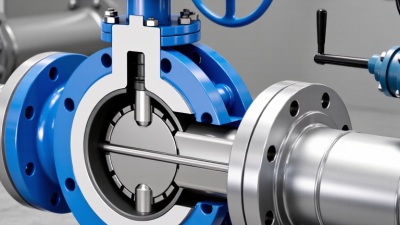
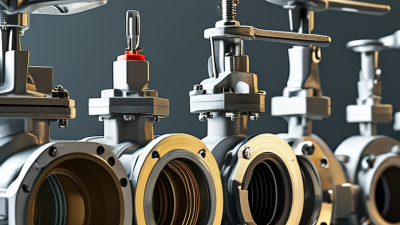
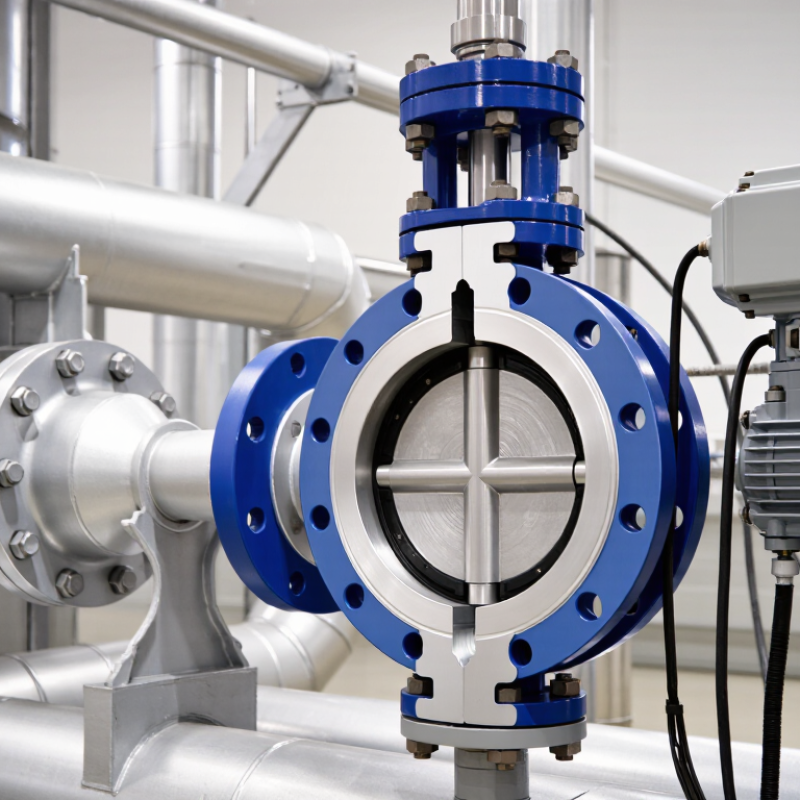
A butterfly valve controls flow with a circular disc mounted on a rotating stem. Turning the stem one quarter-turn moves the disc from open to closed. Its main parts include the body, disc, stem, seat, and actuator. Wafer bodies fit between flanges, while lug bodies support easier line isolation. Flanged designs suit heavier service. The choice is not cosmetic.
A concentric valve places the stem near the disc center and usually suits water, air, and moderate pressure. Double-offset and triple-offset designs reduce seat friction during opening. They are better candidates for higher temperatures, tighter shutoff, or demanding process fluids. Check pressure class, temperature range, corrosion resistance, and fluid velocity. API 609, ISO 5752, and ISO 5211 provide useful dimensional and interface references. The U.S. Department of Energy reports that pumping systems can represent roughly 25% of industrial electricity use, so excessive pressure loss deserves attention. Small losses matter.
Market research from Grand View Research valued the global industrial valves market at about USD 78 billion in 2023, showing how widely these components are deployed. Yet market size does not replace engineering judgment. I have seen selection sheets focus on pipe diameter while ignoring actuator torque and seat compatibility. That mistake is expensive. Review shutoff requirements, cycling frequency, installation space, and maintenance access. Allow for uncertainty. Real fluids rarely behave as neatly as a specification sheet suggests.
A butterfly valve is only as reliable as its material compatibility. Water, seawater, acids, solvents, and abrasive slurries attack valve components differently.
The AMPP summary of the NACE IMPACT study estimates global corrosion costs at about US$2.5 trillion annually, equal to 3.4% of global GDP. Material selection deserves more than a quick catalog check.
For clean water, ductile iron bodies and EPDM seats often provide practical service. Hydrocarbons may require NBR or fluoropolymer-based sealing materials, depending on temperature and composition. Strong acids, oxidizers, and solvents demand careful review of the body, disc, shaft, seat, and lining together. PTFE or PFA can resist many aggressive chemicals, but temperature cycling and permeation still matter.
Check the concentration.
A detailed selection should record temperature, pressure, flow velocity, solids content, cleaning chemicals, and operating cycles.
API 609 and ASME B16.34 provide useful design and pressure guidance, but neither replaces a compatibility review.
In field work, the seat receives attention first, while the shaft is sometimes overlooked. That mistake can become expensive.
Do not trust a single compatibility chart. Test the actual medium when uncertainty remains, especially with mixed chemicals or changing concentrations.
A perfect material choice rarely exists. The better choice balances corrosion resistance, elasticity, abrasion performance, and maintenance access.
Operators should also verify lining damage after installation, because transport and commissioning can create small defects before service begins.
How to Choose the Right Butterfly Valve in 2026?
A butterfly valve should match the service, not just the pipe diameter. Start with pressure, temperature, fluid composition, and required shutoff class. A resilient-seated concentric valve often suits clean water and moderate pressures. Its elastomer seat can seal tightly, but heat and chemicals may shorten service life. Check the real operating temperature, including cleaning cycles and brief spikes.
For higher pressure or frequent cycling, consider a double-offset design. The disc moves away from the seat, reducing rubbing during opening. This can improve wear resistance and operating torque. At high temperatures, a triple-offset, metal-seated valve may be more suitable. It handles demanding thermal conditions, but installation alignment becomes less forgiving. Do not select it automatically; metal seats may not provide the same bubble-tight shutoff as resilient materials.
Flow behavior also matters. A butterfly valve offers compact control, yet its disc remains in the stream. At partial opening, turbulence and pressure loss can rise quickly. Review the valve’s torque curve, flow coefficient, actuator margin, and cavitation risk. In field checks, I compare the datasheet with actual line conditions. They rarely match perfectly. That gap deserves attention. Lug or wafer bodies affect maintenance access and piping flexibility, not the valve’s pressure suitability alone. Specify materials, rating, temperature range, and fail position in writing. Then have an engineer verify the selection against applicable piping and safety requirements.
How to Choose the Right Butterfly Valve in 2026?
Selecting a butterfly valve starts with the actuator, not the catalog photograph. Confirm the valve’s breakaway torque, running torque, and safety margin. Pneumatic actuators suit fast isolation and frequent cycling. Electric actuators fit remote sites where compressed air is unavailable. Specify spring-return action when failure position matters. Open or closed? Decide before ordering. In field work, oversized actuators often hide poor torque data and increase cost. That is an uncomfortable mistake.
Connection choice follows pipe conditions. Wafer valves save space between flanges, while lug designs allow one-sided pipe removal. Flanged connections help with heavier assemblies and repeated maintenance. Match the valve drilling and pressure class with the piping standard. ISO 5211 mounting dimensions can simplify actuator replacement. However, dimensional compatibility does not guarantee correct torque transfer. Check the stem, disc clearance, gasket type, and installation orientation.
Control method should reflect process behavior. Use simple open-close control for isolation duties. Choose modulating control for flow regulation, with a positioner and a stable feedback signal. A 4–20 mA loop remains practical, while digital networks provide diagnostics and asset data. FAO AQUASTAT reports that agriculture uses about 70% of global freshwater withdrawals, making reliable water control important. The International Energy Agency’s Electricity 2024 report expects global electricity demand to grow strongly through 2025, increasing pressure on cooling and process systems. Test the complete valve assembly under realistic pressure. Laboratory confidence can still fail at the pipeline.
Select the Ideal Actuator, Connection, and Control Method
The chart uses a practical suitability index from 1 to 5. A higher score indicates that the actuator is commonly suited to the stated duty; final selection must still consider valve torque, pressure, temperature, cycle frequency, fail position, and applicable standards.
Use manual operation for infrequent local isolation. Electric actuators suit controlled remote operation, while pneumatic actuators are commonly selected for fast cycling, modulating service, or emergency shutoff.
Wafer connections are compact and economical, lug connections support independent pipe-side removal, and flanged connections are preferred when higher mechanical support or easier maintenance access is required.
Choose on/off control for isolation. Choose modulating control when flow regulation is required, and specify a defined fail-open or fail-closed position for safety-related applications.
How to Choose the Right Butterfly Valve in 2026?
Installation cost starts with access, alignment, and actuator space. Wafer valves are compact and often fit between existing flanges. Lug-style designs support easier section isolation during maintenance. However, flange misalignment can damage the seat before commissioning. Check pipe supports, bolt clearance, and disc rotation on site. A small mistake becomes a shutdown.
Maintenance depends on fluid, cycling frequency, and seat material. The U.S. Department of Energy reports that compressed-air leaks can waste 20–30% of compressor output. Poor valve isolation can contribute to similar losses. Specify a position indicator, accessible fasteners, and documented inspection intervals. ISO 5211 helps standardize actuator mounting, while API 609 defines key butterfly-valve design requirements. Standards guide choices, but they do not replace field judgment.
Safety deserves more than a compliance checkbox. HSE guidance HSG253 recommends verified isolation before maintenance, including lockout and trapped-pressure checks. Select fail-safe actuation where process risk justifies it. For lifecycle costing, compare purchase price, actuator energy, spare seats, inspection labor, and downtime. A cheaper valve may require more frequent replacement. I have seen lifecycle estimates fail because labor was ignored. That assumption needs challenging. Ask for tested leakage performance, material compatibility, and maintenance records before approval.
| Valve Design | Typical Applications | Installation Characteristics | Maintenance Profile | Safety and Isolation Considerations | Typical Pressure and Temperature Suitability | Relative Purchase Cost | Relative Lifecycle Cost | Best-Fit Selection Scenario |
|---|---|---|---|---|---|---|---|---|
|
Concentric, Resilient-Seated
Wafer
Lug
|
Potable water, irrigation, HVAC water, fire-protection systems, and general low-to-moderate pressure services. | Compact and lightweight. Wafer versions generally fit between flanges; lug versions can support dead-end service when specifically rated for it. Correct flange alignment and controlled bolt tightening are essential. | The elastomer seat is the main wear component. Routine inspection should check leakage, shaft operation, corrosion, and seat compatibility. Seat replacement may require removing the valve from the line, depending on the design. | Provides tight shutoff when the seat material, pressure direction, and service conditions are correctly matched. Do not use the valve as a personnel safety barrier unless the system has an independent isolation and lockout procedure. | Commonly used in lower-pressure utility systems. Temperature capability is primarily limited by the selected elastomer, such as EPDM, NBR, or PTFE, and must be confirmed against the manufacturer’s rating. | Low | Low | Best general-purpose choice where compact dimensions, low initial cost, and tight shutoff are more important than high-temperature or severe-service capability. |
|
Concentric, Resilient-Seated
Flanged
|
Larger water networks, cooling-water lines, treatment plants, and systems where flange access is preferred. | Heavier and longer than wafer or lug versions, but flange bolting is straightforward. The valve should be centered accurately to prevent disc interference and uneven seat loading. | Similar to other resilient-seated concentric valves. Flange and actuator access are generally convenient, which can reduce inspection time in larger installations. | Suitable for reliable on/off isolation when correctly sized. The resilient seat can be damaged by abrasive solids, excessive closing torque, or operation outside the specified pressure direction. | Typically applied in water-service pressure classes. Maximum temperature and pressure depend on the body, liner, seat, and flange rating rather than the butterfly-disc concept alone. | Medium | Medium | A practical option where robust flange connections, easier field handling, and established utility-piping practices justify the added weight and cost. |
|
Double-Offset
High-Performance
Resilient Seat
|
Process water, cooling systems, hydrocarbon service, compressed gases, and applications requiring reduced seat rubbing. | Requires accurate alignment and suitable flange condition. The offset geometry reduces disc-to-seat contact during most of the rotation, but installation must still follow the specified flow direction and clearance requirements. | Lower seat wear than a fully concentric design in many operating cycles because the disc lifts away from the seat earlier during opening. Shaft seals, bearings, actuator couplings, and seat condition still require periodic inspection. | Offers improved cycle life and shutoff performance compared with many concentric designs. Fire-safe, anti-static, or fugitive-emission features are not automatic and must be specified when required. | Often selected for higher pressure or more demanding services than standard resilient-seated utility valves. Temperature limits depend strongly on the seat construction and body materials. | Medium | Medium | Best when frequent cycling, reduced seat wear, or better flow-control performance is needed without moving to a fully metal-seated design. |
|
Triple-Offset
Metal-Seated
Severe Service
|
Steam, hot gas, high-temperature process lines, hydrocarbon isolation, and services where resilient elastomers are unsuitable. | Installation is less forgiving than for basic utility valves. Proper flange alignment, thermal expansion allowances, flow direction, disc clearance, and actuator sizing are important. | Metal seats can provide long service in high-temperature applications, but inspection and repair require trained personnel. Seat damage, shaft sealing, bearing condition, and actuator calibration should be assessed during planned outages. | Can be suitable for high-temperature and fire-safe applications when designed, tested, and certified for those duties. “Zero leakage” performance depends on the applicable test standard, pressure, temperature, and seat condition. | Commonly selected for higher-pressure and higher-temperature duties, but the actual rating must be confirmed from the pressure-temperature envelope, materials, emissions requirements, and applicable piping code. | High | Medium–High | Best where temperature, fire safety, cycle life, or process isolation requirements outweigh the higher purchase price and more specialized maintenance. |
|
Lined Butterfly Valve
Corrosion Service
Resilient Seat
|
Compatible chemical services, wastewater, acids, alkalis, and corrosive fluids where the lining material is chemically suitable. | Prevent damage to the liner during transport, flange assembly, and insertion. Avoid incompatible gasket materials and verify that the disc edge and liner are suitable for the fluid. | Liner condition is the key maintenance concern. Inspect for swelling, cracking, delamination, hardening, and chemical attack. Abrasive solids can shorten liner life even when chemical compatibility is acceptable. | Chemical resistance is not universal; concentration, temperature, fluid velocity, and contaminants must all be considered. Confirm whether the lining is acceptable for vacuum, permeation, and emission requirements. | Pressure and temperature capability is generally limited by the lining and body construction. Chemical compatibility charts should be treated as a screening tool and validated for the actual operating conditions. | Medium | Medium | Best where corrosion resistance is the main selection driver and the operating temperature, pressure, and solids content remain within the lining’s verified limits. |