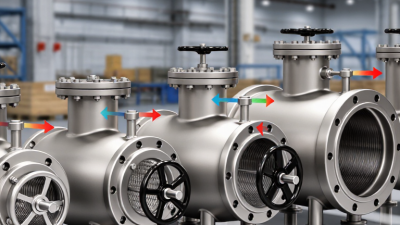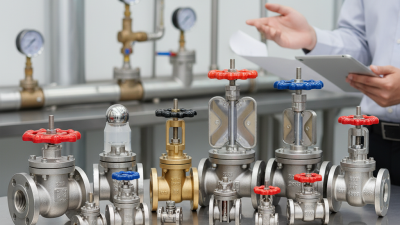
Choosing the top 10 duplex strainer manufacturers requires more than comparing product catalogs or factory photographs. A reliable review must examine design experience, material quality, testing procedures, and service performance. Each duplex strainer should maintain flow while one basket is isolated, cleaned, or replaced. That sounds simple. It is not.
The evaluation will consider cast or fabricated construction, stainless steel options, pressure ratings, connection standards, basket access, switching reliability, and spare-part availability. It will also review how manufacturers support chemical plants, water systems, food processing lines, and other demanding applications. A polished brochure cannot replace inspection records, traceable materials, or clear technical drawings. W. Edwards Deming, a respected manufacturing quality expert, said, “Quality comes not from inspection, but from the improvement of the production process.” His principle remains useful here: strong manufacturers build consistency into design and production, rather than correcting failures later.
This guide will compare ten leading names through practical buyer criteria. It will consider lifecycle cost, not only the initial quotation. A cheaper duplex strainer may require more frequent cleaning, special tools, or costly downtime. That detail is easy to overlook. Manufacturer rankings also depend on application, region, and project scale, so no universal list can be perfect. Some evidence may be difficult to compare openly. That limitation deserves attention. Still, the comparison aims to give engineers, maintenance teams, and procurement managers a clearer starting point for informed decisions.
A serious duplex strainer comparison begins with mesh, not marketing claims. ASTM E11 data shows that 20 mesh is roughly 850 microns, while 400 mesh can approach 38 microns. Actual openings vary with wire diameter. That detail matters.
A 2024 industrial filtration market assessment from MarketsandMarkets identifies process water, chemicals, and oil and gas as major demand sectors. These systems often need continuous flow during basket cleaning. A duplex design helps operators switch chambers without stopping the line. However, it does not remove every operating risk.
Pressure ratings from 150 to 6,000 psi demand careful engineering. The housing, cover bolts, gasket, basket, and selector mechanism must match the specified rating. API and ASME pressure-design practices remain useful reference points. A higher rating is not automatically better. It may increase weight, cost, and maintenance difficulty.
Field experience suggests checking differential pressure before selecting a basket. A fine 400-mesh screen can clog quickly in dirty fluid. A coarse pre-screen may protect it. Operators should also verify viscosity, temperature, corrosion conditions, and cleaning access. Small oversights happen. They can become expensive failures. Manufacturers worth evaluating should provide test evidence, pressure documentation, replacement-basket tolerances, and clear inspection records rather than relying on impressive catalog numbers.
Selecting the top 10 duplex strainer manufacturers requires more than comparing catalog prices. The duplex design should maintain flow during basket cleaning, while wetted materials resist corrosion in demanding services. NPS ½–24 coverage is useful, but stated size ranges need verification. A 24-inch housing may have very different pressure limits from a ½-inch unit.
ASME B16.34 provides a practical reference for pressure-temperature ratings, materials, and valve-related design discipline. API 598 supports inspection and pressure-testing expectations, although it is not a complete strainer specification. Buyers should request hydrostatic test records, leakage results, and traceable material certificates. Small details matter. Gasket seating can decide field performance.
ISO 9001 certification adds quality-system evidence, not automatic product quality. The ISO Survey 2023 recorded 1,265,216 valid ISO 9001 certificates worldwide, showing broad adoption but also its limits. Certification alone cannot confirm basket strength or differential-pressure performance. Industry market reports estimate the global industrial valves market exceeded 77 billion dollars in 2023, with continued growth driven by water, energy, and process industries. That growth increases supplier choice, but perhaps not transparency. A credible ranking should examine witnessed testing, manufacturing experience, replacement-basket availability, and documented compliance with ASME B16.34, API 598, ISO 9001, and NPS ½–24 requirements. Some evaluation gaps will remain. That is worth admitting.
| Rank | Anonymous Manufacturer Profile | Typical Duplex Strainer Configuration | Published or Common NPS Range | Typical Pressure Classes | ASME B16.34 Application | API 598 Testing | ISO 9001 Quality System | Common Materials | Typical Industries | Selection Strength |
|---|---|---|---|---|---|---|---|---|---|---|
| 1 | Profile A Industrial valve and filtration specialist |
Bolted-cover, cast-body duplex basket strainer with changeover valve assembly | NPS ½–24 | Class 150–600 | Used for pressure-containing valve and body design where specified | Available by specification | Certified system commonly offered | Carbon steel, stainless steel, duplex stainless steel; stainless-steel baskets | Oil and gas, petrochemical, power generation | Broad size coverage and engineered valve integration |
| 2 | Profile B Process-piping equipment specialist |
Fabricated duplex basket strainer with flanged ends and differential-pressure connections | NPS 2–24 | Class 150–300 | Referenced for pressure-boundary design when the product scope includes valve components | Hydrostatic and seat tests by order | Certified system commonly offered | Carbon steel, 304/316 stainless steel, duplex stainless steel | Water treatment, marine, chemical processing | Large-line fabrication and custom nozzle orientation |
| 3 | Profile C High-pressure forged-equipment specialist |
Forged or cast compact duplex strainer with bolted bonnet and replaceable screen baskets | NPS ½–12 | Class 300–1500 | Applicable to pressure-containing valve-style bodies when stated in the purchase specification | API 598 testing available | Certified system commonly offered | Forged carbon steel, alloy steel, 316 stainless steel | Refining, high-pressure gas, upstream production | Compact high-pressure designs and robust body construction |
| 4 | Profile D Hygienic and corrosion-resistant equipment specialist |
Duplex basket strainer with stainless body, sanitary surface options, and quick-access cover | NPS 1–12 | Class 150–300 | Applied when the strainer includes pressure-containing valve-style components | Testing available by contract | Certified system commonly offered | 316/316L stainless steel, duplex stainless steel, corrosion-resistant alloys | Food processing, pharmaceutical, specialty chemicals | Cleanability, corrosion resistance, and surface-finish options |
| 5 | Profile E Marine and seawater-service specialist |
Duplex basket strainer with flanged body, reinforced basket, and seawater-compatible trim | NPS 2–24 | Class 150–600 | Specified for applicable pressure-containing components rather than as a universal strainer standard | Hydrostatic testing available | Certified system commonly offered | Duplex stainless steel, super duplex stainless steel, 316 stainless steel | Marine systems, desalination, offshore platforms | Strong resistance to chloride-containing service |
| 6 | Profile F Power and utility filtration specialist |
Large-capacity duplex strainer with parallel flow paths and low-pressure-drop basket design | NPS 4–24 | Class 150–300 | Used where the pressure-containing design falls within the relevant valve-body scope | Testing documented on request | Certified system commonly offered | Carbon steel, 316 stainless steel, duplex stainless steel | Power plants, cooling-water systems, utilities | High flow capacity and maintenance-friendly basket access |
| 7 | Profile G Chemical-process equipment specialist |
Duplex strainer with lined or corrosion-resistant internals and optional magnetic separator | NPS 1–16 | Class 150–600 | Referenced for pressure-boundary components when required by the engineering specification | API 598-style testing by agreement | Certified system commonly offered | 316 stainless steel, duplex stainless steel, alloy steel, fluoropolymer-lined options | Chemical, fertilizer, process manufacturing | Material flexibility for aggressive fluids |
| 8 | Profile H General industrial valve specialist |
Cast-body duplex strainer with removable baskets, drain ports, and optional bypass arrangement | NPS ½–16 | Class 150–600 | Can be included for valve-style pressure-containing elements where specified | Pressure testing available | Certified system commonly offered | Cast carbon steel, cast stainless steel, duplex stainless steel | Industrial plants, HVAC, water and general process service | Versatile standard configurations and aftermarket support |
| 9 | Profile I API-oriented pipeline equipment specialist |
Pipeline duplex strainer with flanged ends, lifting provisions, and high-strength basket support | NPS 2–24 | Class 150–900 | Applied to relevant valve-type pressure boundaries when listed in the technical specification | API 598 testing commonly specified | Certified system commonly offered | Carbon steel, low-temperature carbon steel, stainless steel, duplex stainless steel | Transmission pipelines, terminals, storage facilities | Pipeline-compatible end connections and documentation packages |
| 10 | Profile J Custom-engineered filtration specialist |
Engineered duplex strainer package with automated changeover, monitoring ports, and custom internals | NPS 1–24 | Class 150–600 | Selected for applicable pressure-containing valve components; project-specific confirmation required | Testing and inspection plan by project | Certified system commonly offered | Carbon steel, stainless steel, duplex and super duplex stainless steel | FPSO, offshore, power, chemical and water infrastructure | High customization and integrated instrumentation options |
Comparing the top ten duplex strainer manufacturers requires more than checking catalogue pressure ratings. In plant inspections, I examine the basket housing, changeover valve, seals, drains, and weld quality. “Duplex” should mean two filter chambers supporting uninterrupted service, not automatically duplex stainless steel. Ask which materials are standard: cast stainless steel, carbon steel, or corrosion-resistant alloys. Material certificates and traceability matter when seawater, chemicals, or heated oil are involved. Small details reveal manufacturing maturity.
Flow rate claims need context. A reliable manufacturer should state the tested fluid, viscosity, temperature, screen opening, and basket area. Water performance cannot represent heavy oil accurately. Check whether the stated capacity applies to one chamber or both chambers operating together. Confirm the clean pressure drop, or ΔP, at the required flow rate. Then review the recommended alarm setting and maximum allowable ΔP. Test it in real conditions.
I also compare pressure-drop curves, inspection records, spare-part availability, and valve cycling tests. A strong supplier explains how the design handles blocked baskets and sudden flow changes.
Independent inspection can expose weak welds or inaccurate gauges. I would not treat a polished test sheet as complete proof; field data sometimes disagrees. That disagreement deserves investigation, not dismissal. Maintenance access matters too, especially when operators must remove a wet basket beside hot piping.
What Are the Top 10 Duplex Strainer Manufacturers?
The top ten duplex strainer manufacturers should be compared by design depth, certification, and industry experience. A reliable manufacturer offers cast or fabricated bodies, corrosion-resistant baskets, and smooth changeover between chambers. Operators should inspect handle movement, drain placement, and cover access. Small details matter during a midnight maintenance call.
Design performance comes first. Look for low-pressure-drop passages, reinforced switching valves, and baskets sized for the expected debris load. Stainless steel construction suits many water and chemical applications, while special alloys may serve marine or corrosive environments. Manufacturers with ISO 9001 systems usually provide stronger process control, but certification alone proves little. Ask for pressure-test reports, material traceability, and dimensional records. A polished certificate cannot repair poor engineering.
Industry fit separates strong suppliers from ordinary fabricators. Power plants may require continuous filtration and documented pressure ratings. Food processors need cleanable surfaces and suitable hygienic finishes. Offshore systems demand compact layouts, vibration resistance, and protective coatings. Relevant approvals may include ASME compliance, regional pressure-equipment conformity, or marine classification, depending on the installation. The best ten are not identical; their value changes with service conditions. This ranking remains imperfect because published data rarely reveals long-term basket wear or emergency support quality. Real users should verify those points through site references, test records, and direct technical discussions.
Applications in Oil, Gas, Water Treatment, and Chemical Processing
The top ten duplex strainer manufacturers are usually judged by engineering depth, testing discipline, and field reliability. A strong manufacturer designs two parallel chambers with a dependable changeover system. This allows one basket to operate while the other is cleaned. Downtime matters.
In oil and gas facilities, strainers protect pumps, meters, valves, and compressors from weld debris and scale. Fabricators should verify pressure ratings, basket strength, sealing performance, and material traceability. Stainless steel, carbon steel, and special alloys serve different fluids. Sour or highly corrosive service demands closer material review.
Water treatment plants often need strainers that handle suspended solids, chemicals, and continuous flow. Operators may value simple access, low pressure loss, and clear differential-pressure monitoring. Chemical processing requires greater attention to compatibility. Acids, solvents, oxidizers, and heated fluids can attack seals or baskets unexpectedly. Small details matter.
Manufacturers with practical project experience usually provide drawings, inspection records, replacement baskets, and responsive technical support. Factory testing should cover hydrostatic pressure, leakage, and operating movement. However, no ranking is perfect. Published claims can overlook maintenance problems after installation. Buyers should compare service records, not only brochures, prices, or impressive capacity figures. A carefully selected duplex strainer can protect equipment, but only when its design matches the actual fluid, temperature, pressure, and cleaning routine.