Blog

China Top Pneumatic Actuator Manufacturers and Suppliers?

China has a broad manufacturing base for pneumatic actuators, serving automation, process control, packaging, and other industrial applications. This guide introduces Chinese manufacturers and suppliers and explains what buyers can assess before requesting a quotation. A pneumatic actuator converts compressed air into mechanical motion, but product suitability depends on more than its basic function. Bore size, operating pressure, torque, stroke, mounting dimensions, and duty cycle all matter.

Details matter here. A mismatch can cause slow movement, excess air use, or unreliable valve operation. When comparing suppliers, check technical datasheets, material options, testing procedures, production capabilities, and available documentation. Ask whether the quoted model has been tested under conditions similar to your application. Also confirm expected lead times, customization limits, spare-parts support, and communication arrangements. These checks help distinguish a capable manufacturing partner from a listing with attractive specifications but little supporting evidence. No single supplier suits every project.

The manufacturers discussed should be treated as candidates for evaluation, not as a universal ranking. Supplier capabilities, product ranges, and export experience can change, and published information may not answer every technical question. Request current documents and verify important claims directly with the company. A sample evaluation can reveal practical issues that a catalogue cannot. This is not always convenient, but it may prevent costly surprises later. With clear requirements and careful verification, buyers can narrow their options and select a pneumatic actuator supplier with greater confidence.
China Top Pneumatic Actuator Manufacturers and Suppliers?

Pneumatic Actuator Fundamentals: 90° Quarter-Turn Motion and 3–8 bar Air

Pneumatic Actuator Fundamentals: 90° Quarter-Turn Motion and 3–8 bar Air

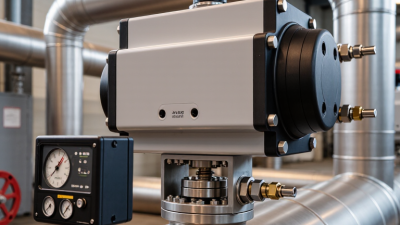
A quarter-turn pneumatic actuator rotates a valve shaft through about 90 degrees. This motion commonly opens or closes ball and butterfly valves. Compressed air drives a piston or vane inside the actuator, producing rotary torque. The movement is quick, but speed alone does not determine whether an actuator is suitable. Available torque must match the valve’s starting and running requirements.

Many systems operate within a 3–8 bar air supply range. Actual torque can change as pressure fluctuates, so check the actuator’s torque data at the lowest expected supply pressure. Also consider valve size, fluid conditions, cycle frequency, and any spring-return requirement. A small pressure drop may matter. I have seen selection become less straightforward when nominal pressure was treated as constant; it rarely is.

Tips: Measure pressure near the actuator during operation, not only at the compressor. Confirm the required rotation angle and mounting pattern. Keep the air clean and dry, and allow a sensible torque margin. Oversizing is not automatically safer; it can increase cost and place unnecessary load on valve components. The final selection should be checked against the valve maker’s torque information and the actuator’s published performance data.

Actuator Types: Rack-and-Pinion and Scotch-Yoke Designs for Valve Automation

For valve automation, pneumatic actuators commonly use rack-and-pinion or scotch-yoke mechanisms. A rack-and-pinion design converts the piston’s linear movement into shaft rotation through meshing gears. It is compact, straightforward to install, and often suits quarter-turn valves in smaller spaces. During selection, check the required torque across the full stroke, not just the valve’s breakaway point. A brief torque mismatch can leave a valve slow or incomplete.

Scotch-yoke actuators use a sliding pin and yoke to turn the output shaft. Their torque varies through the rotation, often providing stronger output near the start and end of travel. This can help operate valves with high breakaway or seating torque. They are commonly considered for larger valves, but their size and maintenance needs deserve attention. Grease condition matters. So does alignment. A small inspection window can reveal wear before it becomes a production problem.

When comparing pneumatic actuator suppliers in China, request torque curves, air-pressure limits, cycle-life data, and material details. Match these figures to the actual valve, operating temperature, and available air supply. Do not assume a larger actuator is automatically safer; excess torque may damage valve components. Selection can still involve judgment, especially when field conditions differ from the specification sheet. A test on the assembled valve is useful. In my experience, that step is sometimes skipped.

Pneumatic Actuator Designs for Valve Automation

Illustrative torque profiles across the actuator stroke

Rack-and-pinion designs typically provide a more consistent torque profile, while scotch-yoke designs generally deliver higher torque near the ends of the stroke. Values shown are illustrative normalized indices, not measured performance data; actual output depends on actuator sizing, air pressure, and design.

Key Specifications: Torque, Operating Pressure, and ISO 5211 Mounting

When comparing pneumatic actuator manufacturers and suppliers in China, start with the valve’s real operating conditions. Torque is not just a catalog number. A butterfly valve may need more torque to break away after sitting idle, while a clean, frequently cycled valve may move easily. Ask for breakaway, running, and end-of-stroke torque figures, then check whether the quoted actuator includes a practical safety margin. Oversizing can waste air and make control less responsive. Undersizing can leave the valve stuck.

Operating pressure must also match the available air supply, not an ideal test setup. For example, if a plant line drops from 6 bar to 4.5 bar during peak demand, the actuator still needs enough output torque at the lower pressure. Confirm the pressure range, air quality requirements, and spring-return performance if the application requires a fail-safe position. Small details matter. A poorly sized tube can slow response, and a pressure gauge near the actuator can reveal dips that a distant regulator misses.

ISO 5211 mounting helps standardize the connection between actuator and valve, but matching the flange alone is not enough. Check the drive insert, shaft dimensions, bolt pattern, and actuator rotation before ordering. Ask suppliers for dimensioned drawings and test data tied to the proposed configuration. In practice, drawings can be incomplete or revised late; that deserves a careful review. A short bench fit check may prevent a costly installation delay.

China Top Pneumatic Actuator Manufacturers and Suppliers? — Key Specifications: Torque, Operating Pressure, and ISO 5211 Mounting

Actuator Type Typical Torque Range Typical Operating Pressure Common ISO 5211 Mounting Typical Applications Key Selection Considerations
Rack-and-pinion, double-acting Approximately 2–4,000 N·m, model-dependent Commonly 2.5–8 bar F03–F25, depending on actuator size Quarter-turn ball, butterfly, and plug valves Compare available output torque at the specified pressure with the valve’s breakaway and running torque.
Rack-and-pinion, spring-return Approximately 2–4,000 N·m, model- and spring-dependent Commonly 2.5–8 bar; spring torque varies over the stroke F03–F25, depending on actuator size On/off service requiring a defined fail position Check both air-stroke and spring-stroke torque, fail direction, and the number of springs fitted.
Scotch-yoke, double-acting Approximately 100–100,000 N·m, model-dependent Commonly 3–10 bar Often F10–F60 or larger, depending on design Large valves and applications with high breakaway torque Review the torque profile throughout the rotation and confirm that the valve interface and mounting kit are compatible.
Scotch-yoke, spring-return Approximately 100–100,000 N·m, model- and spring-dependent Commonly 3–10 bar Often F10–F60 or larger, depending on design Large quarter-turn valves requiring spring-driven fail-safe operation Verify end-of-stroke spring torque, required safety margin, and spring-module configuration.
Compact rack-and-pinion Approximately 1–300 N·m, model-dependent Commonly 2–8 bar Typically F03–F10 Small valves, packaged equipment, and space-constrained installations Confirm shaft dimensions, drive insert, mounting height, and torque at the minimum available pressure.
Modulating pneumatic actuator Depends on actuator size and valve load Commonly 3–8 bar; positioner requirements vary Selected to match the actuator and valve interface Flow or pressure control with a pneumatic positioner Check control signal compatibility, positioning accuracy, operating frequency, and air quality requirements.

Important: Torque and pressure ranges are indicative market ranges, not guaranteed specifications for every product. Actual performance depends on actuator design, operating pressure, spring configuration, temperature, and service conditions. ISO 5211 specifies valve-actuator mounting interface dimensions; confirm flange size, drive dimensions, and any required coupling or bracket against the valve and actuator drawings before ordering.

China’s Leading Pneumatic Actuator Manufacturers and Supplier Capabilities

China’s leading pneumatic actuator manufacturers serve automation projects with rotary and linear units, typically built around aluminum alloy or stainless-steel housings. Their capabilities often include machining, sealing, assembly, and pressure testing. Buyers should ask how each production batch is checked, not rely on a catalog rating alone. Small details matter: shaft fit, port threads, and seal condition can affect installation and service life.

Some suppliers can adapt mounting dimensions, torque ranges, and accessories for valves or process equipment. Clear technical drawings and documented test results make those claims easier to verify. Ask for operating pressure, temperature limits, cycle expectations, and material specifications before comparing quotations. A sample unit can reveal finish quality and fit, though one sample cannot prove consistent production. That distinction is easy to miss.

Export readiness also involves practical support: readable manuals, spare-part identification, and timely answers to application questions. A capable supplier should explain where an actuator may not suit a given duty, such as frequent cycling or harsh washdown. Not every customization is an improvement. Unclear change records can create problems later, so confirm revisions in writing and check that the delivered unit matches the approved specification.

Supplier Evaluation: ISO 9001 Quality Systems and ISO 8573-1 Air Quality

When comparing pneumatic actuator manufacturers and suppliers, look beyond a certificate displayed on a website. An ISO 9001 quality management system should connect documented procedures with actual production controls. Ask how incoming materials are checked, how machining dimensions are recorded, and how nonconforming parts are handled. A useful supplier can explain these steps and show traceable inspection records for a specific actuator batch. Certificates matter, but they do not prove every unit is flawless.

Air quality deserves equal attention. ISO 8573-1 classifies compressed air by contaminants such as particles, water, and oil. Confirm the required class at the actuator’s point of use, not just at the compressor outlet. Long pipe runs, filters, and maintenance can change conditions. Request recent test results and ask who performs the measurements. Details can get overlooked. In practice, I would also check whether the supplier’s recommended seals and lubrication suit the available air quality and operating cycle. A clean-looking installation is not a measurement. Suppliers may provide excellent documents, yet still leave gaps in application guidance; that is worth discussing before specifying equipment.